
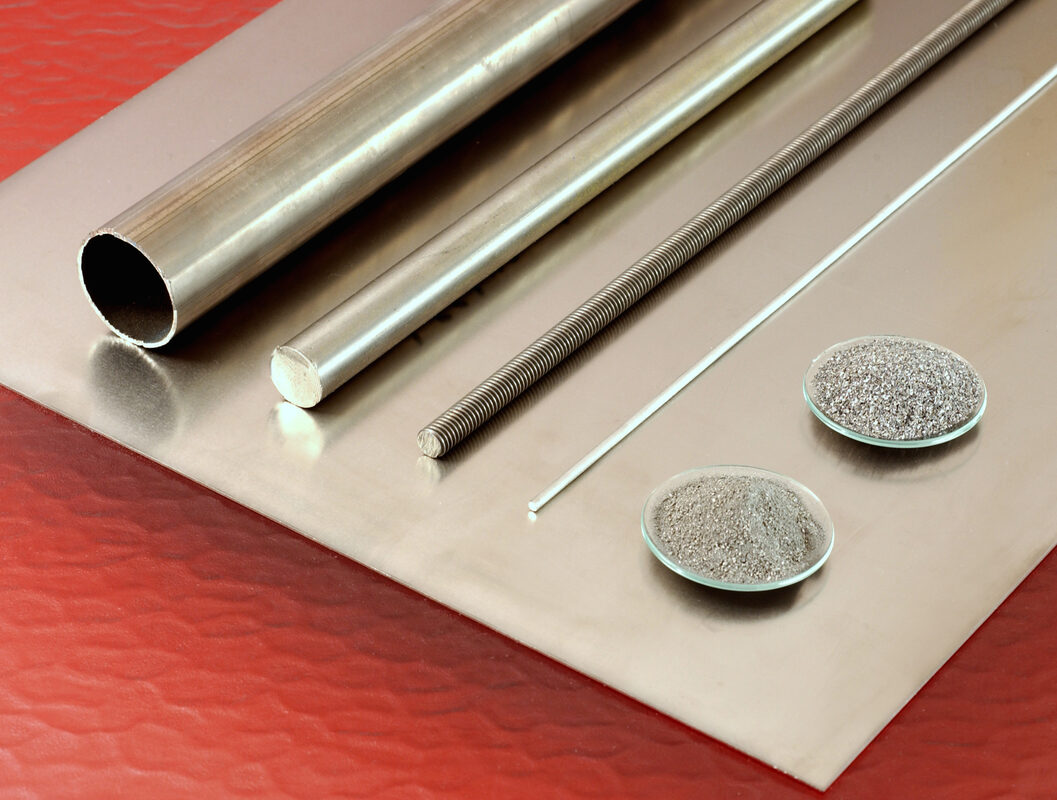
IperionX has priced a public offering of American Depositary Shares that will bring in roughly $50 million, money the titanium producer says it will plow into expanding domestic production capacity — including facilities that feed the metal powder used in industrial 3D printing. For a slice of the additive manufacturing world that has spent years worried about where its titanium actually comes from, it's a notable data point.
According to the July 7 release, IperionX sold 2,275,000 ADSs — each representing 10 ordinary shares, for a total of 22,750,000 ordinary shares — at $21.98 per ADS. Cantor served as sole book-running manager, with Roth Capital Partners and B. Riley Securities acting as co-managers. The offering was expected to close July 9. IperionX said the proceeds are earmarked for scaling up titanium and metal-alloy production, specifically its Titanium Manufacturing Campus in Virginia and the Camden-Titan Project in Tennessee.
Why a Mining-and-Metals Raise Matters to Printer Owners
IperionX doesn't sell FDM filament or resin, and most makers reading this won't ever touch its product directly. But the company sits in a part of the supply chain that increasingly matters to the AM industry as a whole: metal powder feedstock. As 3DPrint.com noted in its July 15 coverage, titanium is one of the most widely used metals in industrial 3D printing — as strong as many types of steel while weighing much less — and it's commonly used in aerospace, defense, and medical components, the same sectors where metal 3D printing has found real commercial traction.
The twist with IperionX is how it makes that powder. Rather than running the energy-intensive Kroll process that has defined titanium metal production for the better part of a century, the company produces what it describes as 100% recycled titanium metal powder from scrap feedstock at its facility in Utah. That scrap-to-powder pipeline serves aerospace, defense, automotive, and additive manufacturing customers already, and it's the production base IperionX is now trying to scale with fresh capital rather than build from scratch elsewhere.
It's worth underlining why a raise by a company most 3D printing hobbyists have never heard of belongs in maker-facing coverage at all. Industrial additive manufacturing, unlike desktop FDM, is downstream of a relatively small set of qualified metal powder producers, and titanium has long been one of the tightest links in that chain. When one of those producers announces fresh capital specifically tied to expanding U.S. output, it's the kind of upstream event that print shops running metal machines track the way desktop makers track filament price swings.
Two Sites, One Supply Chain Bet
The money is going to two specific projects. The Titanium Manufacturing Campus in Virginia and the Camden-Titan Project in Tennessee both fall under IperionX's broader push to stand up more domestic titanium production capacity — the kind of infrastructure that, if it scales as planned, gives U.S.-based metal-printing shops and their customers an alternative to titanium sourced overseas or refined via more conventional, higher-energy methods.
That domestic angle isn't incidental. Titanium powder is a strategic material: it shows up in aircraft, spacecraft, defense systems, and medical implants, all categories where buyers — particularly defense primes and government contractors — have strong incentives to trace material provenance and avoid foreign supply chain exposure. A recycler with U.S. production sites expanding its footprint fits squarely into that dynamic, even if IperionX itself is not a printer OEM or a filament brand that maker-community readers would recognize by name.
What It Means for Makers
For the vast majority of desktop 3D printing hobbyists, this raise changes nothing about tomorrow's print queue. IperionX doesn't sell into the FDM or resin hobbyist market, and $50 million in growth capital for industrial titanium powder production isn't going to move the price of PLA or show up as a new spool on a shelf. But for anyone running metal AM equipment — bound powder deposition setups, laser powder bed fusion machines, or binder jetting systems capable of processing titanium — feedstock availability and domestic sourcing options are a real operational concern, not an abstraction. Titanium powder has historically been expensive and supply-constrained, with quality and traceability requirements that make qualifying a new supplier a slow process. A recycler expanding U.S. production capacity, funded and moving toward two new sites, is the kind of upstream development that can eventually show up as more competitive pricing or shorter lead times for shops that need aerospace- or medical-grade titanium powder and don't want to depend entirely on imported or virgin-process material.
It's also a signal worth watching for where investor money is flowing in the AM supply chain more broadly. Metal 3D printing has always been gated as much by materials availability as by machine capability — printers capable of processing titanium have existed for years, but consistent, qualified, reasonably priced powder has often been the bottleneck. Capital events like this one are a proxy for whether that bottleneck is loosening.
None of that changes what any individual shop pays for powder this week, and it's a mistake to read a single securities offering as an immediate price signal. But sustained investment in domestic recycling-based production is a different kind of input than a one-off supply announcement — compounded over a few funding rounds and a few years of capacity build-out, it can shift how comfortable metal AM shops are qualifying a second or third domestic supplier instead of leaning on a single import channel.
The Fine Print
It's worth being precise about what actually happened here: this is a securities offering, not a product announcement or a manufacturing milestone. IperionX sold new ADSs to institutional and other investors at a set price, raising cash on its balance sheet that it says it intends to spend on the Virginia and Tennessee projects. Whether that capacity materializes on schedule, what output volumes those sites will actually hit, and how much of that output is earmarked for AM powder specifically versus other titanium applications (aerospace mill products, for instance) are all questions the offering documents themselves don't answer in the coverage available. As with any funding round, the raise establishes intent and provides the money — it doesn't guarantee the expanded capacity gets built on the timeline the company hopes.
Readers tracking the metal AM materials space should treat this as an early marker to revisit: does the Virginia campus and Camden-Titan project actually come online, and does IperionX's recycled titanium powder show up in more metal printer bill-of-materials over the next year? That's the follow-up that will determine whether this $50 million raise mattered to the printing industry or just to IperionX's cap table.
Sources
- IperionX Announces Pricing of Public Offering of American Depositary Shares — GlobeNewswire, July 7, 2026
- IperionX Raises $50 Million to Expand U.S. Titanium Production — 3DPrint.com, July 15, 2026
