
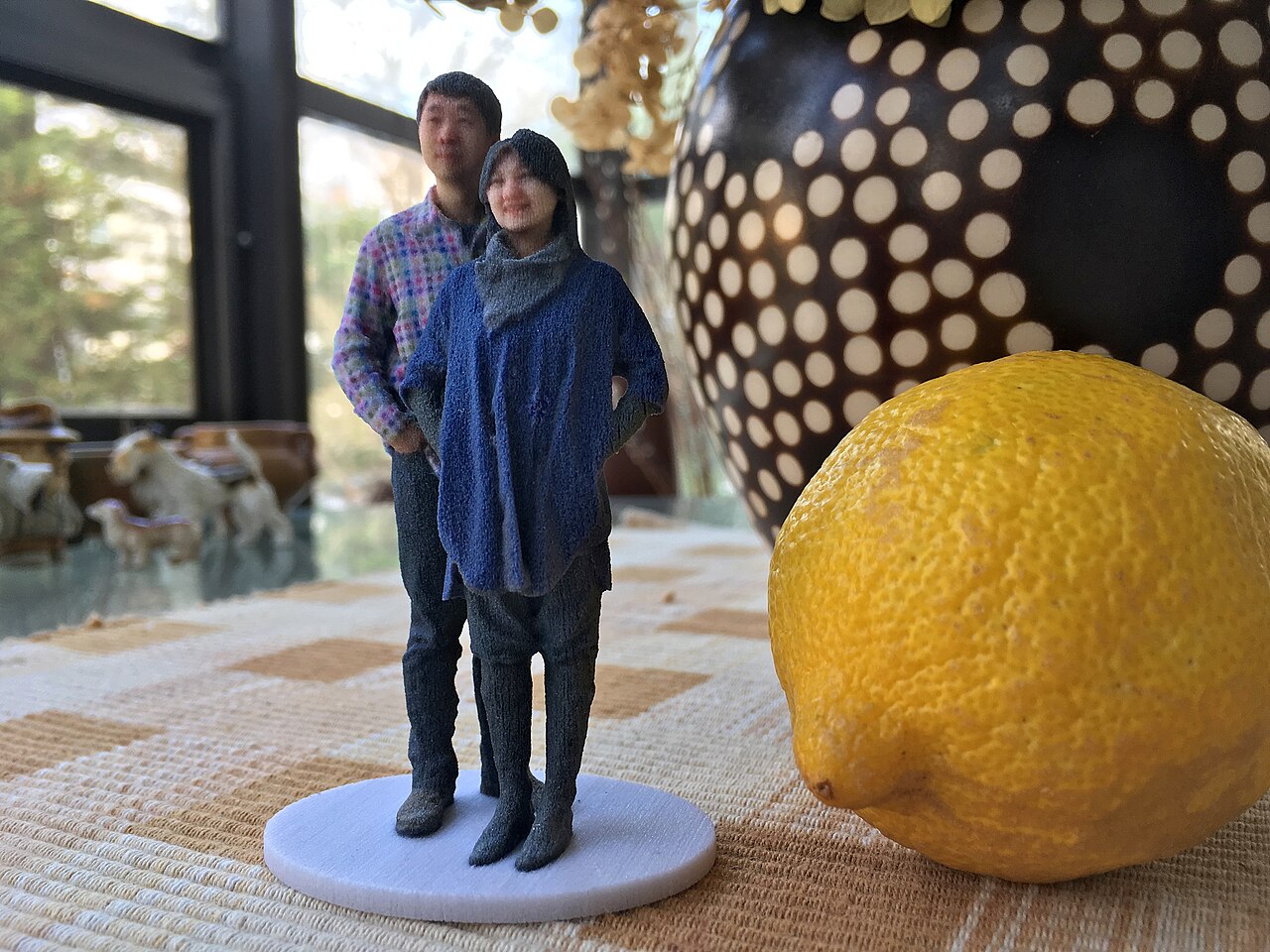
On September 30, AI 3D generation company Meshy said its annual recurring revenue has passed US$100 million, a 100-fold climb from US$1 million in under two years, according to the company's release on PR Newswire. The same day it launched official iOS and Android apps built around a workflow that will interest anyone with a printer: photograph an object, get a textured model, check that it will print, and send it on. The revenue number is the company's own, and the apps are new enough that independent hands-on reports do not yet exist. Both are worth separating from the marketing.
The Numbers, As Claimed
Meshy describes itself as the first AI 3D company to reach $100 million in ARR. That is a superlative the company asserts and we have no independent means to verify; the figure itself is echoed by Dealroom News, which also repeats the user and model counts but is reporting the announcement rather than auditing the books.
Those counts are large. Meshy says it has more than 15 million registered users, over 3,000 companies and schools as customers, and has generated more than 100 million 3D models. The release also says 200 of the Fortune Global 500 build with Meshy. ARR is a run-rate metric, not recognized revenue, and a company-defined one at that, so it tells you about subscription momentum rather than profit. Still, a jump from $1 million to above $100 million in under two years is steep growth for any software business, and it suggests a lot of people are paying for text-and-image-to-3D tools.
The release also cites a Series B in July 2026 of nearly $400 million. Here the sources disagree. The company puts the valuation at $1.5 billion, a figure Unite.AI repeats with attribution to Meshy. Dealroom, by contrast, states the round was at a US$970.6 million valuation. We cannot reconcile the two. The difference may come down to how each party counts, but neither source explains it, so treat the $1.5 billion as Meshy's own number.
The App: Photo In, Printable Model Out
For makers, the more concrete news is the mobile app. Per the release and Unite.AI, it is powered by Meshy 7 and converts photos, sketches and text prompts into textured 3D models. The described workflow is short: photograph an object, generate a model in about a minute, preview it in augmented reality at real-world scale, then send it to a 3D printer.
The feature list leans toward printing more than previous Meshy releases did. The app includes printability checks and AI repair, which is the step that matters most with generated meshes. Anyone who has pulled an AI-generated model into a slicer knows the usual failures: non-manifold edges, thin walls, floating fragments, inverted normals. Automated checks and repair inside the app, before the file ever reaches a slicer, address the actual friction point rather than the demo-friendly part of the pipeline. Whether the repair is good enough to trust on a 14-hour print is something only real use will show.
The AR preview at real scale is a practical addition too. Judging whether a bracket, enclosure or figure is the right size is easier when it sits on your desk in the camera view than when it floats in a viewport with arbitrary units.
Export Formats: Read the List Carefully
The sources word the export list differently. The company release, and Unite.AI following it, lists "industry-standard formats including STL, GLB, FBX, OBJ, USDZ and 3MF." Dealroom names only STL, GLB and OBJ, but it also says "including," so it reads as a partial summary rather than a contradiction. The longer list is the company's own claim, and we have not tested the app. The 3MF entry is the one to check: it carries units, color and multi-material information that STL cannot, and matters for anyone printing on AMS-style or toolchanger setups. If the app really exports 3MF, that is a meaningful upgrade over a mesh-only handoff. If it does not on your plan, you will be back to converting.
Model Updates Behind It
The release notes that Meshy 7.1 shipped this month with Ultra 4K geometry resolution, and that the company open-sourced its alignment benchmark suite for image-to-3D generation. Meshy also says Meshy 7 scores 5.6 percentage points above the average of the latest comparable systems on end-to-end texture alignment. That is a self-reported figure on a benchmark suite the company itself published, though open-sourcing the suite at least lets others rerun the comparison. Geometry resolution is the spec that matters for printing, since fine detail on a miniature or a mechanical part depends on how much surface the model actually resolves. Texture alignment matters less if you are printing in a single color and more if you are heading to full-color or painted output.
The release includes a quote from Faye Pan, Meshy's VP of Growth, and describes founder Ethan Hu as holding a Ph.D. from MIT. The company's framing is of growth and adoption; the release says little about print outcomes.
What It Means for Makers
The honest summary is that the revenue milestone is a business story and the app is the maker story, and only the second changes your workflow. A few points to weigh:
- Photo-to-print is a shortcut, not a scanner. A generated model from a photograph is an AI reconstruction, not a measurement. For a decorative replacement part or a toy, that is fine. For anything with tolerances, such as a mating thread, a press fit or a mount for a specific motor, you still need calipers and a CAD model. Nothing in the announcement claims dimensional accuracy, and we would not assume it.
- Printability checks are the feature to test. Put the app's repair claims through a deliberately bad mesh and see what your slicer says afterward. A model that opens clean but fails at layer 40 is worse than one that warns you up front.
- Check the export before you commit to a subscription. Given the differing format lists, confirm that 3MF and STL are available on the tier you intend to use. Pricing was not part of the sources we reviewed, so we cannot say what the app costs.
- Scale of usage cuts both ways. A platform with 15 million registered users and 100 million generated models is well funded and likely to keep iterating, but registered users are not active users, and the company did not break out how many are paying or how many are makers rather than game and animation developers.
The larger signal is competitive. As generation quality improves, the differentiator is shifting from "can it make a model" to "can it make a model that prints." By building checks, repair, AR scale preview and slicer-friendly export into a phone app, Meshy is betting that the last mile to the build plate is where users will pay. Whether that bet holds depends on failure rates we have yet to see measured. For now, it is a credible claim backed by a growth number, with the hands-on proof still to come.
