
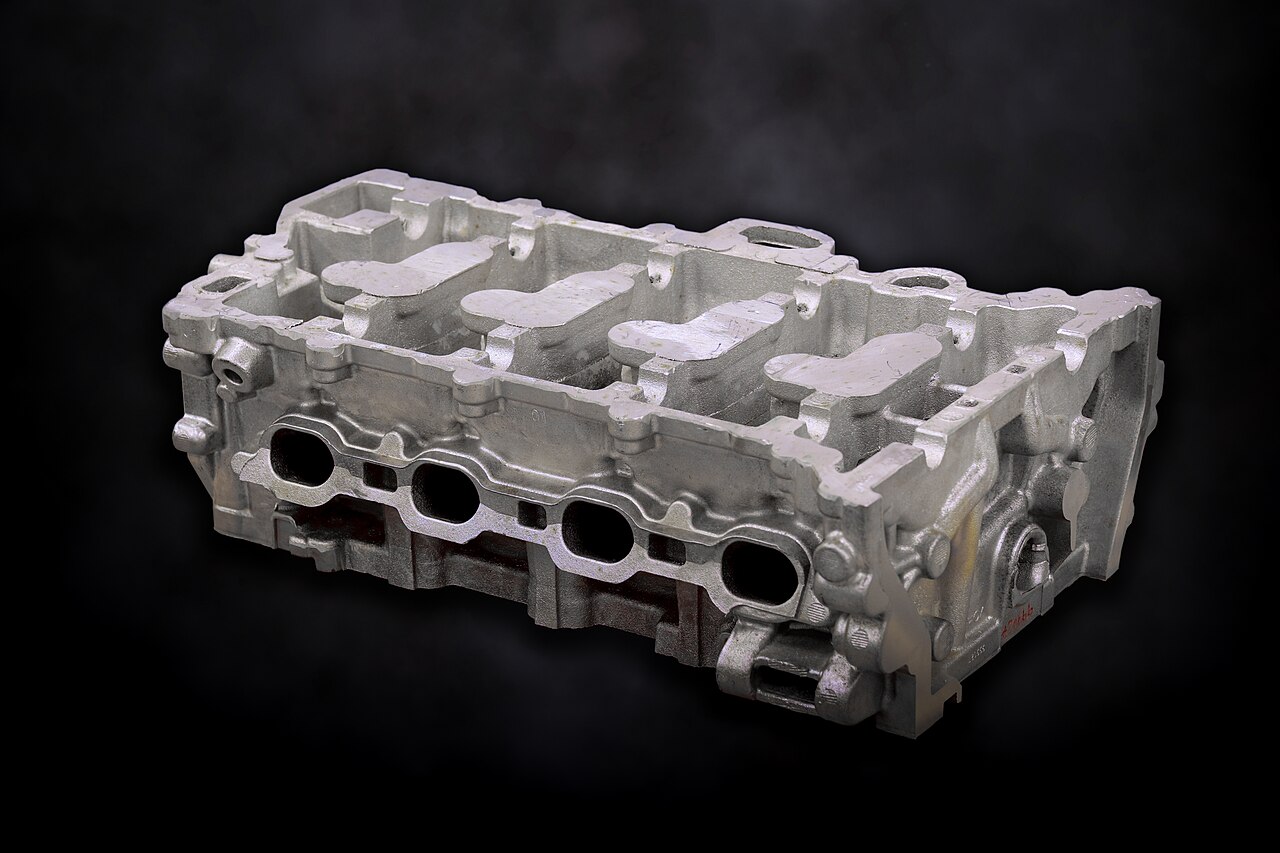
A test part printed during a site acceptance test is not usually where a business case gets made. For Rapid Fusion, a UK maker of large-format robotic 3D printers, it was. Co-founder Jake Hand told 3D Printing Industry, in an interview for its UK additive manufacturing series published 16 November 2026, that a defence customer's test piece cost £5,000 in time and materials. The machined aluminium tool it replaced would have cost £50,000. That tenfold gap, more than any spec sheet, shows why the company has focused on tooling for demanding industrial customers.
The interview is a useful case study in how a hardware company finds the customer who will actually pay. It also describes the engineering problems that keep large-format extrusion away from production tooling, and how Rapid Fusion says it handles them.
The Plan That Didn't Work
Rapid Fusion did not begin as a manufacturer. Its founders first sold other companies' large-format filament printers through a business called Evo 3D. Even customers with a metre of build space in each direction were gluing sections together to get the shapes they needed, and Hand could see the beginnings of a tooling business in what customers did after a print came off the machine. Selling those machines also taught him about the market, and the main lesson was negative. According to Hand, "trying to be in the middle just doesn't work." One group of customers wanted an affordable printer to keep at the back of the building for occasional jobs. The other had a job important enough to keep a premium machine running, and a financial return to justify buying it.
Rapid Fusion chose the factory floor. "It meant actually building an industrial machine that 3D prints," said Hand. Its website describes the company as specialising in the design, manufacturing and delivery of large-format additive manufacturing systems. The product line covers pellet extruders and robotic 3D printing cells designed and manufactured in the UK, plus an additive upgrade kit for industrial robots or gantry systems, and a single software interface for controlling, monitoring and managing machines. The site also hosts a production cost calculator for comparing tooling costs, which shows how the company prefers to sell: by setting its machine's output against the price of a conventional tool.
Why Tooling Is the Opening
The economics depend on time as much as money. Hand said aluminium billet alone can take eight weeks to arrive. With machining, a typical order takes 12 to 16 weeks. In that time, an engineering team can learn enough to want a different tool by the time the first one turns up.
A printed tool sidesteps the wait for an aluminium billet. The catch is dimensional accuracy. Deposited material can expand by different amounts along and across the print lines, so two tools made from the same material to the same drawing can move differently if the printer follows different paths.
Dealing With the Physics
Rapid Fusion's response comes in two parts. The first is thermal analysis software. Rather than modelling an idealised part, it uses the actual deposition path, the material and the intended operating temperature to predict how a tool will change shape. The prediction informs both the print and the subsequent milling operation. What matters to the customer is the dimension of the working surface at the temperature where it will be used.
The second part is a scanning system used between printing and machining. There is a more immediate problem when a six-metre print needs machining: where, precisely, is it on the bed? Rapid Fusion's scanning system builds a point cloud from successive images, then fits the CAD model to the measured position of the print. If the operator has allowed eight millimetres of stock for finishing, to take Hand's example, the mill can locate the intended surface without someone first touching off a series of reference points with the milling head.
Rapid Fusion has also built printing and milling into one machine. At Kingston University's Roehampton Vale campus, a £450,000 Zeus robotic cell puts printing and CNC milling in one system, and students, researchers and industrial partners have access to both processes.
Where the Machines Are Going
Hand put the installed base at around 43 systems. The UK accounts for the largest concentration, followed by Central Europe, and when the interview took place a team was in Honolulu installing a machine. Rapid Fusion recruits resellers that already employ service engineers and electricians, and its own staff lead the early installations. He said most of the business cases the company quotes put payback within two years. For the buyer, Hand reckons a robot can take "three to six months of heavy learning and R&D" before operators understand its capabilities.
Shipbuilders are emerging as another group of buyers. Hand counted three or four deals in the preceding month across marine applications and uncrewed surface vessels. Rapid Fusion is pursuing a route through Lloyd's Register and, according to Hand, has won an Innovate UK bid for a vessel project. On the defence side, the company has packaged its Medusa system in a container, and Hand says parts of the UK Ministry of Defence have trialled it, with a shipboard trial planned. A printer in a shipping container is a system that carries its own services and runs from a single power connection.
What It Means for Makers
Few readers will buy a robotic LFAM cell, but the Rapid Fusion story carries lessons that apply at smaller scale.
Sell against the alternative, not the spec sheet. Rapid Fusion's pitch is not build volume or extrusion rate. It is £5,000 against £50,000 and a print against a 12 to 16 week wait. Anyone printing jigs, fixtures or moulds for a small shop, or offering print services locally, can make the same argument by pricing a part against the machined or outsourced version it replaces, including the lead time.
The middle is risky. Hand's view that the middle "just doesn't work" was about large-format machines, but it is worth keeping in mind as desktop printers become more capable. Buyers tend to want either a cheap tool for occasional use or a dependable production asset. Products that are neither have to justify their existence.
Distortion is a process problem. Predicting shape change from the real toolpath, then measuring the part before finishing it, is the industrial form of habits many makers already have: printing test pieces, leaving machining allowance, and checking a part before drilling it. At six metres the stakes are higher. The method is the same.
Hybrid is where large parts end up. Print near shape, then machine the surfaces that matter. Whether the machine is a £450,000 Zeus cell or a hobby CNC router next to a large-format printer, combining the two is a sensible way to reach real tolerances.
Bottom Line
Rapid Fusion found its market by targeting a specific, expensive pain point instead of trying to make a large-format printer appeal to everyone: tooling that is slow and costly to machine. With roughly 43 machines installed, payback claims under two years and new interest from shipbuilders and defence, the approach appears to be working. For the wider industry, it shows that large-format printing earns its place when its output is priced against what it replaces, not against other printers.
