
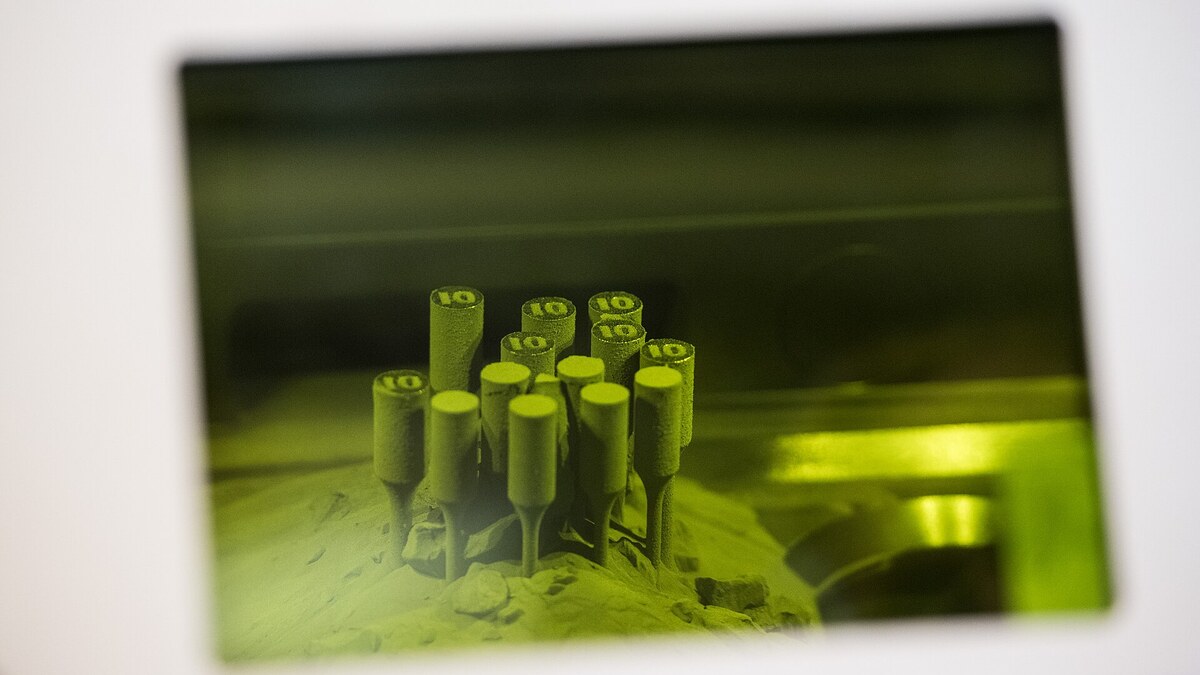
VulcanForms, the Massachusetts metal additive manufacturing company that spun out of MIT in 2015, has raised $500 million to build three new factories in the United States, according to TCT Magazine, which reported the financing on November 13. The round was led by J.P. Morgan, through its Security and Resiliency Initiative, and by funds managed by Apollo (NYSE: APO). The new plants will sit alongside the company's existing manufacturing footprint, including its sites in Devens and Newburyport, Massachusetts, and part of the money is earmarked for integrating more physical AI into its production systems.
A note on sourcing: FilamentFeed was unable to read a primary press release for this announcement. The company's own website blocked automated access, and no release turned up on the PR Newswire listing we checked. The figures and quotes below come from two trade publications, TCT Magazine and VoxelMatters, both of which carried statements attributed to the company and its investors. Treat the details accordingly until VulcanForms publishes its own account.
What the money is for
The headline is simple: three new factories. According to VoxelMatters, they will be added to the company's three existing manufacturing sites. Both outlets name Devens and Newburyport as existing facilities the new plants are meant to complement. Neither report, as we read them, specifies where the new factories will be built, when they will open, or how the $500 million will be split between construction, equipment and operations.
What the reports do describe is the production model the factories are meant to scale. VulcanForms does not pitch itself as a printer vendor. Its platform, as VoxelMatters summarizes it, combines metal additive manufacturing with precision machining, automation, physical AI and product validation under one roof. In other words, the company sells finished metal parts rather than machines, and the printing step is only one stage in a longer chain that also includes precision machining and validation.
That distinction matters for reading a number this large. A $500 million raise for a company that sells machines would point toward product development and sales channels. A $500 million raise for a company that uses its own technology in its own factories and sells finished parts, much as a contract manufacturer would, points toward floor space, capital equipment and people, which is what the three-factory plan describes.
Who is writing the checks
The investor lineup is as telling as the dollar figure. J.P. Morgan's participation comes through its Security and Resiliency Initiative, according to TCT Magazine, and the outlet quotes Jay Horine of the JPMorganChase Security and Resiliency Initiative alongside John Zito, co-president of Apollo Asset Management. VoxelMatters describes the initiative as the bank's program to support industries and supply chains it considers essential to US economic security. That framing points to an investment thesis in which domestic manufacturing capacity is treated as a matter of supply chain security, not just a growth bet.
VulcanForms CEO Kevin Kassekert framed the deal in the same terms. "America cannot lead the next industrial revolution if we can't manufacture what we invent," he said, in remarks carried by both TCT Magazine and VoxelMatters.
Apollo's Zito described the deal as a "bespoke financing solution to fund capacity expansion alongside J.P. Morgan." Pairing Apollo-managed funds with a bank-run resiliency program suggests the backers expect long-duration industrial returns rather than a quick software-style exit. That is consistent with how the company describes its pipeline. According to TCT Magazine, VulcanForms refers to some of its projects as "multibillion-dollar commercial programs." The reports do not identify those programs or customers, and that phrase should be read as the company's own framing rather than a disclosed contract value.
VoxelMatters adds that, with this round, VulcanForms has raised more than $1 billion in total from lenders and investors, a total it says puts the company among the best-funded in metal additive manufacturing.
Where the parts go
VoxelMatters lists the markets VulcanForms serves as medical devices, consumer products, aerospace, defense, space and industrial applications. That spread is worth noting. Metal AM's industrial story has long been dominated by aerospace and defense, where low volumes, high part values and tolerance for long qualification cycles make the economics work. Medical devices and consumer products are different animals: they tend to demand higher volumes, tighter cost targets and repeatable quality across very large part counts.
A manufacturer that can serve both ends of that spectrum from the same factory network has a real argument for scale. A manufacturer that cannot will find that three new buildings mostly mean three new overhead lines. The reports do not break out revenue or volume by sector, so there is no way yet to tell which mix VulcanForms is actually running.
The physical AI angle
Both reports note that integrating more physical AI is part of the plan. VoxelMatters says the new capital will go toward integrating more physical AI into the platform so that complex components can be produced with more automation and higher efficiency. "Physical AI" has become a catch-all for machine learning applied to robots, sensors and process control rather than text or images. In a metal AM context, the plausible applications are in-process monitoring, automated handling between printing and machining, and inspection. The reports, however, do not detail which systems VulcanForms intends to deploy or what problems it expects them to solve, so any specifics beyond the company's general intent would be speculation.
What can be said is that automation is load-bearing for the business model. Multi-step metal part production, with printing, post-processing, machining and validation in sequence, is labor-intensive. Building more of it in the US, where labor costs are high, only pencils out if more of those steps run with less manual intervention.
What It Means for Makers
Nobody reading this is going to place a production order with VulcanForms from a garage shop. But the deal is a useful signal about where metal additive manufacturing is heading and who is paying for it.
First, the money is going into factories, not printers. The industrial end of metal AM increasingly looks like contract manufacturing with additive as one tool among several, and the value is in the integrated chain of printing, machining and validation. For makers who have watched metal printing hardware trickle toward smaller shops, that is a reminder that the hard, expensive part of metal AM is everything that happens after the build plate comes out.
Second, the backers are framing domestic manufacturing as a resiliency issue. When a major bank routes an investment through a program named for security and resiliency, it suggests that capital for US-based production capacity is available to companies that can make that case. That matters for the broader ecosystem of service bureaus, machine shops and suppliers that tend to grow up around large anchor manufacturers.
Third, keep expectations calibrated. Until VulcanForms publishes the locations, timelines and customers behind those "multibillion-dollar" programs, this is a funding announcement, not a production milestone. The real test is whether three more factories turn into steady part output across medical, consumer and aerospace work, or remain capacity waiting for demand.
