
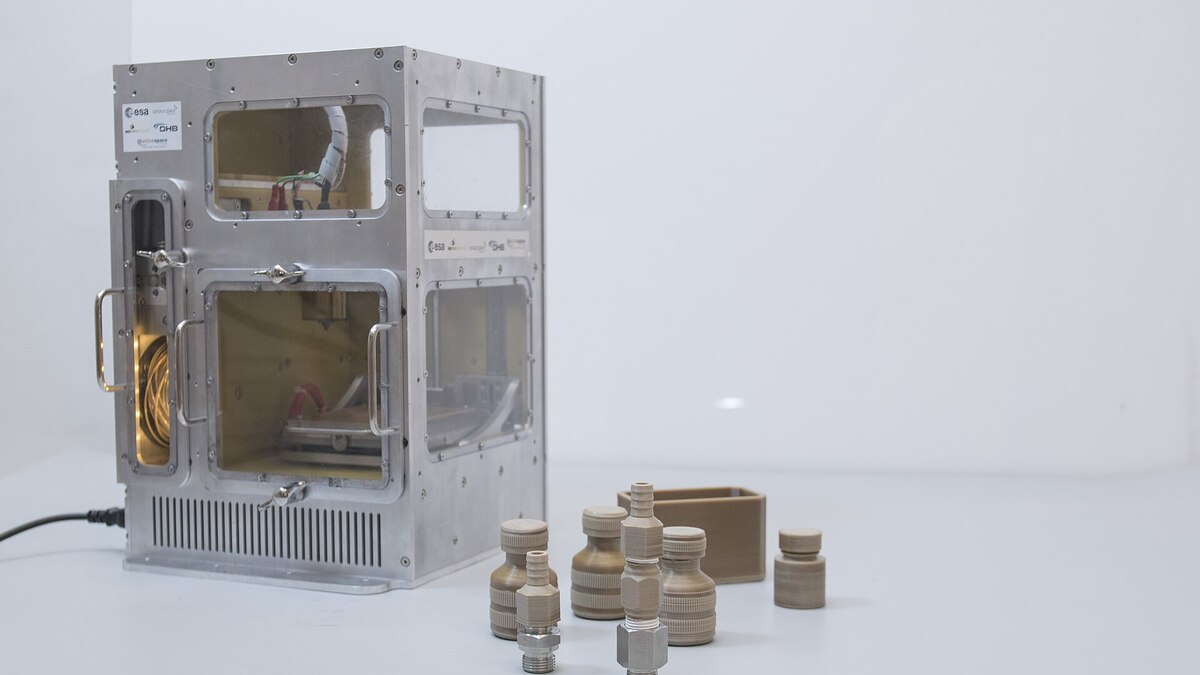
Omni3D, the Poznan-based maker of large-format industrial FFF printers, has acquired Apium 3D Technologies GmbH, the Karlsruhe company known for its high-temperature extrusion hardware and its work processing superpolymers such as PEEK. The deal was announced in an Omni3D press release posted on November 17, 2026. The release itself carries a Poznan/Karlsruhe dateline of October 28, which suggests the agreement was in place a few weeks before it was made public at Formnext. The sources give no financial terms. Omni3D will bring Apium's adaptive heating technology and high-temperature print-head engineering into its large-format portfolio, led by the OmniPro HT, and product development will focus on Apium's industrial P400 printer.
The deal is small, but it says a lot about where the high-temperature end of FFF is going. Apium works on one of the hardest problems in extrusion printing, getting high-performance polymers to print reliably enough for functional parts. Omni3D has the large-format machines, the industrial customers, and procurement credentials that defense buyers pay attention to.
What Changes Hands
According to Omni3D, the Apium technology going into its lineup has two main parts: an adaptive heating approach and the engineering behind Apium's high-temperature print heads. Both are aimed at keeping thermal conditions under control while the machine extrudes materials that don't tolerate sloppy temperature management. The OmniPro HT leads the portfolio they are joining.
The release says product development will focus on the industrial Apium P400 and on "next-generation high-temperature architectures." The company gave no timeline, specifications or model names for those architectures. For now, that is a statement of direction rather than a product announcement.
Omni3D also says technical support, service continuity and material validation will continue for customers across Europe, North America and Asia-Pacific. For buyers outside Europe, that matters more than it might seem. Industrial printers stay in service for years, and the service and parts network often decides whether a specialized machine keeps earning its floor space.
The release quotes Pawel Robak, Omni3D's CEO, and Niklas Descher, Apium's CEO. Both present the deal as combining complementary strengths. Their comments don't change the picture much: Omni3D wants high-temperature extrusion depth, and Apium gets a larger industrial platform to sell through.
The Materials Case
The material list Omni3D published shows which parts it hopes these machines will make:
- PEEK and carbon-fiber-filled PEEK (PEEK-CF): gears, pumps and structural brackets, the kind of mechanical parts where metal is often the default.
- PEKK: defense, space and vacuum applications.
- PEI 9085: aerospace and general industrial uses.
These are the polymers that separate industrial FFF from everything else. If you have printed nylon or polycarbonate on a well-enclosed machine, you know thermal management is a constant fight. This class of materials makes that fight harder. Apium's heating and print-head engineering is the asset Omni3D chose to name.
According to VoxelMatters' coverage, Omni3D said the acquisition supports its development of open-material FFF platforms for industrial use. An open-material approach would let engineering teams source superpolymers from whichever supplier meets their certification and cost needs, though it would also leave more of the process-qualification work to them.
Who It's Aimed At
Omni3D lists its target demand as industrial manufacturers, defense contractors, automotive OEMs, and battery and hydrogen applications. The defense entry is backed by credentials. Omni3D Sp. z o.o. is ISO 9001:2015 certified and has NATO supplier status, with NCAGE code 9BT1H and AQAP 2110 quality assurance. Those codes are paperwork, but for a defense procurement office they decide whether a vendor can be considered at all. Combining a superpolymer specialist with a vendor that already holds them is a sensible way to reach buyers who want PEKK parts for vacuum or space hardware and need a qualified supplier to provide the machine.
The battery and hydrogen entries are more speculative. Omni3D didn't describe specific parts for those sectors. The likely reasoning is that chemically resistant, high-temperature polymers suit fixtures and components in those environments, but the release doesn't make that case in detail.
The Formnext Showing
VoxelMatters reports that the two companies are exhibiting together at Formnext 2026, with live demonstrations of the OmniPro HT and Apium P400 printing PEEK, PEKK-A and PEI 9085. Showing both machines together under one flag fits Omni3D's stated plan to keep the P400 in the lineup. Visitors can see both machines run before any follow-on hardware exists.
No pricing was disclosed for the acquisition or for any future hardware from the combined company.
What It Means for Makers
Most FilamentFeed readers won't buy an OmniPro HT. This deal still matters to them for a few reasons.
First, it is another sign that high-temperature FFF is consolidating around companies with industrial distribution and certifications, not purely technical specialists. Apium's know-how will now be sold through a company that can put "NATO supplier" on a quote. That is good for Apium's technology reaching real production use, but it could make an independent, engineering-led voice in superpolymer printing less visible.
Second, techniques developed for printing PEEK tend to spread downmarket over time. Adaptive heating and better print-head thermal design are aimed at defense parts today, but the ideas behind them, controlling heat where the polymer is actually being deposited, are the same ones that make engineering filaments more manageable on smaller machines.
Third, the focus on developing the P400 is reassuring for existing Apium owners. Acquisitions sometimes end with the acquired product line sunset. Omni3D's stated focus on the P400 and its support commitment for customers in Europe, North America and Asia-Pacific suggest current Apium users shouldn't be stranded.
Bottom Line
Omni3D bought the part of high-temperature FFF that is hardest to build from scratch, the thermal engineering that makes PEEK and PEKK printable, and connected it to a large-format industrial platform with defense credentials. The important open questions are what the promised next-generation architectures look like, when they ship, and whether the open-material approach survives the move toward regulated buyers. Until Omni3D announces hardware, the clearest sign of the deal's value is what the two companies are printing at Formnext this week.
