
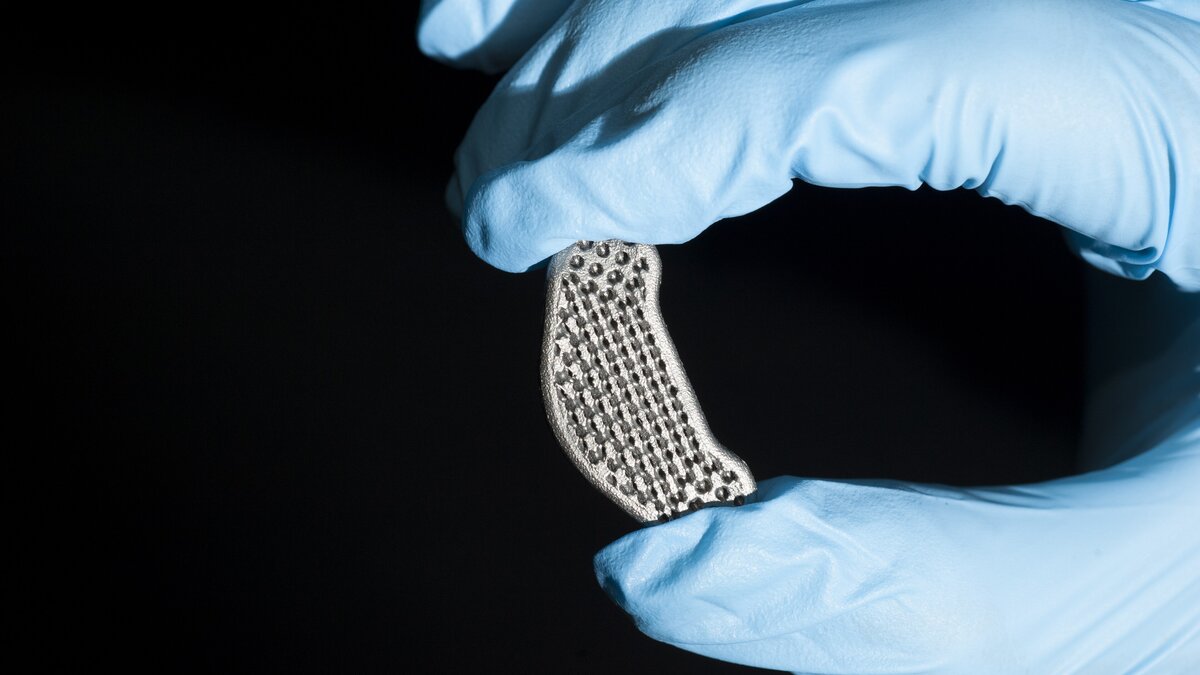
Most metal 3D printer sales are counted one or two machines at a time. On November 17, at Formnext 2026, VulcanForms and EOS announced an order for 200 EOS M4 ONYX metal laser powder bed fusion systems plus ancillary equipment. The companies say it is the largest single order in EOS history. The machines will add capacity at VulcanForms' facilities in Devens, Massachusetts, which already run 35 M4 ONYX systems. The timing matters too. According to VoxelMatters, VulcanForms disclosed $500 million in financing for three new factories a day earlier.
Put the two announcements together and the picture is clear. This is not a service bureau adding a few machines to cover a backlog. A manufacturer is betting that metal additive manufacturing can run as a production process at fleet scale, on American soil, and it is buying the hardware to prove it.
The Deal in Numbers
The joint release, datelined Krailling, Germany, where EOS has its headquarters, gives few financial details. Neither company disclosed a price. The release says the systems will expand capacity at the Devens facilities. What it does give is the scale. Add 200 new machines to the 35 already installed and VulcanForms would have 235 M4 ONYX systems. EOS CTO Joachim Zettler used that figure in independent coverage by VoxelMatters.
Zettler's point was less about the purchase than about what comes after it. In VoxelMatters' account, he said that running 235 M4 ONYX systems depends on repeatable processes, consistent part quality across the whole fleet, and integration. That is the hard part of industrial AM. One well-tuned printer making good parts is a solved problem. Getting two hundred-plus machines to make the same part to the same specification, week after week, without engineers babysitting each build, is not.
The release includes comments from Kevin Kassekert, VulcanForms' CEO, and Glynn Fletcher, President of EOS North America. Kassekert framed the order around reshoring and company growth. Fletcher spoke for the supplier side of the partnership. EOS will provide more than machines: the release says it also supplies materials, software and application support. At this volume that matters as much as the printers. A fleet's output depends on powder consistency, build preparation and process parameters at least as much as on the lasers.
What the M4 ONYX Actually Is
The M4 ONYX launched in late 2025, so VulcanForms is committing heavily to a platform that is only about a year old. According to the release, the system has:
- Six 400 W lasers working across the powder bed
- A 450 x 450 x 400 mm build volume
- Intelligent process control for monitoring and managing builds
- RFS Pro filtration for handling the process byproducts generated during laser melting
VoxelMatters says the machine was built on the successes of EOS's M400-4. VoxelMatters reports that EOS claims three improvements over the older system: 50% lower total cost of ownership, 50% higher productivity and 30% higher utilization rates. These are vendor figures, and real results depend on part geometry, material and how well a shop runs its operation. But the direction of the claims shows what the machine was built for. Utilization and total cost of ownership are numbers a production planner cares about. A prototyping lab cares about different ones. If those gains hold, higher utilization means more output from each machine without adding floor space.
The build envelope matters too. At 450 x 450 x 400 mm, the M4 ONYX is not a giant-format machine. It is a mid-to-large platform where many parts can be nested in one build. That fits VulcanForms' stated markets. The company serves consumer goods, medical devices, industrial equipment and mission systems, which are mostly sectors with many parts per build, not single oversized components.
Reshoring, Fleets and the Shape of Demand
For years, the main argument against metal AM in volume production has been economics. The machines are expensive, builds are slow next to casting or machining, and post-processing adds cost and time. The reshoring case answers that argument with a different set of numbers. Domestic production means shorter supply chains and fewer tooling commitments, and it lets a design change without waiting for new molds or dies from overseas. Here, a $500 million financing round for three new factories and a 200-machine purchase arrive within 24 hours, and both are aimed at US manufacturing. That says some investors and customers now find those numbers convincing.
It also shows what kind of AM company can grow at this pace. VulcanForms' model is an operator's model: it is a manufacturer that happens to use printers. Its growth depends on running a large, uniform fleet as one production system. That is why Zettler's comments about consistency across machines sit at the center of the announcement. A large block of identical systems from a single vendor, with that vendor also providing materials and software, removes many of the variables that make multi-machine AM quality control painful.
For EOS, the order is a validation of the M4 ONYX and of its pitch to production customers. The photo with VoxelMatters' coverage shows EOS CEO Marie Niehaus-Langer standing with Kassekert and Zettler. The announcement was made at Formnext 2026.
What It Means for Makers
Nobody reading FilamentFeed is putting a six-laser powder bed system in a garage. But orders at this scale shape the rest of the field in ways hobbyists and small shops eventually notice.
First, metal AM is becoming an ordinary way to make parts. When a manufacturer runs hundreds of machines as a production line, printed metal parts end up in consumer products, medical devices and industrial gear. Designers who learn to design for additive, with lattices, consolidated assemblies and topology-optimized brackets, have more places to apply those skills.
Second, US-based capacity at this scale could make domestic contract metal printing easier to get for small companies and hardware startups. The release and coverage say nothing about customer pricing or minimum order sizes, so that is a hope, not a promise.
Third, the hard problems Zettler named are the same ones every maker with a print farm faces: repeatable processes, consistent quality from machine to machine, and integration. Anyone who has tried to get six FDM printers to make identical parts knows that keeping a fleet consistent is a discipline of its own. VulcanForms is about to run that experiment with 235 laser powder bed fusion machines.
Bottom Line
The 200-machine order is a record for EOS, and VulcanForms' $500 million factory financing sits right behind it. Together they are a strong signal that metal additive manufacturing is being built out as US industrial capacity, not bought in small lots. Whether the M4 ONYX delivers EOS's claimed gains at fleet scale is something only years of production will show. The bet itself is now on record.
