
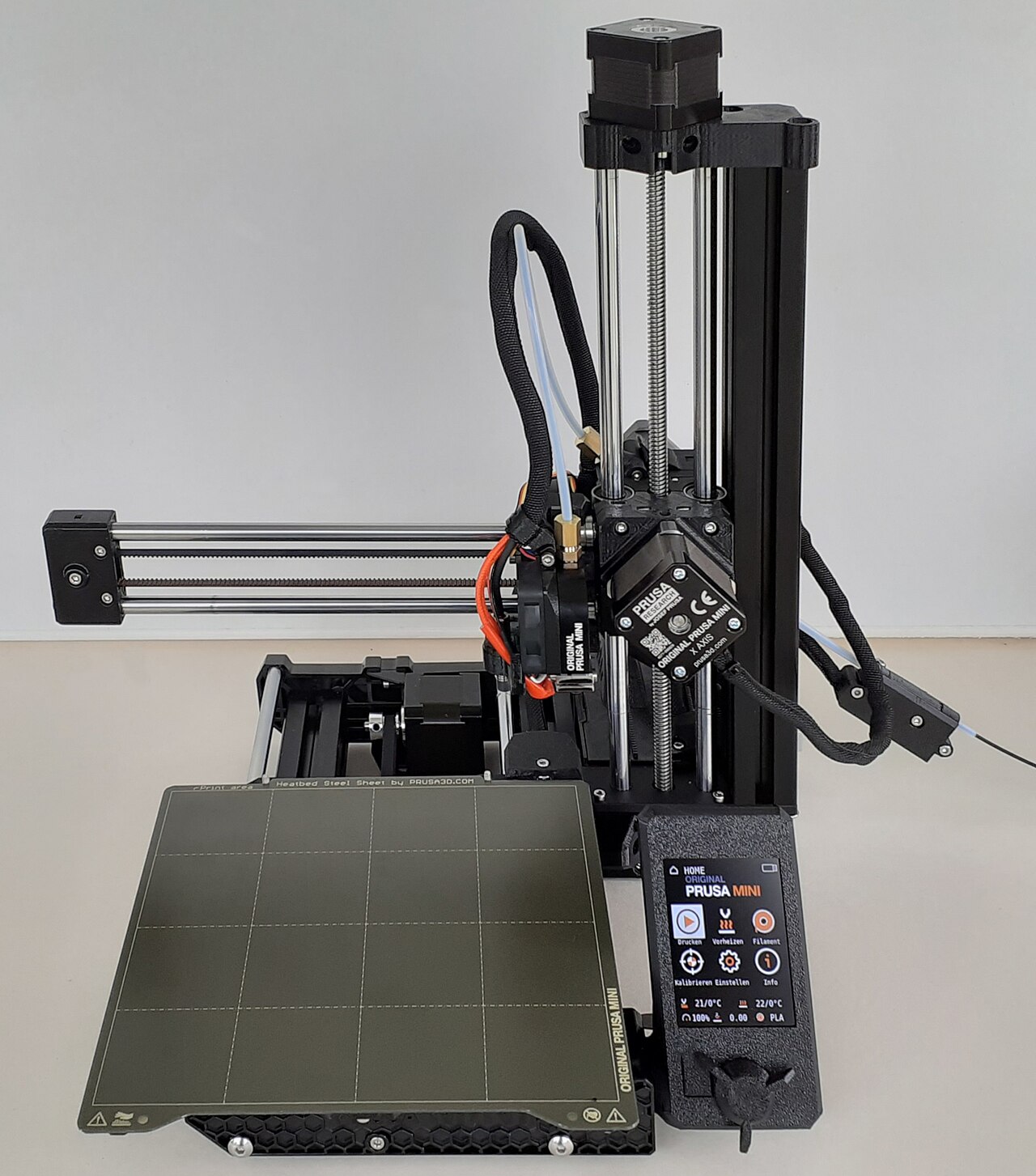
The most telling thing about the Prusa CORE One L+ is how little of the machine changed. When Prusa Research announced its summer 2026 product refresh on August 13, the larger CORE One variant got two things: an integrated nozzle wiper and new GT1.5 belts. Tom's Hardware has now put the result through its paces, and its verdict, published September 18, is that the update is "small, but important." The review carries an Editor's Choice badge.
This is a revision, not a launch. On the evidence available, it changes the buying calculus mostly by fixing chores rather than adding headline features.
What Actually Changed
Prusa's announcement covered three machines: the XL+, the CORE One+ (Gen 2), and the CORE One L+. The nozzle wiper is common to all three. Prusa describes it as "one of the most frequent requests" from users, and it deliberately chose a standard, widely available wiper, because the wiper is a consumable that will eventually wear out and replacements should be easy to find.
The reviewer explains why the wiper matters. In the review's words, the "plus" upgrade "removes a super annoying flaw that has spoiled an otherwise perfect machine: nozzle wiping failures." With the added silicone brush, the reviewer calls the L+ "one of the few printers I trust to set it and forget it."
The CORE One L+ also gets the new GT1.5 belts alongside the wiper. Tom's Hardware credits the pairing with adding "quality and reliability," and its review headline calls the machine "more precise." Prusa states plainly that it is keeping the same price for all machines in the refresh, so the improvements arrive without a nominal increase.
The core platform carries over. The build volume remains 300 x 300 x 330 mm, and the review's spec table lists the machine at 21.9 kg, or about 48 lbs. The hotend limit is unchanged at 290 C. That is the constraint the reviewer most wants changed: "I'd like to see the CORE One L+ do at least 300°C from the get go."
The Upgrade Kit Angle
The review opens with a question: "How about a $25 upgrade kit?" The update, according to Tom's Hardware, "can be purchased as a mod and added to a machine you already own." Prusa's August post said upgrade kits for the CORE One L+ and XL+ were planned for around the end of August and beginning of September, while assembled CORE One+ (Gen 2) and CORE One L+ units would begin shipping immediately.
For existing owners, this is the real news. By the review's account, a $25 upgrade is a far easier decision than replacing a printer. The $25 figure comes from the review alone, so confirm kit availability and pricing with Prusa before ordering.
Testing Context: Abrasives and Heat
The reviewer's credibility on this machine rests partly on mileage. Tom's Hardware reports running the original CORE One L for more than 1,000 hours, quietly printing abrasives such as carbon fiber and glass fiber, with no problems. The printer ships with both high-flow and hardened nozzles.
It also frames the review's chief caveat. The L+ tops out at 290 C. The reviewer normally runs PA6-CF20, a carbon-fiber-filled nylon, at 300 C, which is hotter than this printer can go. An optional high-temperature hotend rated to 400 C is listed at $199, but it was out of stock at the time of the review. Prusa's August post said the HT Hotend, designed for high-temperature engineering materials, would be available for the CORE One L/+ in September. For comparison, the review cites the Bambu H2S at 350 C and the Qidi XPlus 5 at 370 C. If engineering nylons are central to your work, the ceiling is a real limitation until that hotend is available.
Pros, Cons, and the Workflow
The review's strengths are practical: CoreXY speed, both nozzle types included, a fully assembled and calibrated machine, offline operation, very quiet running, and an upgrade path to the INDX system. The cons: it is expensive, the nozzle tops out at 290 C, and the Buddy camera is awkward for timelapses.
On workflow, the machine is calibrated at the factory, and the reviewer reports getting a first print going about five minutes after unboxing. The review says Prusa is offering the L+ only as a fully built machine, with no kits this time.
The Price Problem
Here the review is inconsistent, and we will not paper over it. The body text and the specification table put the L+ at $1,999, which the review describes as the same price as before the upgrade. But the page header shows "$1,799 at Prusa," and an embedded product caption, which names the CORE One L rather than the L+, shows the same $1,799 figure. We could not confirm which is current.
Treat $1,999 as the review's stated price, and check Prusa's store before drawing conclusions about value.
The INDX Wildcard
Late in the review, Tom's Hardware adds news that arrived as the piece was being finished. In its words: "As we were wrapping up this review, Prusa Research announced the CORE One L+ is now compatible with the Prusa INDX conversion kit, which is $799 for four tools, or $1,079 for eight."
The review offers no hands-on testing of INDX on the L+. Its reviewer says the INDX is being tested on a standard-size CORE One+ (Gen 2) instead, so read this as an announcement of compatibility, not a verified result. Still, it changes the long-term picture. The upgrade path now has prices attached.
What It Means for Makers
If you own an original CORE One L, the calculation is simple: the wiper and belt update is cheap by the review's account, addresses a widely requested feature, and does not require a new machine. Prusa's August plan put L+ upgrades at around the end of August and beginning of September. That window has passed, so check Prusa's store for current kit availability.
If you are shopping, the L+ is the version to buy, and the price question is the one to resolve first. Confirm whether the current price is $1,799 or $1,999 on Prusa's store. Then decide whether the 290 C ceiling fits your materials. For carbon fiber and glass fiber work, the reviewer's 1,000-plus hours on the earlier model and the included hardened nozzle are reassuring. For hot-running nylons, the constraint is genuine.
