
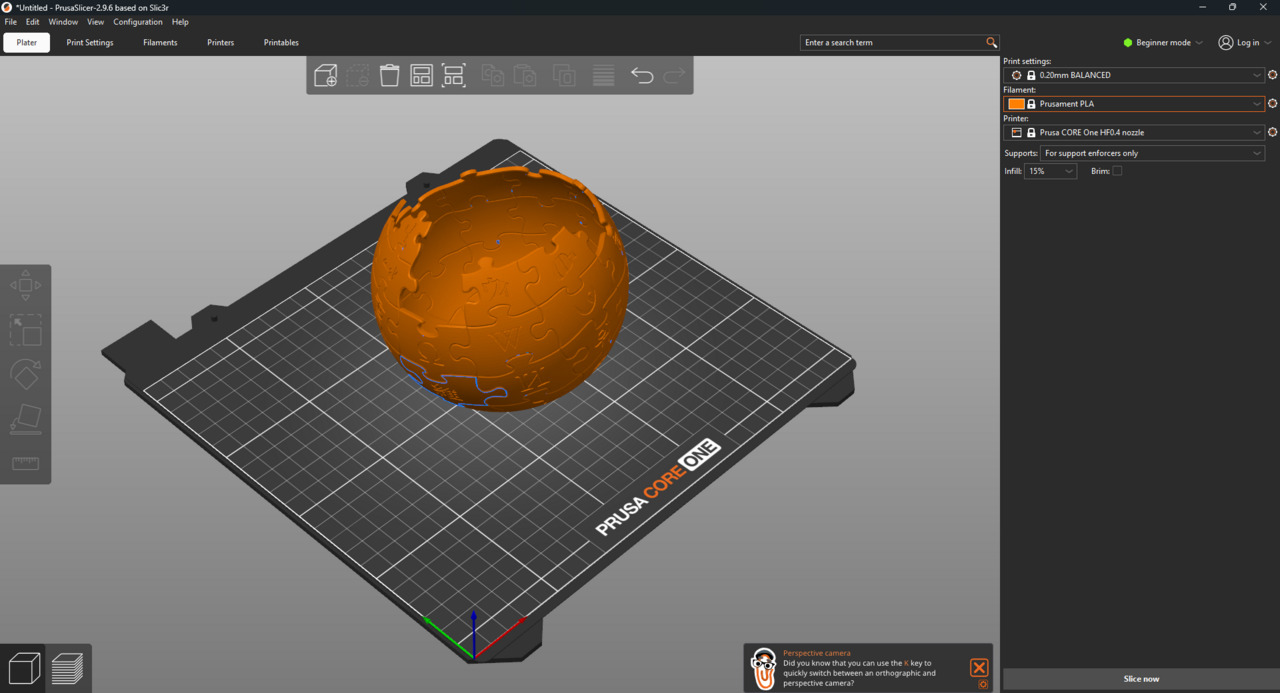
Prusa Research has published PrusaSlicer 3.0.0-alpha12 on GitHub, the second public build of a from-scratch rewrite of the company's slicing engine since it opened the project to outside testers on Sept. 1, 2026. The release notes read less like a features showcase and more like a punch list: alpha12's headline work is fixing the crashes and bugs testers reported against alpha11, alongside a handful of workflow additions that suggest the new engine is settling into shape rather than still discovering its architecture.
That framing matters. PrusaSlicer 3.0 isn't an incremental update to the 2.x line most makers run today — it's a new codebase built to replace it, and Prusa is deliberately shipping it in public while it's still unstable. Alpha12 is the project owning up to that instability and working through it in the open.
What Changed Since Alpha11
According to the GitHub release notes, the bulk of alpha12 is crash and bug fixes carried over from problems reported against alpha11 — the kind of stability work that rarely gets a headline but determines whether a pre-release build is usable for real modeling sessions rather than just kicking the tires. Prusa doesn't itemize every fixed crash in the notes, but the pattern is consistent with a team working down a bug tracker built from the first wave of community feedback.
On top of that triage, alpha12 adds several concrete features:
Per-tool settings. Options that previously applied globally — only_one_perimeter_first_layer, top_one_perimeter_type, and first_layer_height — can now be set per tool, meaning per extruder or nozzle on a multi-tool setup. This is a meaningful capability for owners of machines like the Prusa XL, where different tools may carry different nozzle diameters or serve different roles in a print, and a single global first-layer height or perimeter rule doesn't fit every tool on the carriage.
Camera toggle. Users can now switch between orthographic and perspective camera projections in the 3D viewport — a small addition, but one that CAD-adjacent users have wanted for precise visual alignment, where perspective distortion can make parallel edges look non-parallel.
Restored printer connectivity. The "Test" button for verifying a connection to a physical printer, along with a file browser for CA certificates, is back after apparently being dropped or broken in an earlier alpha build. For anyone slicing and sending G-code directly to a networked printer, this is a basic sanity check that needed to return before 3.0 could be considered usable end-to-end.
G-code placeholder additions. The custom G-code scripting system gains a ceil function and new variables — sheet_type, bed_name, and toolchange_count — for use in start/end/tool-change scripts. These are the kind of low-level hooks that matter most to users who write custom G-code macros for multi-material setups or unusual bed configurations, letting scripts branch on which sheet or bed is active or count how many tool changes a print will require.
Safer 3MF re-import. Re-importing a 3MF project file now brings in only the geometry, rather than also overwriting other project state. This closes off a class of surprise where reloading a model would clobber settings a user had already adjusted in the current session.
Consistent with earlier alpha builds, alpha12 runs out of a separate PrusaSlicer3-dev configuration folder, keeping its settings, profiles, and preferences isolated from a stable 2.x installation. That means testers can install the alpha directly alongside their production copy of PrusaSlicer without either one touching the other's config.
The Bigger Rebuild This Alpha Sits Inside
Alpha12's fixes make more sense in light of what the 3.0 preview introduced three weeks earlier. As 3D Printing Industry reported when the preview launched on Sept. 1, 2026 — 15 years to the day after the first commit to Slic3r, the project PrusaSlicer itself forked from — the 3.0 line reworks the multi-bed project system to remove the nine-bed limit, moves the profile format from .ini to .yaml, and rebuilds the UI around a View Cube and a new light theme. It also introduces per-tool nozzle and profile assignment for multi-tool machines like the XL, and lays groundwork for a sandboxed Lua plugin system with a community marketplace planned down the line.
Seen against that backdrop, alpha12's per-tool settings for perimeter and first-layer options read as an extension of the per-tool nozzle/profile work the preview build introduced — filling in specific settings that hadn't yet been made tool-aware. The restored printer "Test" button and the G-code placeholder additions are more housekeeping: features that existed in 2.x and needed to be rebuilt, or extended, on the new architecture rather than reintroduced from scratch.
What It Means for Makers
Nothing here changes what's happening on the stable 2.x branch that most users are printing with today — that's the point of the isolated PrusaSlicer3-dev config folder. Anyone curious can install alpha12 next to their existing PrusaSlicer without risk to their working profiles, but this remains pre-release software aimed at testers, not a production upgrade.
For owners of multi-tool machines, the expanding per-tool settings list is the feature to watch most closely: it's the first concrete sign that the "no more single global profile" promise of the 3.0 rebuild is being delivered setting by setting rather than all at once. For everyone else, alpha12 is best read as a stability checkpoint — evidence that Prusa is working through the crash reports from its first public alpha rather than piling new architecture on top of unstable ground. The .yaml profile migration, the Lua plugin marketplace, and the full multi-bed rework described in the preview are still ahead; alpha12 is Prusa making sure the foundation holds before it keeps building.
