
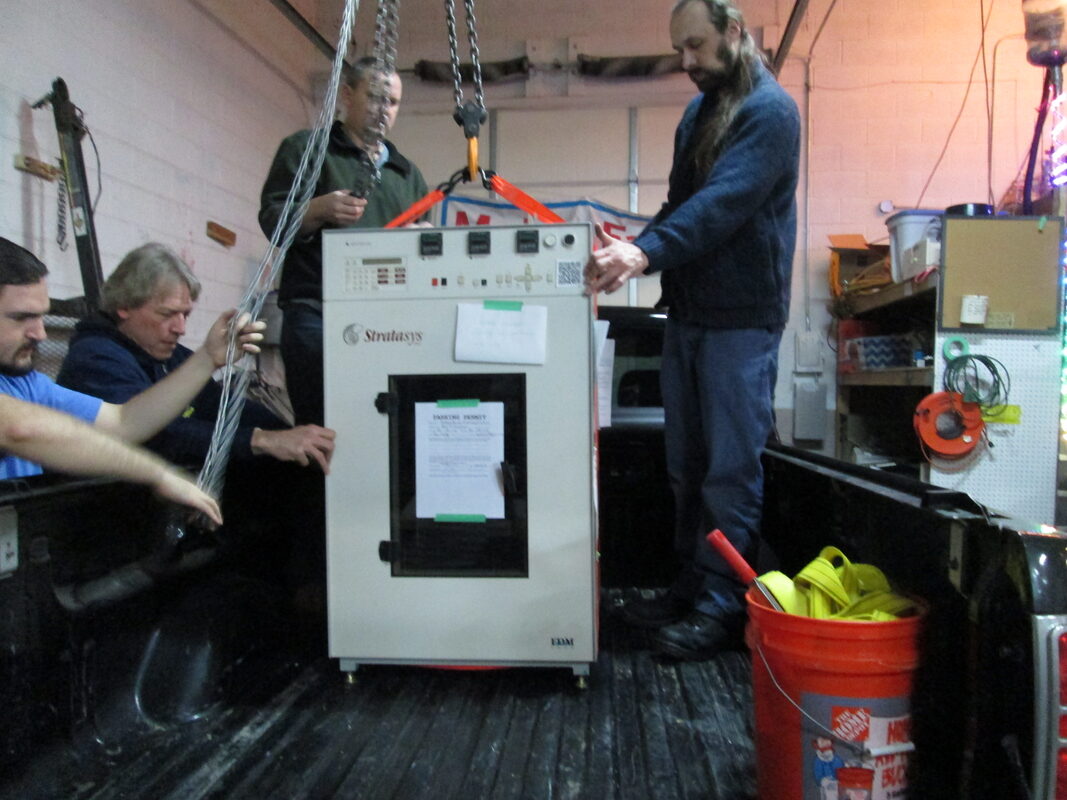
Contract manufacturer Quickparts is putting nearly $6 million behind a bet that has less to do with resin chemistry than with geopolitics: that the safest place to keep production capacity for space and defense programs is spread across four countries at once, not concentrated in one. According to a report from Industry EMEA, the company is installing 12 Stratasys NEO large-format stereolithography systems across facilities in the United States, France, Italy, and the United Kingdom, with deployment running August through October 2026.
The rollout is the second major capacity expansion in 18 months for Quickparts' Seattle Aerospace & Defense Center of Excellence, following a Seattle-focused buildout in November 2025. Combined, the two rounds push the center's total commitment toward the $6 million mark cited in both reports. Stratasys, for its part, is treating the order as validation of a product line rather than just a sale — but the more interesting story is what Quickparts says it's actually buying.
A Balance-Sheet Argument for Redundancy
Quickparts CEO Avi Reichental framed the investment in unusually blunt financial terms for a press announcement. "Reshoring and industrial resilience are usually discussed as policy," he said, according to Industry EMEA's writeup. "We're treating them as a balance-sheet decision." That's a deliberate reframing: instead of positioning multi-country manufacturing as a compliance box to check for export-control regimes, Reichental is presenting it as a hedge any CFO should recognize — diversify a critical input the same way you'd diversify a supply chain for raw materials.
Reichental made the same point more pointedly in a second quote from the announcement: "Anyone can buy the same machine we just bought. What they can't buy quickly is a qualified capability delivering to the same standard across four countries, at a scale that took us years to build. That's the difference between renting machine time and owning a position in this market that's genuinely hard to take away, and it's the business we've built." It's a pointed distinction: hardware is a checkbook problem, but a qualified process a customer's engineers will sign off on takes years to build no matter where it happens.
Stratasys CEO Dr. Yoav Zeif's quote leans more toward the vendor's usual talking points, calling out "the growing role large-format additive manufacturing now plays in critical applications across aerospace, defense, and space." Read together, the two statements sketch the pitch: Stratasys gets to point to a marquee customer buying a dozen machines in one swing; Quickparts gets to tell its own customers that its Seattle center's qualifications now travel across an ocean.
VoxelMatters' coverage of the same announcement fills in the strategic logic more explicitly. The publication frames the investment as part of a broader push to let Quickparts customers requalify parts across multiple sites rather than depend on a single supplier location — a direct hedge against tariffs and the kind of regional disruption that has become a live risk for national-security-adjacent space and defense programs. In an environment where export-control rules and tariff schedules have both been in flux, a part qualified only in one country is a part with a single point of failure. A part qualified identically in four countries is a part a program manager can route around a problem.
What Twelve NEO Systems Actually Buy You
The mechanics matter here as much as the politics. Both reports describe the deployment as boosting large-format throughput by 40 percent while retiring older-generation machines — this isn't simply bolting more capacity onto an existing fleet, it's a fleet refresh that happens to be geographically distributed. The Stratasys NEO line targets large-format stereolithography, the resin-based process favored for big, dimensionally precise parts like tooling, patterns, and end-use components that need a smooth surface finish and tight tolerances — exactly the profile of parts that show up in aerospace jigs, fixtures, and flight hardware prototypes.
Spreading 12 machines across the US, France, Italy, and UK also means Quickparts is standardizing on one machine platform across every relevant site. That's the detail that makes "requalification across sites" a plausible claim rather than a marketing line — qualifying a part to a process typically means qualifying it to a specific machine, material, and parameter set. If every site is running the same NEO hardware, the qualification work done in Seattle has a real shot at transferring to Toulouse, Turin, or Coventry without starting from scratch. Do it on four different machine generations, and you're really running four separate qualification programs.
There's also a supplier-diversification story buried in whose machines these are. According to VoxelMatters' reporting, Quickparts spent years inside 3D Systems before being divested, and much of its existing installed base came out of that period. Buying a 12-machine fleet from Stratasys — 3D Systems' closest competitor in large-format stereolithography — means a meaningful share of Quickparts' highest-value production capacity now sits on a rival's equipment rather than its former parent's: a second kind of redundancy layered on top of the geographic one.
What It Means for Makers
Nothing here changes what's on a hobbyist's print bed, but it says something about where the additive manufacturing money is actually flowing in 2026. It isn't consumer or prosumer FDM — it's large-format resin systems bought by contract manufacturers serving defense primes and space programs, where a single qualified part can be worth more than an entire desktop printer line's annual revenue. The buyers driving Stratasys' industrial business right now aren't chasing print speed or filament cost; they're buying insurance against a tariff schedule changing or an export license getting harder to secure.
For makers who follow the industry rather than just the machines, the useful signal is the shape of the deal itself: enterprise AM investment is increasingly justified in supply-chain-resilience language rather than pure cost-per-part economics. That's a shift from how additive manufacturing was pitched a decade ago, when the argument was almost entirely about eliminating tooling costs and enabling geometries subtractive processes couldn't touch. Now the pitch includes where the machine physically sits and which government's export rules govern it. If you're tracking Stratasys as a public company or watching for where large-format resin technology trickles down toward more accessible price points, deals like this one are the leading indicator — they tell you which segment of the market is actually growing its capital budget, and it's not the desktop segment.
