
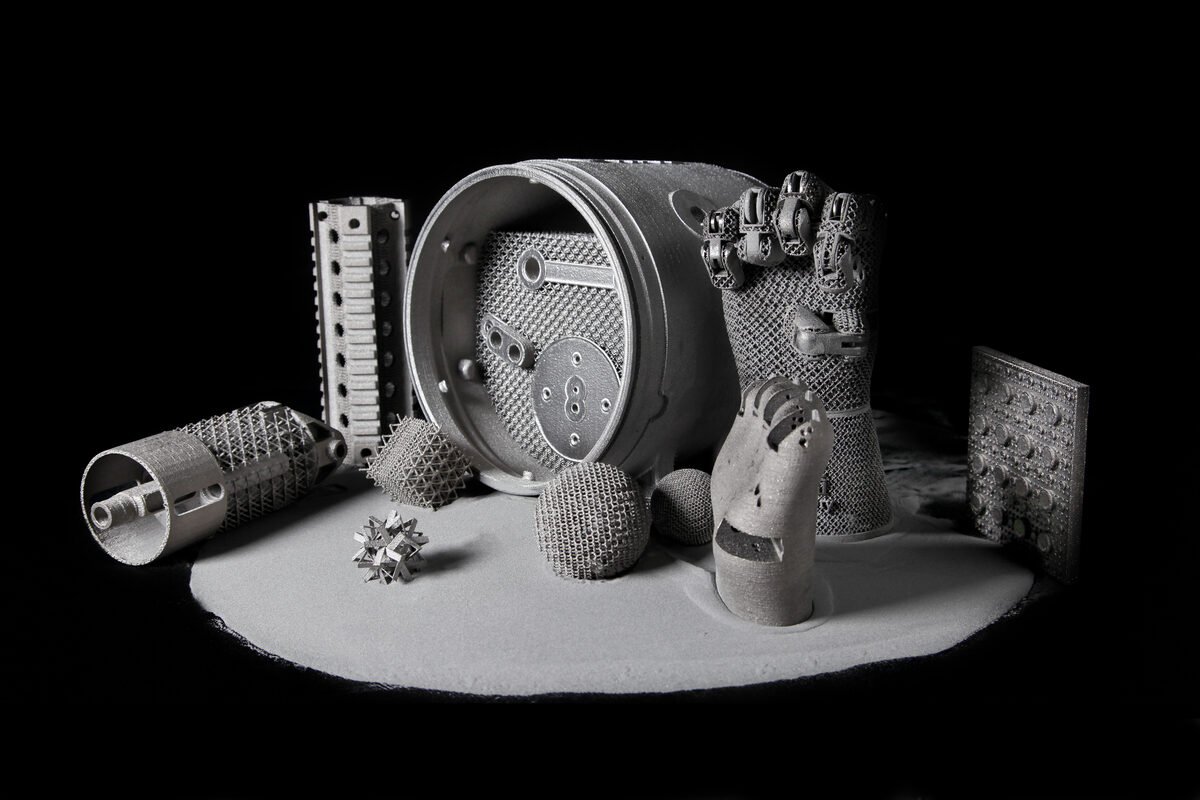
Zenith Tecnica, one of the earliest contract manufacturers to bet on Electron Beam Melting (EBM) for production titanium parts, has changed ownership in a deal that closed June 18, 2026, according to a report published July 9 by 3DPrint.com and independently confirmed by TCT Magazine. The New Zealand-based shop is being taken over by a new group led by Andrew Burgess and Blair Jordan, who bring backgrounds from Boeing, Amazon, and dairy manufacturing to a company whose six EBM systems are, by the new owners' own account, running flat-out.
For a niche corner of metal additive manufacturing, the news carries outsized weight. EBM — the powder-bed fusion process pioneered commercially by Sweden's Arcam in the early 2000s — never attracted the volume of machine sales that laser powder bed fusion did. Arcam's EBM business was folded into GE after a 2016 acquisition and marketed for years under the "Arcam EBM" name; GE Additive retired that legacy branding in 2024 when it relaunched as Colibrium Additive, and Colibrium's EBM systems are what Zenith Tecnica's fleet runs today. EBM requires a vacuum chamber, uses an electron beam instead of a laser to melt metal powder, and runs hot enough that parts come out with lower residual stress and less need for support structures. That combination made it a favorite for titanium and other reactive, high-melting-point alloys used in orthopaedic implants and aerospace structures — exactly the markets Zenith Tecnica built its business around.
A Regional Anchor for Metal AM
Zenith Tecnica's significance has never been about scale in the way a Protolabs or a Sandvik operates at scale. It's about being one of the few production-grade EBM houses anywhere in the Southern Hemisphere, holding both AS9100 (aerospace) and ISO 13485 (medical device) quality certifications — a pairing that lets a single shop float between satellite brackets and orthopaedic hardware without requalifying its quality system each time. A companion report from TCT Magazine independently confirms the ownership change, quoting the new owners' stated ambition to strengthen Zenith's standing as "one of the world's largest and most capable EBM manufacturing partners."
The customer list reported by 3DPrint.com and TCT Magazine reads like a checklist of the applications EBM was designed for. Zenith supplies parts into Air New Zealand's maintenance, repair, and overhaul (MRO) operations for aircraft interiors and product development. It has 3D-printed more than 260 titanium satellite components for Maxar — the satellite manufacturer that, following a 2025 corporate rebrand and its 2026 acquisition by Intuitive Machines, now operates as Lanteris Space Systems, and which TCT identifies as a partnership the new owners plan to build on for further growth. It has built hardware that flew on NASA's Psyche mission, the spacecraft en route to study the metal-rich asteroid of the same name. And it's a supplier into the Space Development Agency's Tranche 1 and Tranche 2 Tracking Layer — the proliferated missile-warning and missile-tracking satellite constellation the Pentagon is building in low Earth orbit, not a communications network, though it is part of the same broader Proliferated Warfighter Space Architecture that includes a separate comms-focused Transport Layer. That's a lot of mission-critical, flight-qualified hardware coming out of a shop with only six printers.
Growth That Outran the Machine Count
The headline number in the acquisition reporting is revenue growth of 490% since 2020, a run that has evidently outpaced the company's physical capacity to produce parts. With all six EBM systems reportedly running at full capacity, the new ownership group says it plans to add two more machines and move Zenith into a larger facility. Outgoing general manager Heather Grace is staying on through August to help with the transition, and incoming managing director Blair Jordan has signaled that orthopaedic implants — an application EBM machine builders have long targeted, thanks to the process's ability to grow porous, bone-integrating lattice structures directly into solid titanium components — will be part of the company's forward focus alongside its aerospace and defense work.
That's notable because it suggests the new owners aren't simply buying Zenith to milk its existing aerospace contracts; they're looking to diversify into medical device production, a market where EBM's ISO 13485 certification and titanium expertise are directly transferable. Acetabular hip cups and spinal cages have been signature EBM products since the technology's earliest medical adopters, and a shop with Zenith's quality infrastructure is well positioned to chase that business without starting from zero.
What It Means for Makers
None of this touches the desktop or prosumer end of the market directly — EBM machines cost well into seven figures, run in vacuum chambers, and are aimed squarely at production shops serving aerospace, defense, and medical customers, not garage workshops. But the Zenith Tecnica story is a useful data point for anyone tracking where metal AM demand is actually landing in 2026, three years after the industry's post-pandemic hype cycle cooled off. A shop that has grown revenue by 490% since 2020 — nearly six times its starting point — with every EBM system it owns running at capacity, is evidence that qualified, flight- and implant-grade metal printing capacity remains genuinely scarce — not oversupplied, as some of the broader industry consolidation narrative of the past two years might suggest.
It's also a reminder that EBM, often treated as the quieter, less-hyped sibling of laser powder bed fusion in trade coverage, still has a defensible niche: titanium parts where low residual stress, reduced support requirements, and high-temperature processing matter more than fine feature resolution. Makers and small shops evaluating metal AM service bureaus for titanium work — whether for a drone bracket, a custom implant prototype, or a satellite fixture — should expect lead times and pricing at established EBM houses like Zenith to reflect that scarcity for the foreseeable future, particularly while its new machines are still being commissioned and its facility move is underway. An ownership change that adds capacity is good news for the pipeline; it will still take time before two new systems actually come online and absorb the backlog implied by "full capacity" on six.
For the wider EBM ecosystem, a well-capitalized new ownership group investing in expansion — rather than a private equity roll-up looking to extract value — is arguably the better outcome. Burgess and Jordan's operational backgrounds at Boeing and Amazon suggest an emphasis on manufacturing throughput and logistics discipline, which is exactly what a capacity-constrained, mission-critical parts supplier needs most right now.
