
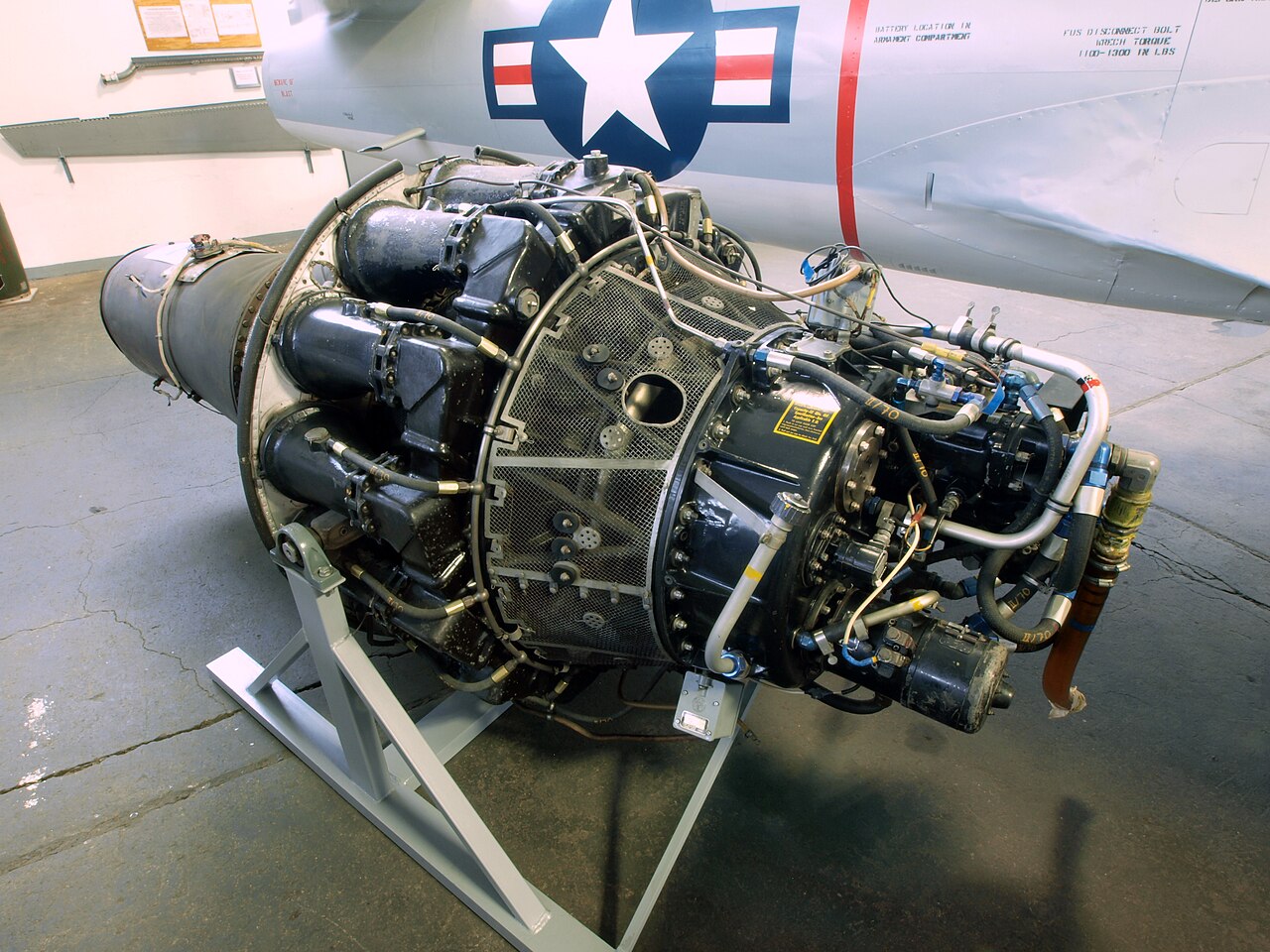
Australian metal additive manufacturing and propulsion company Aurora Labs (ASX: A3D) has secured A$6 million to expand production of its 3D-printed turbojet engines. TCT Magazine reported that the money came from a range of investors and will go toward manufacturing capacity for the company's proprietary additively manufactured turbojet propulsion systems, and toward defence and aerospace opportunities in Australia and abroad. The raise is a share placement priced at A$0.055 per share, and Walkinshaw Group Holdings came in as a strategic investor.
The amount is modest by aerospace standards. What matters more is where the money is going. Aurora Labs is not raising to prove that printed turbojets work. It is raising to make more of them, more consistently, under the paperwork regime that defence customers require. That is the shift from prototype to production line, and it is the hardest stage for any hardware company built on additive manufacturing.
A caveat on sourcing: we could not read Aurora Labs' ASX announcement directly. The deal terms below come from a StockWireX summary of that filing, dated October 28, and from TCT's coverage, which agree on the headline figures. Treat the exact figures as reported second-hand until the primary document is checked.
The Deal Terms
According to the StockWireX summary, Aurora Labs is issuing about 109.1 million new shares at A$0.055 each, which works out to roughly A$6 million. The new shares equal about 20.8 percent of the shares already on issue, so existing holders are being diluted by about a fifth.
The discount is small. The issue price is 3.67 percent below the 10-day volume-weighted average price and 6.77 percent below the last trade of A$0.059 on October 23, 2026.
The money arrives in two tranches:
- Tranche 1: A$4.565 million, settling November 2, 2026.
- Tranche 2: A$1.435 million, which depends on shareholder approval at a general meeting expected in mid-January 2027.
Chairman David Trimboli has committed A$550,000, subject to shareholder approval. Directors usually need that approval to take part in a placement, so the condition is routine. Still, a chairman putting in more than half a million dollars of his own money sends a clearer signal than most investor-relations copy.
There was no lead manager or advisor; the sources say Aurora's management conducted the placement itself. Participating brokers will receive 7.5 million options and about A$213,000 in cash fees, according to the summary.
Why Walkinshaw Matters
The StockWireX summary describes Walkinshaw Group Holdings' stake as a "significant strategic investment," but neither source gives its size. Both describe Walkinshaw as part of an Australian-headquartered engineering group, and TCT says Aurora will now hold discussions with it about future production support and metal additive manufacturing. StockWireX adds that the investment also opens the potential for Aurora to support Walkinshaw in metal additive production. No agreement has been announced, so whether a board seat, an offtake arrangement or a manufacturing partnership follows is not yet public.
Where the Money Goes
TCT lists five uses for the funds, and each one says something about where the company stands:
- Expanding turbojet production lines. This is the headline item: more output from engines that already exist as products.
- Acquiring commercial off-the-shelf metal AM equipment. The company is buying standard production printers to add capacity. It is not building custom machines for this expansion, which is the faster and more predictable way to scale.
- Finalising production data packs. In aerospace and defence, a data pack is the documented definition of a part and how it is made: geometry, materials, process parameters, inspection criteria. A finished data pack means the part can be made the same way every time, and a customer's quality team can audit it. For printed parts, where results depend heavily on process parameters, this documentation is arguably the real product.
- Hiring key personnel for full-scale production. These are production hires, not R&D hires.
- More business development and marketing. This is aimed at the defence and aerospace customers TCT says the company is pursuing in Australia and abroad.
The Foundation It Builds On
The StockWireX summary says the placement builds on three earlier milestones: AS9100D certification, a Teaming Agreement with MBDA, and a maiden US order.
AS9100D is the aerospace quality management standard. For a supplier hoping to sell into defence programmes, it is effectively a prerequisite. A Teaming Agreement generally sets up a framework for two companies to pursue work together, not a guaranteed contract, and neither source gives terms for the MBDA arrangement. StockWireX says the US order covered three AU4 turbojets plus integration services for an unnamed US start-up, a small initial value, with any follow-on business dependent on successful integration and a separate commercial agreement. Taken together, the three milestones match what the funding is meant to do: certify the process, line up a partner, land a first export customer, then build capacity.
What It Means for Makers
Nobody reading FilamentFeed is going to print a turbojet on a bed-slinger, but there are lessons here for anyone who has tried to turn a printed prototype into a repeatable product.
First, the bottleneck is process definition, not the printer. Aurora Labs is buying off-the-shelf metal machines and putting its effort into data packs and production staff. That points to where the value sits: in knowing exactly which parameters, materials and inspection steps produce a part that passes every time. Makers who sell printed parts in batches deal with the same problem at a smaller scale. A reliable profile, a documented filament or resin lot, and a check for dimensional drift are what make a hobby print into a product.
Second, certification shapes the business. AS9100D and a data-pack-driven workflow are the industrial versions of the discipline that separates a print farm from a pile of printers. Defence buyers pay for traceability as much as for geometry.
Third, the economics are still fragile. A A$6 million raise that dilutes shareholders by about a fifth, with part of it waiting on a January vote, is typical of a small company growing carefully. Additive manufacturing's move into propulsion is happening, but it is being paid for one tranche at a time.
Bottom Line
Aurora Labs has the money, a strategic investor and a chairman with his own capital in the deal, all aimed at moving its printed turbojets toward full-scale production. The next things to watch are the January general meeting that unlocks Tranche 2, any outcome from the Walkinshaw discussions, and whether the MBDA arrangement and the first US order lead to repeat volume. The primary ASX filing should also be checked to confirm the figures reported here.
