
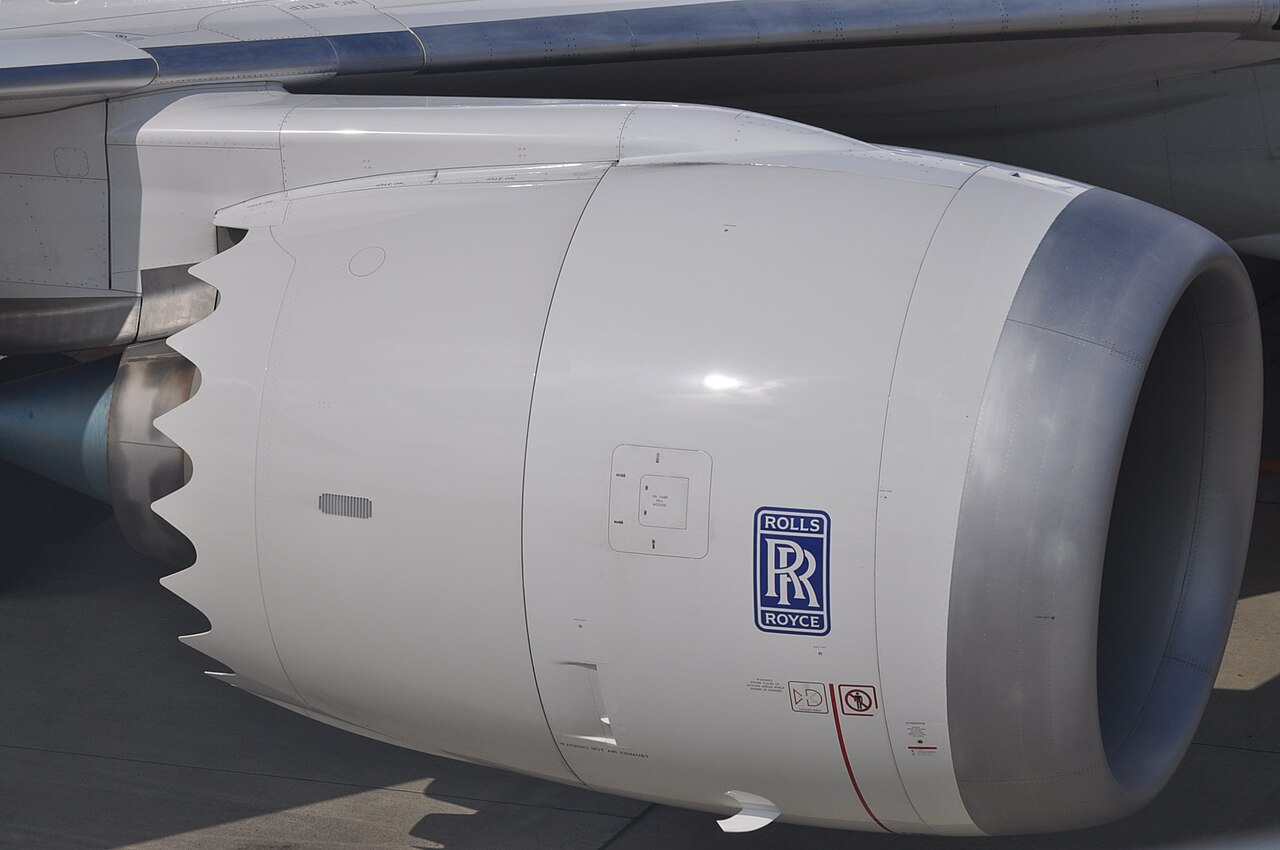
Norsk Titanium has added another aerospace name to its customer list, and this one makes jet engines. In a press release dated October 29, 2026, the Oslo-based company said it has received a purchase order from Rolls-Royce Plc for a titanium component that is being explored as a possible option for current civil aerospace engine programmes. The order comes with a status change: Norsk is now an approved supplier of parts for Rolls-Royce development activities. That is narrower than a production contract, but in aerospace, getting into a development pipeline usually has to happen before anything else does.
The part is a Ti-6Al-4V structural component. Norsk manufactured it at its Technology Center in Norway using Rapid Plasma Deposition (RPD), its wire-based directed energy deposition process, and final machining is being completed in Germany through the project supply chain. The company didn't say what the part is, where it sits in the engine, or how many units the order covers. Secondary coverage from VoxelMatters confirms the same details, and both sources say the two companies plan to use the experience from the project to assess further applications of the technology. Read plainly, this is an evaluation order: Rolls-Royce is looking at whether RPD might earn a place in its supply chain.
What Rapid Plasma Deposition actually is
RPD is about as far from the powder-bed metal printers in maker magazines as metal additive manufacturing gets. Norsk's process belongs to the directed energy deposition (DED) family, and it is wire-based: titanium wire is fed in and built up layer by layer into a shape. Picture a very large, very carefully controlled welding robot building up a preform, not a laser tracing fine features in a bed of powder.
That has consequences, and anyone who has run an FDM machine will recognize them. Wire-fed DED builds coarse, so the "printed" part is generally not the finished part. It is a blank close to final geometry, which then goes to a CNC shop. That fits the Rolls-Royce part being made in Norway and machined in Germany. Machining here is a planned step in the supply chain, not a fix for something that went wrong.
The economics come from what the process replaces. Norsk says RPD uses less raw material, energy and time than conventional forming methods, and VoxelMatters repeats that as the company's claim. Starting from a near-net preform should mean less metal to cut away, which matters with an expensive material like titanium. The Rolls-Royce order is a chance to test that argument on a structural engine component, where qualification is demanding and the customer sits in one of the most safety-critical industries there is.
Norsk also says its parts already fly on commercial aircraft, and it cites about 700 metric tons of production capacity. Both claims come from the company itself, but they show how it presents itself: as an industrial supplier with flight heritage looking for more programmes to fill its capacity, not as a lab with an interesting process.
The balance sheet behind the order
The order makes more sense next to Norsk's first-half 2026 results, published August 19. Revenue and other income for the half came to USD 2.9 million, up 38 percent year over year, from USD 2.1 million in the first half of 2025. That is real growth from a small base. Serial production revenue was USD 1.1 million, up 29 percent. Development revenue was USD 1.7 million, up 50 percent.
The split matters. Development work brought in more than serial production, and it grew faster. Norsk is still mostly paid to prove parts, not to ship them at volume. The Rolls-Royce order is another development engagement, so in the near term it reinforces that pattern rather than changing it. The bet is that some of these qualification programmes eventually become recurring production orders. The company itself says the timing of its ramp remains customer-dependent.
Cash is the other half of the story. Average monthly cash burn was USD 2.1 million, a 28 percent decrease year over year. The company held USD 19.6 million in cash at June 30, 2026, and raised USD 27.3 million (NOK 260 million) in a private placement in two tranches at NOK 1.00 per share. Burn is falling and money has come in. That buys time, and time is what a company in long aerospace qualification cycles needs most.
A widening customer map
Rolls-Royce isn't the only customer news this year. In the same H1 report, Norsk said it had expanded its strategic relationship with Airbus through agreements to develop, industrialize and qualify RPD for high-criticality structural titanium parts, and that it had secured its first serial production contract with Northrop Grumman after a multi-year qualification process. It also reported a USD 4.2 million contract from the US Department of War to advance additive manufacturing for submarine applications, and extended its partnership with Hittech through 2027.
Taken together, the customers cover commercial airframes, defense aerospace, naval programmes, semiconductor-driven demand through Hittech and now, in an exploratory way, civil engines. That breadth matters for a process technology. Every new qualified application lowers the risk of depending on one programme's schedule, and every customer that runs RPD parts through its own qualification adds to the process's track record.
There are things the announcements don't say. Neither source puts a value on the Rolls-Royce order. Neither says how long the development work will take or when any decision on serial production would come. The press release quotes CEO Fabrizio Ponte, who called the order "an important step forward" and described the work as a phase of exploratory work, but the hard facts are the ones above: an order, a part, a material, a process, and approved-supplier status for development work. It is reasonable to read this as a meaningful step. It is not reasonable to read it as a production win.
What It Means for Makers
Nobody reading FilamentFeed is going to buy an RPD cell. The story is still worth following, because it shows where additive manufacturing is trying to earn its keep in the most demanding industries. In this case it isn't about printing finished, intricate geometry. It is about using deposition to cut material, energy and time on large, expensive metal parts, then relying on conventional machining for the final finish.
That hybrid workflow, print near-net and then machine, will be familiar to anyone who has printed a part oversize and faced it on a mill or lathe. The scale and material are very different, but the logic is the same: the printer builds most of the volume and the machine tool makes it precise.
It is also a reminder of how slowly aerospace qualification moves. Norsk says its parts already fly, yet it still earns more from development work than from serial production. When the next desktop metal printer promises to "disrupt aerospace," this is the real bar: approved-supplier status, one development order at a time, with final machining still done in Germany.
