
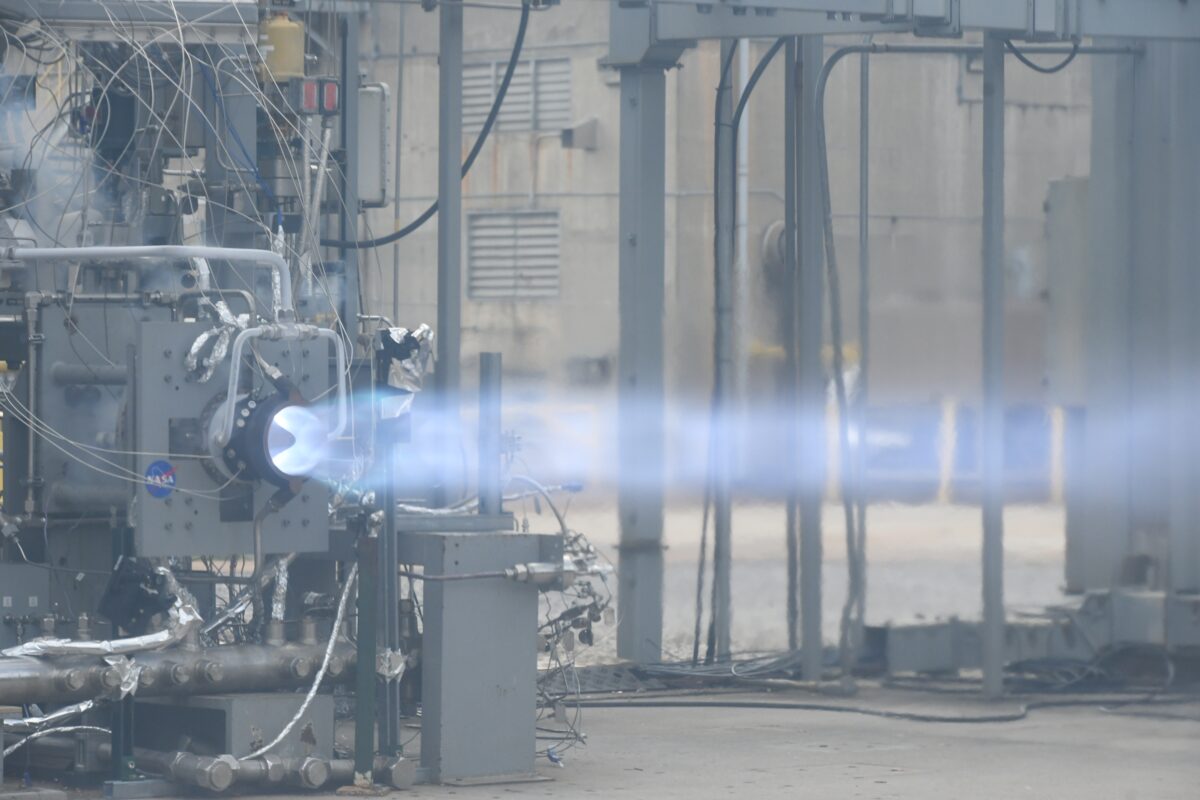
Copper alloys are supposed to be a pain to print, and GRCop-42 is the alloy that proves it. In a peer-reviewed paper published in Virtual and Physical Prototyping, researchers from Washington State University and the University of Minnesota describe an AI-guided experimental-design framework that navigated a search space of more than 100 million possible directed-energy-deposition (DED) parameter combinations down to roughly 40 physical print trials — and came out the other side with working settings at laser powers as low as 500W, well below the 950W baseline the research team treated as its known-good reference point for the alloy.
The team calls the framework BEAM, short for Bayesian Experimental design for Additive Manufacturing. Authors Azza Fadhel, Nathaniel W. Zuckschwerdt, Aryan Deshwal, Susmita Bose, Amit Bandyopadhyay, and Jana Doppa built it around a probabilistic k-nearest-neighbors surrogate model — specifically a five-nearest-neighbor variant standing in for the actual physics of a print — that picks which parameter combination to test next, watches how the resulting print turns out, and updates its internal model before choosing the next trial. It's the same basic idea behind Bayesian optimization used to tune machine-learning hyperparameters, pointed instead at feed rate, gas flow, scan speed, and layer height on a metal deposition head.
Why Copper Fights Back
GRCop-42 is a copper-chromium-niobium alloy developed by NASA for high-temperature aerospace applications, according to reporting from 3D Printing Industry. Its thermal conductivity and elevated-temperature properties are exactly what suit it to components exposed to the highest heat flux in a rocket engine. That's also exactly the metallurgy that makes it miserable to print. Copper reflects a huge fraction of the laser energy a DED system throws at it and conducts the rest away almost as fast as it arrives, instead of pooling into a stable melt the way steel or titanium does. Most commercial DED and laser powder bed systems simply can't push enough net energy into the material to get consistent fusion — which is why the researchers, per 3D Printing Industry's coverage, describe establishing a workable DED process window below 900W as particularly challenging for this alloy in the first place. The conventional workaround is to just add power — hence the 950W baseline the WSU/Minnesota team used as their upper reference point. More power costs more in equipment, energy, and thermal management, and it does nothing to fix the underlying trial-and-error problem: DED involves at least five interacting parameters (power, feed rate, gas flow, scan speed, layer height), and print quality doesn't respond to any of them in a straight line. Move one knob wrong and the deposition delaminates, balls up, or fails to bond to the substrate. Before BEAM, the same research group had already run through 37 failed experiments over what the reporting describes as months of manual trial and error trying to find any workable combination.
What the Search Actually Looked Like
Instead of continuing that manual sweep, BEAM was given four fixed power levels to work within — 950W, 700W, 600W, and 500W — and a budget of ten experiments per level to start. At every single power level, including 500W, the framework found at least one feasible parameter set within that budget — three of them at 600W alone — across roughly 40 total physical trials system-wide. That's the headline number against the theoretical search space: more than 100 million possible combinations of feed rate, gas flow, scan speed, and layer height, compressed to a few dozen actual metal prints. Two of the resulting recipes are specific enough to be useful as reference points for anyone tracking DED process development. At 700W, BEAM landed on a 0.2 RPM feed rate, 7 L/min gas flow, 1600 mm/min scan speed, and 0.11 mm layer height. At 500W — the new low-power record for this alloy — the working combination was a much slower 0.075 RPM feed rate, the same 7 L/min gas flow, a dramatically reduced 250 mm/min scan speed, and a thicker 0.3 mm layer height. The pattern is intuitive once you see it: less laser power means the process compensates by moving slower and depositing thicker layers per pass, buying more time for the low-reflectivity, low-conductivity window where fusion can actually happen. Whether that trade-off is worth it for a given part depends on total build time, but for shops that simply don't have a 950W-class DED head, it's the difference between processing GRCop-42 and not being able to touch it at all. The paper's own mechanical testing backs up that these aren't just cosmetically sound prints: builds across the discovered parameter sets showed compressive yield strengths ranging from roughly 257 to 332 MPa and Vickers microhardness between about 71 and 142 HV0.2, with the spread tracking the chromium-niobium phase distribution that forms differently depending on each recipe's energy density. The prints in the study were deposited onto Inconel 718 substrate, the nickel superalloy commonly used for the surrounding hardware in rocket-engine components — meaning the process was validated in a configuration close to how the alloy would actually be used, not just on a bare test coupon. The work was also presented at the 40th AAAI Conference on Artificial Intelligence (AAAI-26), putting it in front of the machine-learning research community as well as the materials-science one.
What It Means for Makers
None of this touches desktop FDM or even most metal powder-bed systems directly — GRCop-42 in DED form is aerospace-supply-chain territory, not a filament spool. But the methodology is the part worth watching. BEAM is a demonstration that Bayesian experimental design can replace blind manual parameter sweeps for hard-to-print materials generally, and that pattern generalizes to any process with a large, nonlinear parameter space and expensive physical trials — which describes a lot of metal AM, and arguably describes plenty of polymer and composite process development too. The specific payoff here is concrete: a copper alloy that used to require a 950W laser and months of failed prints now has documented working parameters at little more than half that power, discovered in a fraction of the attempts. For the DED shops and research labs that do work with copper alloys, that's a lower equipment bar and a faster path to a usable process — worked out by an algorithm instead of by attrition.
