
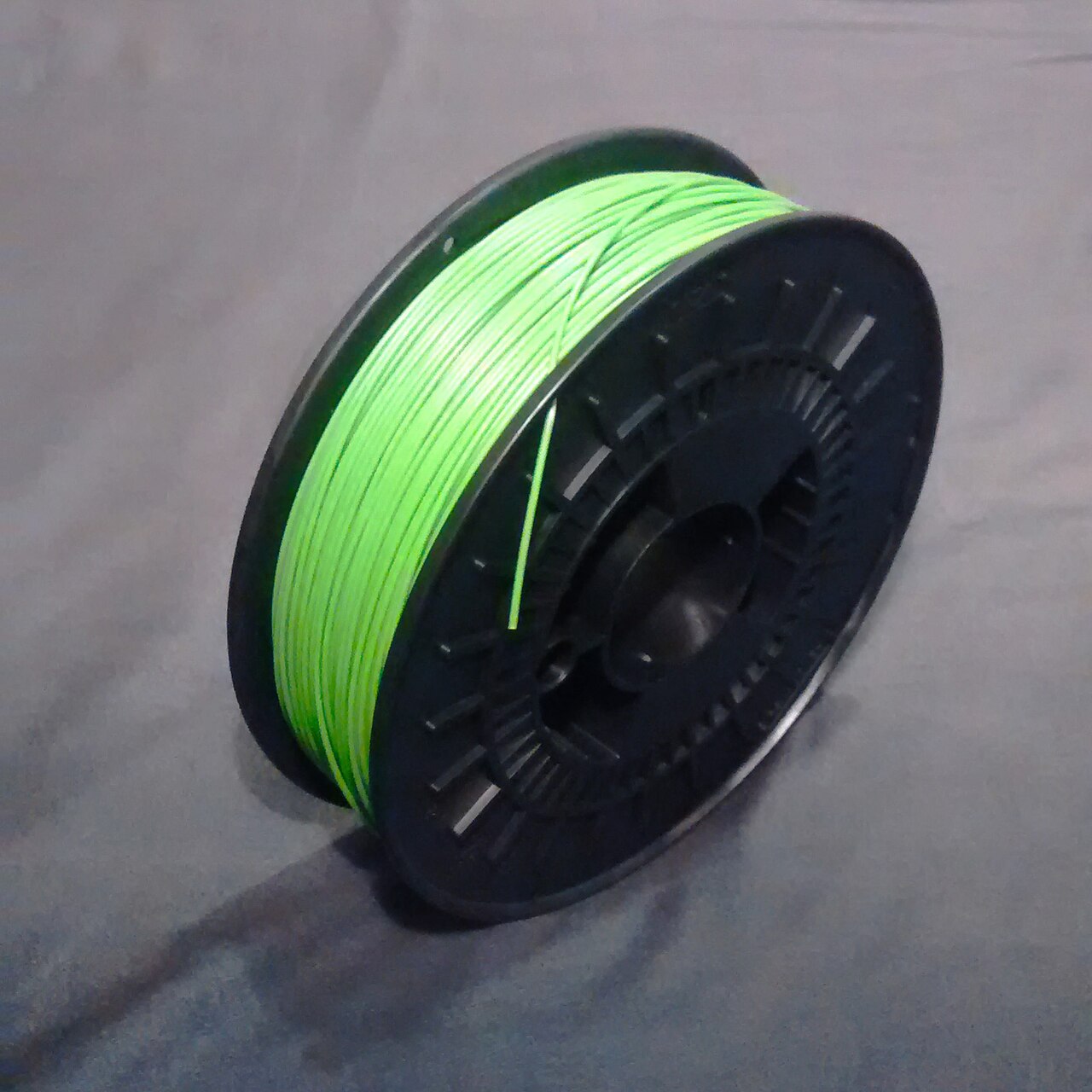
Italian compounder Xenia Materials has signed a collaboration agreement with the Institute for Polymers, Composites and Biomaterials (IPCB) of the National Research Council of Italy (CNR), according to an announcement on Xenia's website dated October 19, 2026. The partners say they want to develop thermoplastic composites that carry the mechanical properties you would expect from engineering materials plus a set of extra functions: self-healing, energy absorption, electromagnetic interference (EMI) shielding and electrical conductivity. The formulations are meant for injection molding and for pellet- and filament-based 3D printing, and the target markets are aerospace, defense and energy.
The announcement is about intent, not results. Neither side has released a budget, a timeline, a product list or any test data, so what follows looks at what the deal says, what it leaves out, and why a filament user might care.
Who Is Involved
Xenia says it has more than 30 years of experience with reinforced composite materials. That makes it an established compounder, not a startup trying out a new idea. TCT Magazine described the agreement as focused primarily on materials engineered for injection molding, with materials for pellet and filament 3D printing also covered.
The research partner is a large group. Xenia's release, and VoxelMatters' coverage, both put IPCB's staff at 73 researchers and 11 technologists. IPCB is a CNR institute devoted to polymers, composites and biomaterials. Pairing a public lab of that size with a company that compounds and sells material is a familiar way to move work from the bench toward production. The Xenia release includes a statement from Pietro Russo of IPCB-CNR, and both Xenia's release and VoxelMatters quote Xenia CEO Fabio Azzolin describing the partnership as a step toward industry-oriented research. That framing suggests the aim is commercial grades, not academic papers.
What "Smart" Means Here
"Smart materials" is a broad marketing term, so the specific list matters. The announcement names four functions:
- Self-healing: the ability of a material to partly recover from damage such as microcracks. The partners have not said which mechanism they plan to use.
- Energy absorption: parts that dissipate impact or vibration energy, which is useful for crash structures, protective housings and mounts.
- EMI shielding: enclosures that block or attenuate electromagnetic interference, a common requirement for avionics and defense electronics.
- Electrical conductivity: enough to dissipate static or carry signals, depending on how much conductive filler the material contains.
The fillers named are carbon fibers, nanofillers and graphene. Carbon fiber is already a standard reinforcement in both molding compounds and printing filaments. Graphene and other nanofillers are the experimental part: they are the additives expected to deliver conductivity and shielding without the large filler loadings that make a polymer brittle or hard to process. The release does not say which base polymers will be used, what filler loadings are planned, or which property targets the team is working toward.
Why Pellets and Filament Are in the Plan
Molding compounds and 3D printing feedstocks have different processing requirements, even when the polymer and filler are the same. An injection-molding grade is designed for high shear, fast fill and a closed mold. A filament has to hold tight diameter tolerances, survive being spooled, and melt and flow through a small nozzle without clogging. Pellet extrusion falls between the two. It is closer to molding in the feedstock it uses, but it still deposits material layer by layer.
That last step is where functional properties tend to suffer. Printed parts are anisotropic, and the bond between layers is usually the weak point. Conductive networks made of carbon or graphene can be disrupted at those interfaces, and fiber orientation follows the toolpath, not the part's load paths. A self-healing or conductive behavior measured on a molded test bar may not appear in the same form in a printed part. Making pellet and filament printing an explicit target means the partners will have to deal with those issues. It also suggests Xenia wants these materials to work on advanced manufacturing platforms, not only in molding.
Reading Between the Lines
The target sectors, aerospace, defense and energy, are where lightweight, multifunctional parts justify the cost and where certification is slow. TCT Magazine says the focus will be on lightweight, high-performance materials. In practice, that means anything coming out of this partnership will probably appear first as industrial-grade compounds and pellets for qualified customers, not as hobby spools.
It is worth being clear about what has not been announced. There is no list of products and no release date. No mechanical, electrical or shielding data has been published, and there is no cost information or any mention of consumer-format filament. A research agreement can lead to a commercial grade in a short time or in several years, and some of these projects never reach the market. Until Xenia publishes datasheets, the "smart" functions are research goals.
What It Means for Makers
For most people printing on a desktop machine, this announcement is not something to act on today. It is still a useful indicator for a few reasons.
Functional filaments are getting serious attention. Conductive and carbon-filled filaments are already available, but they usually force a trade-off between conductivity, strength and printability. A dedicated industrial-academic program looking at graphene and nanofillers for printable feedstocks is the kind of work that could improve on those trade-offs, provided it produces data.
Pellet printing keeps showing up in materials roadmaps. Large-format and pellet-fed machines can use compounds that are hard or expensive to turn into filament. If Xenia's materials arrive as pellets first, owners of pellet extruders may get access before filament users do.
Be skeptical of claims until there is data. When products based on this work appear, check the properties of printed specimens, not only molded ones. Look for conductivity and shielding values measured in the build direction, interlayer strength, and information on how print parameters affect the functional behavior. Ask what "self-healing" means quantitatively before relying on it.
Plan for abrasive feedstock. Carbon fiber and similar fillers wear out brass nozzles. Any filament from this line would likely need a hardened or ruby-tipped nozzle and an all-metal hotend, which is already standard practice for composite printing.
Bottom Line
Xenia Materials and IPCB-CNR have agreed to work together on thermoplastic composites with built-in functions, for both molding and 3D printing. The partners have a credible mix of experience and research staff, and the fillers they name are the right ones for conductivity and shielding work. What they have announced so far is a plan with no numbers attached. FilamentFeed will follow up when either party publishes material grades or test results.
Sources
- Xenia announces a collaboration agreement with National Research Council of Italy for the development of future composite materials (Xenia)
- Xenia Materials partnership with National Research Council of Italy to develop materials for polymer 3D printing technologies (TCT Magazine)
- Xenia Materials and CNR institute partner on thermoplastic composites (VoxelMatters)
