
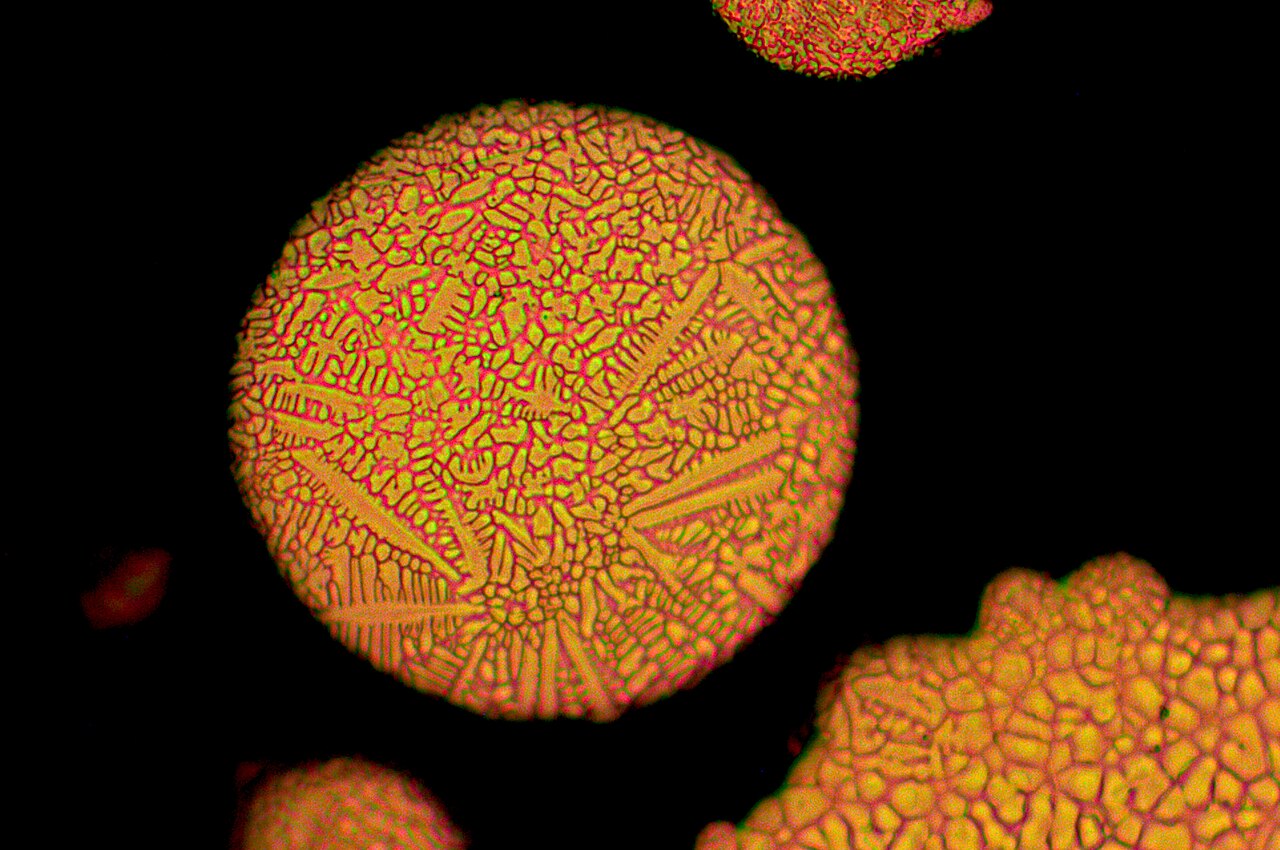
A Chinese metal powder producer says it wants half of its business to come from abroad. Speaking at Formnext Asia in Shenzhen, Robin Sun, overseas sales director at Jiangsu Vilory Advanced Materials (VMP), told 3D Printing Industry that the company produced more than 3,000 tonnes of powder in 2025, expects to double capacity by the end of 2026, and wants exports to account for half of its business within five years. Exports are roughly 10 percent today.
The ambition lands at an awkward moment. 3DPI framed its interview around a blunt question: can Chinese metal powder win abroad after tariffs? Meanwhile, a separate aerospace project in Gansu province is planning thousands of tonnes of its own powder capacity, a reminder that domestic demand is growing too.
What VMP Says It Is Building
VMP was founded in 2015. According to Sun, it runs more than 30 production lines and plans to add another 30. The company's own corporate site describes those 30-plus lines as covering both powder production and titanium-alloy recycling, and lists more than 200 granted patents, participation in more than 20 national standards, and sales into more than 30 countries and regions. It claims ISO 9001, AS9100D and ISO 13485 certification, the last two being the aerospace and medical-device quality management standards that matter most to anyone selling into regulated part production. Its catalogue also covers metal injection molding (MIM) and electronic paste.
The expansion is being financed in stages. Sun said a Series C+ round of RMB 100 million (about $14.8 million) is funding Phase IV, which adds 10,000 tonnes of capacity split across three materials:
- Titanium: 3,000 tonnes
- Copper: 5,000 tonnes
- Aluminium: 2,000 tonnes
A further round of RMB 300–500 million ($44–74 million) is planned. The weighting toward copper is notable: half of the new phase is copper, a material 3DPI's Jiuquan report ties to rocket combustion chambers because copper alloys conduct heat well. A producer putting half of a new phase into copper is betting that such applications will scale.
3DPI was careful to flag that planned capacity is not confirmed output, and the same caution applies here. It also noted that not all output will necessarily go to additive manufacturing. Announced tonnage is a statement of intent, not a shipping record.
Why Powder Prices Have Been Falling
The most interesting technical claim in the interview is about cost. Asked how prices had changed over the previous five years, Sun answered simply: "Going down." He attributed that partly to two levers. The first is higher sellable yield: improved production technology raises the proportion of atomized material that can be sold. The second is finding buyers for the fractions that fall outside an AM specification. A run targeting particles of 15 to 53 microns, a typical laser powder bed fusion range, also generates material outside that band; finding applications for it, such as MIM, reduces waste and improves overall economics.
That second lever is the quieter story. Atomization never produces a single particle size, and the economics of AM powder are shaped by how much of each batch ends up in the sellable window. A producer that also has a MIM and specialty-alloy business has somewhere to send the rest of the batch, which spreads production costs across several markets. 3DPI suggested scale, atomization efficiency and the ability to commercialize more of each run may matter as much as cheap labor or energy.
VMP also told 3DPI its prices are around 60 to 70 percent of comparable American or European products, though 3DPI noted that the exact comparison needs clarification. Tariffs, freight, customs compliance and testing can narrow that gap by the time powder is delivered.
For context, 3DPI noted that Chinese shipments of industrial 3D printers rose 29 percent year over year in the first quarter of 2026. Even so, a producer that doubles capacity needs every market it can reach.
The Jiuquan Project: Powder at Industrial Scale
Domestic demand is not hypothetical. 3D Printing Industry separately reported an engineering, procurement and construction (EPC) tender for a commercial aerospace manufacturing project in Jiuquan, Gansu province, valued at 3 billion yuan, or about $500 million. According to the tender, published on the Gansu Economic Information Network, construction is due to start on November 1, 2026, with a 395-day build period.
The headline figures are large:
- 18 powder production units totalling 6,300 tonnes a year, or about 350 tonnes per unit
- Powder made by the plasma rotating electrode process (PREP), with a specified 60 percent powder yield
- 100 printing units with output of 500 tonnes a year
- A four-machine laser-cladding repair centre
PREP is worth a note. A rotating metal bar is melted at its tip by a plasma arc, and the droplets that fly off solidify into spherical particles. The method is widely used for aerospace-grade powders because of the uniform, spherical particles it produces. The 60 percent yield figure in the tender echoes the issue Sun raised from the other side: yield is a central economic variable for any powder plant, and whatever does not land in the target window has to be sold elsewhere or recycled.
FilamentFeed has only seen 3DPI's account of the tender, not the original document on the Gansu government site. 3DPI's separate Jiuquan report does mention VMP, but only as another Chinese producer expanding, citing its Phase IV round; neither report links VMP to the Jiuquan project itself. They are two data points about the same trend: China is building metal powder capacity at a scale measured in thousands of tonnes.
What It Means for Makers
Most makers do not buy metal powder by the tonne, and many never touch it directly. But the people who print metal parts for them, the service bureaus and in-house AM teams, do, and powder is a meaningful share of what a metal part costs. If producers like VMP can genuinely lower prices through yield and by-product sales, that pressure could eventually show up in quotes for printed titanium brackets, copper parts and aluminium heat sinks.
The constraint is not price alone. Sun himself said "the price is important, but not most important," naming quality and stability as decisive, and 3DPI pointed to qualification histories, traceability and customers' willingness to approve alternative suppliers. Switching sources in aerospace and similar fields can mean requalification, which takes time and money. Tariffs add another layer of cost and uncertainty for anyone importing Chinese material, and Sun acknowledged that for some materials VMP cannot yet compare with US or European brands. An AS9100D certificate opens doors, but it does not shortcut a customer's own material qualification. That is why a 10 percent export share today is a more realistic indicator than a 50 percent target five years out.
The bottom line: Chinese metal powder capacity is growing quickly, and private producers and large aerospace projects alike are pouring money into it. Whether VMP reaches its export goal will depend less on how many tonnes it can make than on how many Western buyers are willing to put its powder through qualification. Watch the copper and titanium lines first; those are where any price movement will matter most.
