
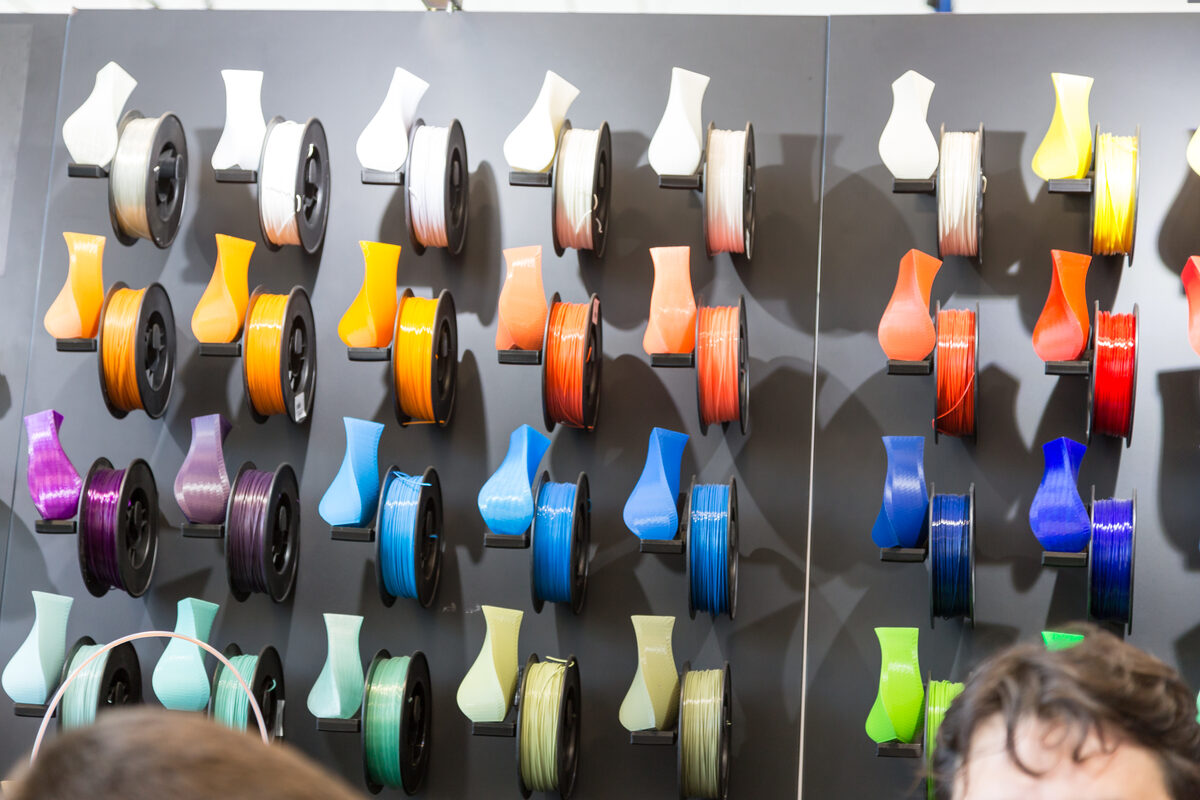
Bedrock 3D, the Dutch filament producer that grew out of BASF's old Innofil3D operation, has taken on a new owner willing to sit on the investment indefinitely. According to reporting from 3DPrint.com's Joris Peels, 819 Capital Partners has invested in Bedrock 3D through its evergreen Private Equity Fund I, folding the filament maker into a holding company called Novio-Scan Group. It's the kind of deal that rarely makes headlines outside trade press, but it says something notable about where money is starting to flow in the materials side of 3D printing.
The move was independently confirmed a day later by VoxelMatters, which reported that Bedrock 3D is now the second operating company inside Novio-Scan Group, joining Insolution, a maker of 3D printers built for custom orthopedic insoles. Neither outlet disclosed a purchase price.
From BASF Chemicals Giant to Independent Filament Maker
Bedrock 3D's back story is a reminder of how much churn has happened inside the filament supply chain over the past decade, even among brands makers might assume have been stable the whole time. The company's roots trace to Innofil3D, a filament producer that BASF folded into its materials division years ago. That business eventually became Forward AM Technologies Netherlands, operating out of a facility in Emmen — a site that itself has an earlier life as a DSM chemical plant before the switch to filament extrusion.
The unwinding took more than one ownership change. Forward AM first split off from BASF via a management buyout, and Stratasys subsequently acquired a large part of that materials business. The Emmen filament operation was later spun out through a second, separate management buyout led by its own local leadership team, rather than being absorbed into Stratasys's roadmap — and that's the entity that now operates as Bedrock 3D. It's a pattern that's played out elsewhere in the industry, with local teams stepping in, sometimes more than once, to keep production lines running under a new name as parent companies refocus. For a filament brand, surviving that kind of repeated ownership churn without disappearing from shelves is itself a minor feat.
An Evergreen Fund With No Clock Running
What distinguishes this deal from a typical private-equity buyout is the structure behind it. 819 Capital Partners' Private Equity Fund I is described as an evergreen fund — meaning it isn't raised with a fixed lifespan and a mandated exit window. Traditional buyout funds typically operate on five-to-seven-year cycles: acquire a company, grow (or strip) it, then sell or take it public to return capital to limited partners on a schedule. An evergreen structure removes that clock, giving the company's operators room to make decisions on longer time horizons — capital equipment, R&D, new material formulations — without an investor pushing for a quick markup ahead of a sale.
819 Capital, founded by Wim Smit, manages roughly $100 million in assets across its funds — modest enough that a filament maker in Emmen is a meaningful bet rather than a rounding error in a diversified portfolio. That cuts both ways: it signals real conviction, but it also ties Bedrock 3D's fortunes more tightly to a single sponsor's health than a larger fund family would.
Insolution board member Rob Hendriks framed the deal's appeal in terms that apply to both companies inside Novio-Scan Group. "Working with 819 Capital Partners gave us the long-term security we were looking for," he said, per 3DPrint.com's coverage. Bedrock 3D managing director Jeroen Wiggers echoed the sentiment, saying Hendriks's point "resonates strongly" with Bedrock 3D and that the same long-term vision "fits us very well too" — language that reads less like a triumphant acquisition announcement and more like management teams shopping for patient capital after years of being shuffled between corporate owners.
Pairing Filament With Orthotics Hardware
The more interesting wrinkle is who Bedrock 3D is now sitting alongside. Its new sister company, Insolution, makes 3D printers purpose-built for custom orthopedic insoles — a niche but established application of additive manufacturing in podiatry, where a scanned foot geometry gets translated directly into a printed, patient-specific insole.
VoxelMatters framed the pairing as a vertical-integration play: Novio-Scan already had hardware and software for a specific application through Insolution, and acquiring a filament producer gives it control over the materials layer feeding that hardware, rather than sourcing filament from third parties. It echoes what larger printer manufacturers have done for years — bundling proprietary or preferred materials with their machines — except here it's happening from the materials side inward, with a filament maker acquired specifically to feed an existing hardware business.
Whether Bedrock 3D's product line stays open-market or increasingly gets tuned toward Insolution's orthotics printers is the open question worth watching. Neither report indicates any change to Bedrock 3D's existing customer base or product catalog, and there's no suggestion the company is being pulled out of the general filament market. But vertical integration deals like this one often start with "no changes for now" and drift toward tighter alignment over a few product cycles, especially once a shared parent company starts looking at where R&D dollars deliver the best combined return.
What It Means for Makers
For the average desktop printing hobbyist, this deal is unlikely to change much in the immediate term — Bedrock 3D wasn't a household name even under its Innofil3D and Forward AM branding, and neither report mentions changes to pricing, distribution, or the retail lineup. The more relevant audience is professional and prosumer users who source filament from BASF-lineage supply chains for engineering or medical applications, where consistency and certification pedigree matter more than brand recognition.
The bigger signal is structural. An evergreen private-equity fund choosing to back a filament producer — rather than a printer OEM, a software platform, or a service bureau — suggests investors see durable value in materials specifically, not just in the hardware and software layers that tend to draw more attention. Combined with the pairing alongside an orthotics-hardware company, it also hints at where one investor thinks consolidation in 3D printing materials might head: fewer independent filament brands, more of them absorbed into holding groups that also own the printers or end-use hardware those materials feed. Makers sourcing engineering-grade filament from smaller European producers may want to watch ownership changes like this one — not because Bedrock 3D's material quality is expected to shift, but because "who owns my filament supplier" is quietly becoming a more relevant question than it used to be.
