
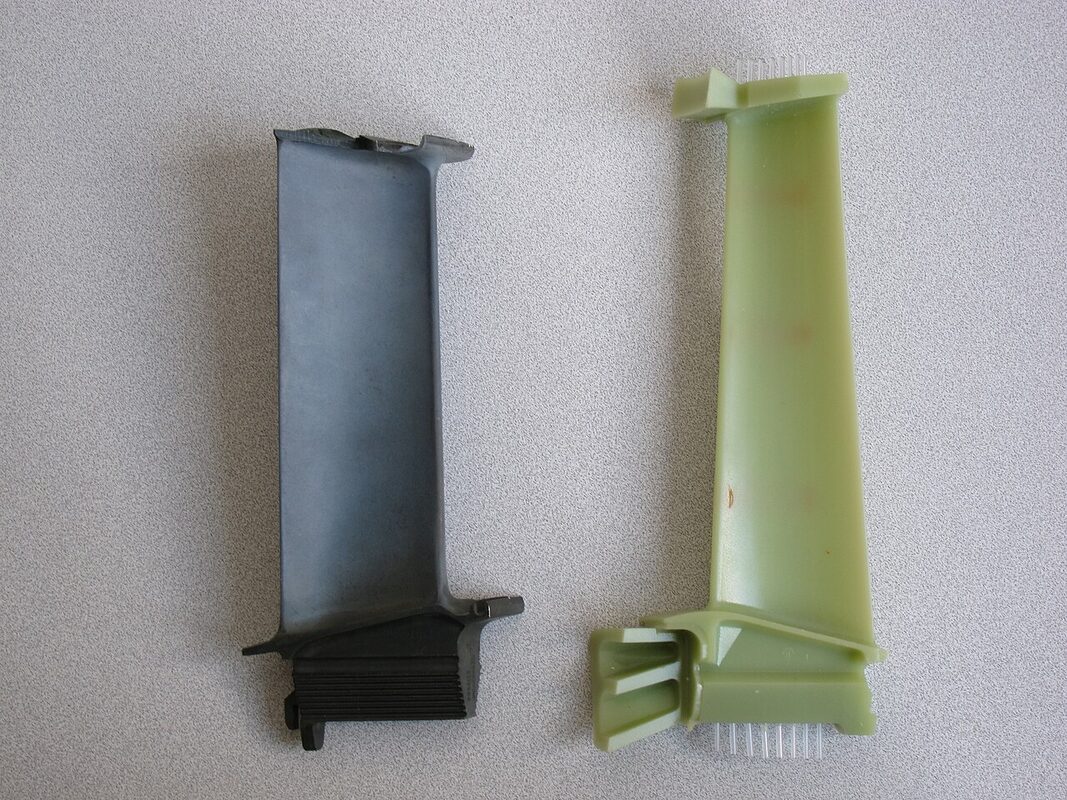
An investment-cast part usually starts life as something nobody wants to pay for: a hard tool. Before a foundry pours metal, someone machines a die and injects wax into it to make the pattern the ceramic mold forms around. For a complex part, that up-front step alone can run past $1 million and take many months. Fabri, a young foundry in Billerica, Massachusetts, skips it. According to a profile published by MIT News on November 10, the company 3D prints its patterns in resin, uses its own software to design and refine them, and already works with Raytheon, Lockheed Martin and Sikorsky Aircraft while it moves through the qualification process those customers require.
A VoxelMatters report published November 26 covers the same ground in shorter form. Here is what we know about how the process works, who is behind it, and why it matters.
The problem: tooling cost and a shrinking domestic base
Fabri's pitch rests on two facts. The first is economic. Co-founder Steven Davis says traditional tooling can cost upward of $1 million for complex designs and take many months to make, a big reason customers wait so long for parts. That cost is easy to absorb on a long production run. It is a serious obstacle for low-volume, high-mix work, and for any program where the design is still changing.
The second is industrial. MIT News reports that more than 70 percent of American metal casting facilities have closed since the industry's peak in the 1950s, and that China and India now dominate global casting production. For defense and aerospace buyers, that points to fewer domestic sources for parts that cannot easily be made any other way.
Fabri is betting that if it takes the hard tool out of the process, a small American foundry can compete on speed. Davis says the company can go from receiving a design to producing a finished part in as little as a week, and that 3D printing lets it iterate on parts in days.
How the process works
As both reports describe it, the workflow has four stages:
- Design in software. Starting from the part's CAD file, Fabri's in-house platform, FoundryOS, designs the casting pattern.
- Print the pattern. Instead of injecting wax into a machined die, Fabri prints the pattern in resin using digital light processing (DLP) and stereolithography (SLA).
- Build the shell. The printed pattern is dipped in ceramic slurry to form the shell the molten metal is poured into.
- Learn from each pour. FoundryOS collects data from every step and uses machine-learning models to improve the process and the parts with each casting.
The metallurgy downstream of the pattern is the familiar part. What changes is that the pattern comes from a digital file, not a steel die. In Davis's words, printing the pattern "right off the bat" removes the early steps of traditional casting, including injection molding wax patterns and gluing them into a tree. Fabri automates the creation of the patterns and channels that make up the tree and prints it in one piece. A design change, then, means editing a model and starting a new print job rather than re-cutting tooling. If the machine-learning loop works as described, every pour should make the next pattern a little better.
That combination is the interesting part. Resin patterns for investment casting are not a new idea in themselves. Fabri's argument is that it has built a whole foundry around them, with software that handles both the pattern design and the process data.
The company and the plant
Fabri was founded by Steven Davis, Thomas Cole and Pieter Coulier. MIT News notes that Davis graduated from MIT in 2024 and Cole holds MIT degrees from 1991 and an MBA from 2013. Coulier previously developed algorithms at the metal 3D-printer maker Velo3D, according to both reports. MIT News adds that Davis interned at Relativity Space, grew up competing in robotics competitions like BattleBots, and built the first prototype of Fabri's printer in the basement of his MIT fraternity.
The company opened its first foundry in Ashland, Massachusetts, in 2025 and moved production to Billerica in spring 2026. That plant covers 16,000 square feet (about 1,490 square meters). Fabri currently casts aluminum, copper alloys and stainless steel, primarily for munitions, aviation and naval applications.
The customer list is unusually heavy for a company this young: Raytheon, Lockheed Martin and Sikorsky Aircraft, among others. MIT News is careful to say Fabri is "moving through qualification," and that distinction matters. In aerospace and defense, a supplier can produce parts for a prime contractor long before it is approved for the most critical hardware. Qualification is where processes are documented, parts are tested and repeatability is proven, and it is often the slowest step in getting a new supplier onto a program.
What comes next: bigger parts and nickel superalloys
Both reports point to a larger facility. MIT News says demand from customers is driving Fabri to build a far larger plant in 2027 that will produce bigger parts at higher volume as customer programs move into production. Both sources also say Fabri plans to begin casting nickel superalloys in early 2027. These are the metals used in turbine blades, which can currently have four-year wait times.
Nickel superalloy turbine components are some of the most demanding cast parts made, and the four-year wait times show how hard they are to source. If a tooling-free, software-driven foundry can shorten that wait, the market is large. Neither source gives detail on how Fabri plans to handle the extra process demands of superalloy work, so for now this is a stated goal, not a demonstrated capability.
What It Means for Makers
Most readers will never send a turbine blade to a foundry, but the pattern side of Fabri's process will look familiar. The core move is one many makers already use at small scale: print a resin pattern, invest it, burn it out and pour metal. Jewelers and hobby casters have done this with resin printers for years. What Fabri adds is industrial process control. Software designs the pattern, and data from each pour feeds back into the process.
A few points are worth taking from it:
- The printer is the pattern tool, not the part maker. Fabri is not 3D printing metal directly. It uses established vat photopolymerization techniques, DLP and SLA, to make a sacrificial pattern, then relies on conventional casting for the metal itself.
- Tooling is where the time and money go. Removing a tooling step that Davis says can top $1 million and take many months changes the economics for low-volume parts far more than shaving minutes off a print.
- Software is the differentiator. Printing resin patterns is an established technique. FoundryOS and its machine-learning loop are where Fabri places its advantage.
The open question is qualification. Sample castings are useful. Qualified production castings for Raytheon, Lockheed Martin and Sikorsky are a business. How quickly Fabri clears that bar, and whether its 2027 expansion and superalloy work arrive on schedule, will show whether 3D-printed patterns can help rebuild a domestic casting base that has lost more than 70 percent of its facilities.
