
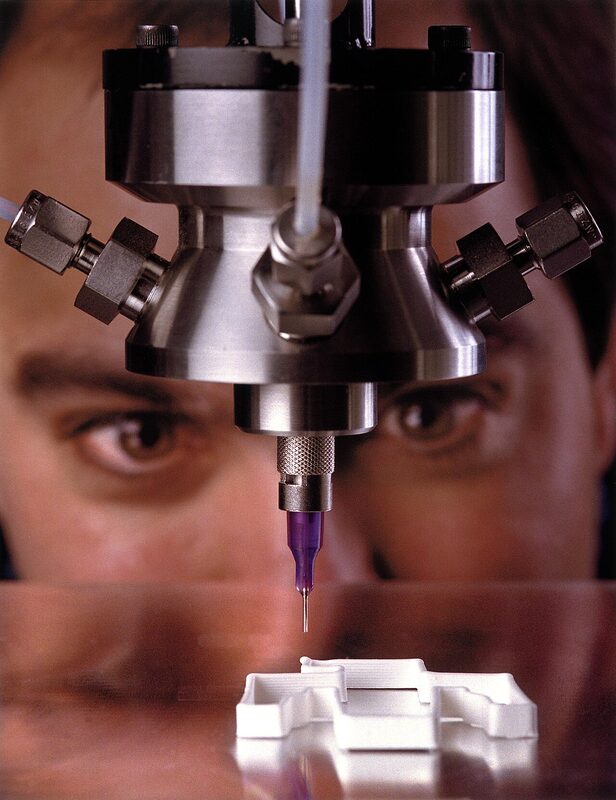
The Queensland Government has awarded defence manufacturer NIOA $15 million to build advanced manufacturing capacity at its Rheinmetall NIOA Munitions facility in Maryborough. The state's ministerial media statement of 25 November 2026 (via mirror) describes the result as Australia's first industrial-scale ceramic 3D-printing production capability, installed next to new metal additive manufacturing equipment. The project costs $29.85 million in total. The grant comes from the state's $180.6 million Sovereign Industry Development Fund, and the government expects operations to begin by late 2028.
Most 3D-printing money announcements involve a research lab or a startup's seed round. This one is different: a state government is helping to put production-grade ceramic and metal printers inside a working munitions plant. The aim is to make components for munitions, missiles, rockets, drones and counter-drone systems. It is not a prototyping room.
What the Money Buys
VoxelMatters reported the equipment list. It includes three industrial ceramic 3D printers, two industrial metal 3D printers, two post-print sintering ovens and one prototype sintering oven. According to the report, the capability will cover the whole chain, from feedstock design through to post-print processing.
That last point matters. In ceramic and many metal AM processes, the printed part is only an intermediate. The real material properties come from what happens afterwards in the furnace. With two post-print sintering ovens plus a separate prototype oven, NIOA appears to be planning to tune thermal cycles for new parts without tying up the production line. Covering feedstock design also means the company would control the material that goes into the machines, not just the machines. For defence work, where qualification and supply security count as much as part geometry, owning both ends of the process looks like a deliberate choice.
VoxelMatters converts the grant to about US$9.9 million and the total project, which it rounds to roughly A$30 million, to about US$19.8 million. The state grant therefore covers roughly half of the project cost; the sources do not say how the remainder is funded.
From Forging Shells to Printing Parts
The Maryborough site is not new. VoxelMatters notes that Rheinmetall NIOA Munitions (RNM) opened in 2022 and makes 155 mm artillery projectile bodies by forging and machining. That is traditional subtractive and forming work: heavy presses, lathes and mills turning steel into shell casings.
The new funding moves the plant into a different kind of product. Missile, drone and counter-drone components have more complex shapes, are made in smaller batches and change design more often than artillery shells. Those are the conditions where additive manufacturing tends to pay off over tooling-heavy methods. Adding printers to a plant that already forges and machines also leaves room for hybrid workflows, where printed parts are finished on the conventional equipment already on site. The sources don't describe the plant's exact process plans, but the logic of putting the two together is clear.
The ceramic side is the more unusual of the two. Metal AM has become fairly established in aerospace and defence supply chains. The Queensland statement's claim of Australia's first industrial-scale ceramic 3D-printing production capability marks a step up in scale. VoxelMatters says target parts include advanced ceramic components for high-speed defence systems, but neither source names specific parts.
The Policy Angle
Deputy Premier Jarrod Bleijie announced the funding, according to VoxelMatters. The money comes from a fund that, by its name, is meant to build sovereign industrial capacity in the state. The sources disagree slightly on that name: the government statement calls it the Sovereign Industry Development Fund, while VoxelMatters writes Sovereign Industrial Development Fund. The ministerial wording is likely the official one.
VoxelMatters reports that NIOA managing director and CEO Rob Nioa spoke about the project in terms of sovereign capability. The idea, in his words, is to expand Australia's capacity to make advanced defence and aerospace components at home. Additive manufacturing fits that argument well. A printer working from a digital file and a qualified feedstock can, in principle, switch between part designs much faster than a line built around dedicated tooling.
The jobs figure is modest. VoxelMatters puts the count at up to 18 positions by late 2028. That matches what an AM cell like this looks like in practice: a small number of skilled operators, materials engineers and post-processing technicians running a handful of expensive machines, not a large production workforce.
What It Means for Makers
Nobody reading FilamentFeed is going to print counter-drone parts on a bench machine, and nothing here changes what's on your desk tomorrow. Still, the project matters to the wider maker community in a few ways.
Sintering is the hard part. Anyone who has tried filled filaments or sinterable metal and ceramic feedstocks knows the print itself is the easy step. Debinding and sintering are where parts shrink, warp or crack. An industrial buyer spending money on three sintering ovens alongside five printers is a clear sign of where the real engineering effort goes in these processes. The same holds at every scale.
Ceramic AM is moving into production. Industrial-scale ceramic printing showing up in a defence plant suggests the technology is moving from research curiosity to a qualified production tool. Historically, that kind of shift has pushed process knowledge, materials and eventually cheaper equipment down to smaller shops.
Skills are local. For makers in regional Queensland, an AM facility in Maryborough means local demand for people who understand printing, materials and post-processing. Eighteen jobs is a small number. But they are the kind of roles a serious hobbyist with hands-on furnace and printer experience is better placed to understand than most job applicants.
Bottom Line
Queensland is spending A$15 million to help NIOA add three ceramic and two metal industrial printers, plus the sintering capacity to make them useful, to a plant that until now has forged and machined artillery shells. The target is missile, drone and counter-drone components, with operations due by late 2028. Neither source gives further technical detail, including the printer vendors, the specific processes or the parts involved. It is worth watching whether the "first industrial-scale ceramic" claim turns into qualified parts on schedule. If it does, Maryborough becomes a useful test of whether ceramic AM can hold up under the demands of defence production.
