
Fathom Digital Manufacturing, the Hartland, Wisconsin, contract manufacturer whose service menu includes industrial additive manufacturing, has bought three companies at once. In a press release dated October 13, 2026, CORE Industrial Partners announced that its portfolio company Fathom had acquired TCS Industries, TCS Electronics and Precision Grinding & Manufacturing Corp. (PGM). The combined footprint now spans 10 facilities and roughly 700 employees, and the deal is framed explicitly around one customer base: aerospace and defense.
The announcement came from CORE Industrial Partners, the private equity firm that owns Fathom, with CORE Partner Matthew Puglisi named in the release. Trade outlet VoxelMatters covered the deal the following day, carrying comments from Fathom CEO Rush LaSelle, TCS founder Manoj Shekar and PGM's Todd Hockenberger.
What Fathom Actually Bought
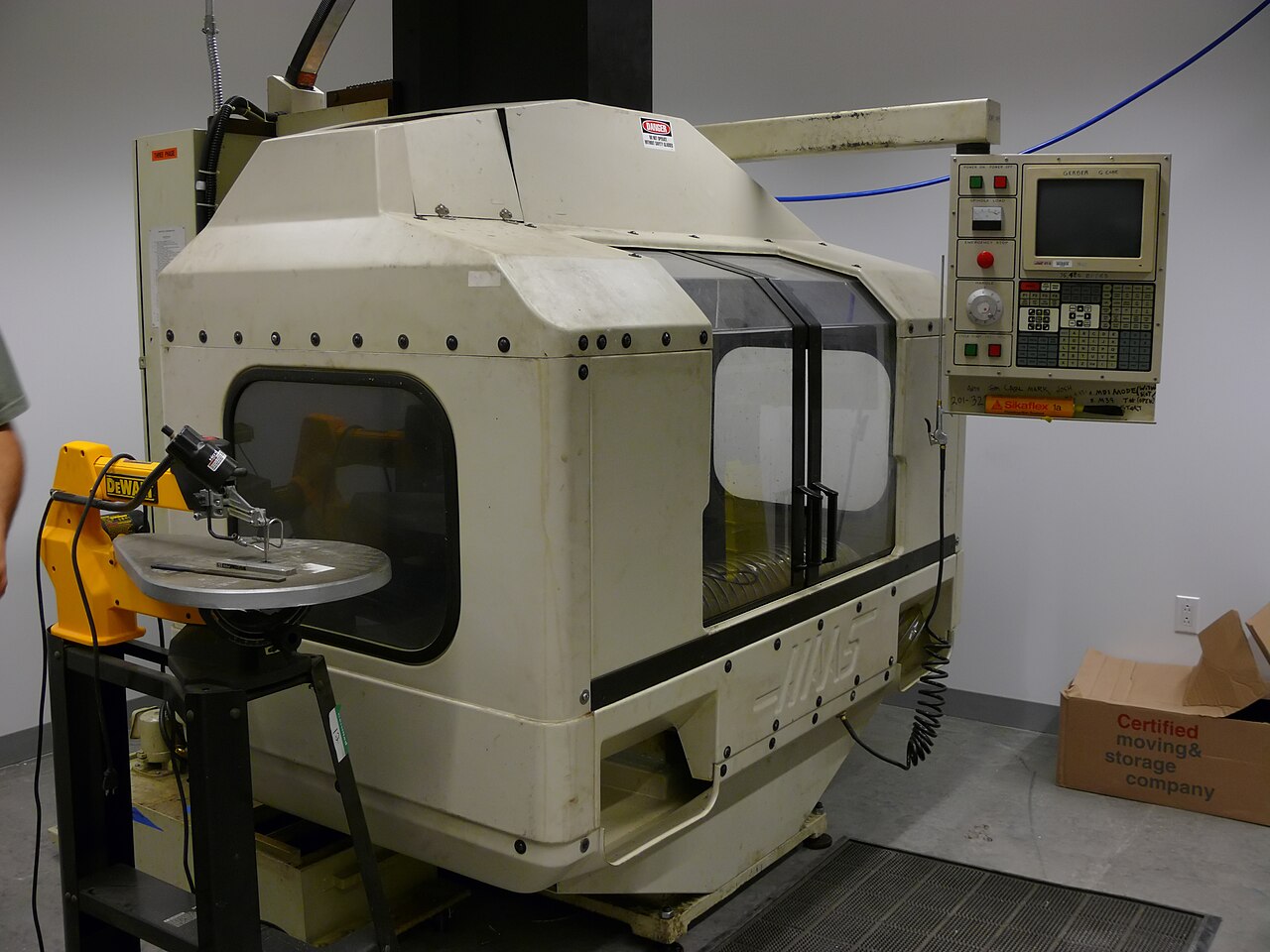
The three acquisitions are not additive manufacturing companies, and that is the point. Fathom already offers more than 25 manufacturing services, according to its release, including additive manufacturing, CNC machining, sheet metal fabrication and injection molding. What this deal adds is depth in two areas that sit downstream of, and alongside, a printed part: precision machining and electronics.
The sellers bring long operating histories. According to the release, TCS, based in Rochester, New York, has nearly 35 years of experience, and PGM, also headquartered in Rochester, has nearly six decades behind it; Hockenberger speaks of what "our family" has built. Those are not startups being rolled up for their technology; they are established shops with established customers, the kind of supplier relationships that take years to build in regulated industries.
Neither source disclosed a purchase price or other financial terms, and the materials reviewed for this article do not break down which of the 10 facilities came from which acquisition. What the sources do establish is the scale of the resulting platform and its stated direction.
Why a Print Bureau Wants Grinders and Circuit Boards
Anyone who has sent a metal part out for printing knows the build plate is rarely the end of the story. Functional aerospace components typically need support removal, heat treatment, machining of critical surfaces, inspection and documentation before they are usable. A service bureau that can only print hands its customer a half-finished part and a list of other vendors to find.
That is the logic behind the broad "digital manufacturing" platform model Fathom represents. The pitch to an engineering buyer is consolidation: one supplier, one quality system, one purchase order, with the work routed internally to whichever process suits each feature of the part. Additive handles the geometry that conventional methods struggle with; machining and grinding bring the tolerances and finishes; sheet metal and molding cover the high-volume or simple components; and, with TCS Electronics, the platform reaches into the electronic content that increasingly rides inside aerospace and defense hardware.
Precision grinding in particular is a telling addition. It is a finishing process reserved for parts where dimensional accuracy and surface quality matter enough to justify a slow, specialized step. Pairing that capability with additive and CNC under one roof is a bet that customers want complete, inspected parts, not raw near-net shapes.
The Ownership Angle
Fathom's ownership matters for reading the deal. The acquisitions were announced by owner CORE Industrial Partners, and buying several established suppliers in a single transaction is a classic platform-building move for an owner of that kind: a larger, more diversified manufacturer with more facilities and a deeper service list can be more attractive both to big customers and, eventually, to a buyer.
Aerospace and defense is a sensible target for that strategy. The sector values supplier continuity, traceability and qualifications, which are slow and expensive for a new entrant to earn. Acquiring shops that already hold those relationships is faster than building them, and the sources' emphasis on decades of operating history for both TCS and PGM suggests that longevity is part of what Fathom was buying.
It also fits a broader pattern in the additive industry. Print-only service bureaus have found that printing alone is a thin business when customers need finished, certified parts. Companies that survive tend to wrap additive inside a fuller manufacturing offering, so that 3D printing becomes one tool among many rather than the whole product. Fathom's latest purchases push it further in that direction: none of the three acquired companies is described as an additive specialist.
What It Means for Makers
For hobbyists and small-shop makers, an aerospace-focused acquisition by a Wisconsin manufacturer will not change anything on the bench this week. But it is a useful signal about where professional 3D printing is heading, and it carries a few practical lessons.
Printing is a process step, not a product. The companies doing industrial additive at scale increasingly treat the printer as one station in a longer workflow. If you are designing parts for real use, design with post-processing in mind: leave stock on surfaces that must be machined, plan datums you can fixture against, and think about which features truly need to be printed versus cut or bent.
The outsourcing landscape is consolidating. Makers and small businesses who rely on online manufacturing services for prototypes or short runs should expect the larger players to keep folding in specialist shops. That can mean broader one-stop quoting, but it can also mean services tuned more toward large regulated customers than toward one-off maker orders. It is worth keeping relationships with smaller local machine shops and print bureaus alongside the big platforms.
Hybrid skills are valuable. If a contract manufacturer with roughly 700 employees sees value in pairing additive with precision grinding and electronics, the same logic applies at hobby scale. A maker who can print a bracket, face it on a mill and wire the sensor that mounts to it is building the same kind of integrated capability, just on a smaller bench.
Open Questions
Several things remain unclear from the published sources. Financial terms were not disclosed. The sources reviewed do not say whether the acquired businesses will keep their own names and leadership, how their operations will be integrated with Fathom's existing additive and machining sites, or what specific aerospace and defense programs they serve. Those details will determine whether the combined company functions as a genuinely integrated manufacturer or as a portfolio of separate shops under one logo.
Bottom Line
Fathom's triple acquisition expands a platform that already counts additive manufacturing among more than 25 services into precision machining, grinding and electronics, with an explicit focus on aerospace and defense. With 10 facilities and about 700 employees, the CORE Industrial Partners-backed company is betting that the future of industrial 3D printing lies in surrounding the printer with every other process a finished part needs. For makers, the takeaway is the same one the industry keeps learning: the print is where the work starts, not where it ends.
