
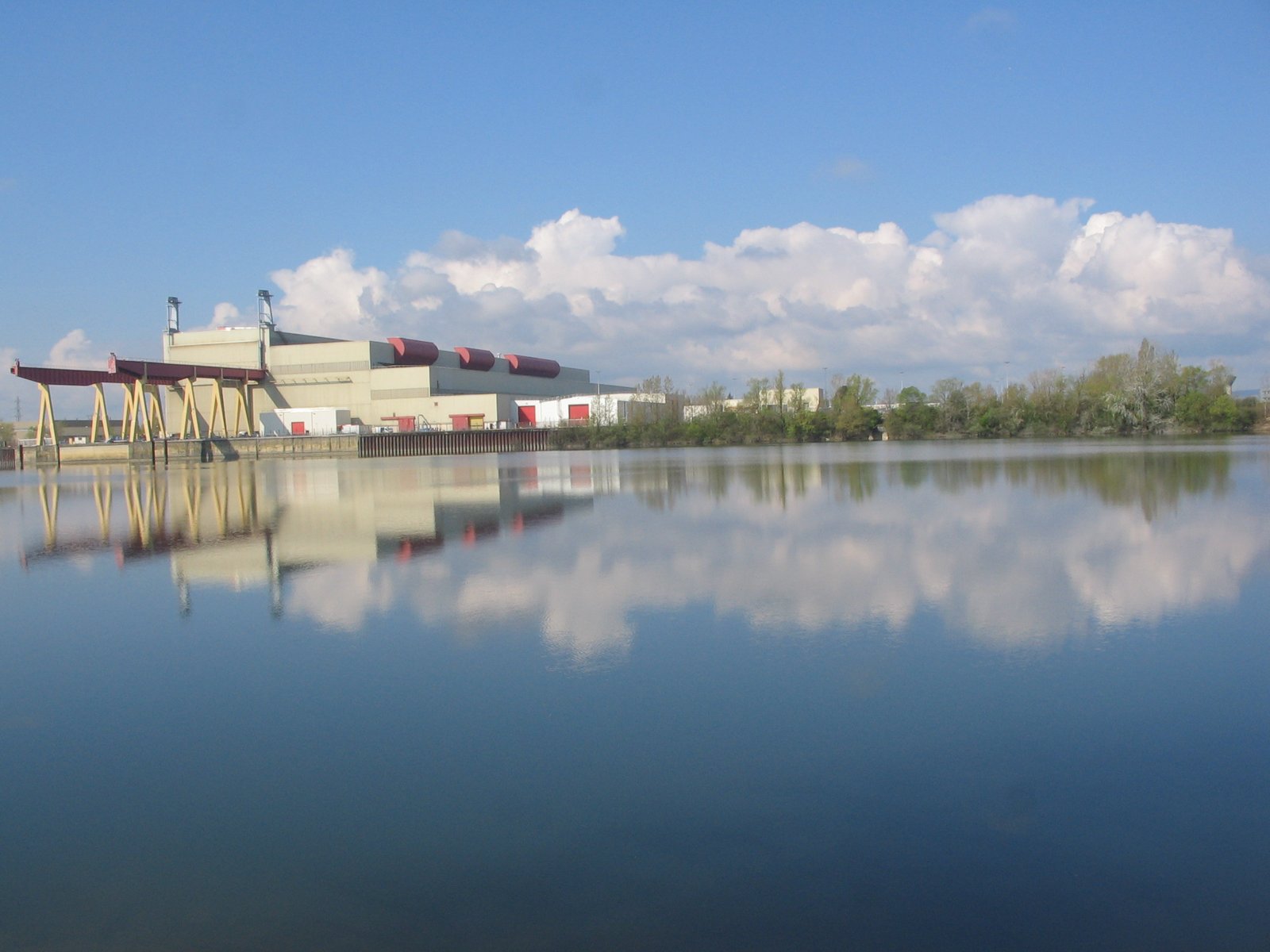
France's nuclear giant Framatome has opened a €25 million additive manufacturing center in Romans-sur-Isère, a 6,000-square-meter facility the company describes as the first industrial-scale AM plant in Europe dedicated specifically to nuclear and defense components. For an industry that has spent decades treating metal 3D printing as an interesting side project, the scale of this bet is the story: this is not a lab, it's a production line, and it's already booking real orders.
The numbers are worth sitting with. Framatome took the facility from groundbreaking to production output in roughly one year, and it has been operational since May 2026. It employs about 20 people at launch and houses two very different metal AM processes under one roof: Laser Powder Bed Fusion (LPBF) for high-precision, smaller-scale parts, and Wire Arc Additive Manufacturing (WAAM) for the kind of large, load-bearing metal structures that no powder-bed machine could ever build. Between the two processes, the center can produce parts ranging from a few millimeters up to 5 meters, and from a few kilograms up to several tons.
That range is the point. Nuclear plants don't just need small precision brackets — they need pump housings, valve bodies, and structural components that are often huge, heavy, and, thanks to decades-old reactor designs, sometimes no longer manufacturable through their original supply chains at all.
Two Processes, One Supply-Chain Problem
LPBF is the process most makers will recognize by analogy, even if the machines involved bear little resemblance to a desktop resin or FDM printer. A laser selectively melts thin layers of metal powder — layer by layer — to build dense, geometrically complex parts with tight tolerances. It's the metal-printing workhorse used across aerospace and medical device manufacturing, and it's well suited to the kind of intricate valve components and precision housings that a reactor's cooling and control systems depend on.
WAAM is the opposite end of the spectrum. Instead of a laser and a powder bed, it uses a welding-style arc to deposit metal wire in beads, building up large structures at a fraction of the cost and time that powder-bed methods would require at that size. It sacrifices some precision and surface finish for the ability to print at a scale measured in meters rather than millimeters — which is exactly what you need if you're replacing a large forged or cast structural component with no direct modern equivalent.
Running both processes in the same facility, rather than farming one out to specialist subcontractors, is what turns this into an actual industrial capability rather than a demonstration project. Framatome frames it as, essentially, insurance for its own supply chain: many components in France's aging reactor fleet were designed and forged decades ago, by suppliers and using techniques that may no longer exist. Additive manufacturing lets Framatome requalify and reproduce those parts from digital models instead of chasing down a foundry that can still cast an obsolete alloy shape.
Regulatory Weight, Not Just Engineering
The Romans-sur-Isère center isn't only a print farm — it's built around qualification. Nuclear components carry some of the most demanding certification requirements in any industry, and a part printed for a reactor has to survive not just mechanical testing but a paper trail proving process repeatability, material traceability, and non-destructive inspection at every stage. Framatome has built the site to include R&D and process-qualification work alongside production, plus a training platform aimed at building a nuclear- and defense-qualified additive manufacturing workforce — a recognition that the bottleneck in nuclear AM isn't printer throughput, it's getting regulators and utilities comfortable trusting a printed part in a primary coolant loop.
That qualification muscle is also what French trade outlet Usine Nouvelle reports is already paying off commercially: the center has booked more than €10 million in orders since opening, largely in civil nuclear work — a sign that customers view the facility's process qualifications, not just its print beds, as the product being sold. Mohamed Zouari, the Framatome manager overseeing additive manufacturing activities at the site, told the outlet: "Before we even started production, we had already won the confidence of our clients and we had contracts." As Framatome CEO Grégoire Ponchon put it, the goal is for the site to become "a leading industrial tool to sustainably support nuclear projects" and meet the needs of customers and partners in France and internationally, as well as those of the defense sector — language that reads less like a ribbon-cutting soundbite and more like a statement of strategic intent for a fleet that France plans to keep running — and expanding — for decades.
The facility is named after Admiral Bernard-Antoine Morio de l'Isle, and its opening was corroborated by the French Nuclear Energy Society (SFEN), which described the center as dedicated to producing mechanical components for the nuclear and defense sectors via metal 3D printing — independent confirmation of both the location and the industrial focus Framatome has claimed for the site. Jean-Bernard Ville, Framatome's executive vice president for the Projects and Components Manufacturing business unit, framed the stakes in more strategic terms in the same SFEN release, saying additive manufacturing "strengthens the sovereignty and competitiveness of strategic sectors in France" — positioning the Romans-sur-Isère center as much an industrial-policy asset as an engineering one.
What It Means for Makers
Nobody reading this on a desktop FDM printer is going to be printing reactor valve housings anytime soon, and that's not really the point. What matters here is signal, not access. When a company operating some of the most conservative, risk-averse engineering culture on the planet decides to stand up a dedicated, dual-process metal AM facility rather than keep additive manufacturing as an R&D curiosity, it's a strong data point that metal printing — especially processes like WAAM that scale to genuinely large parts — has crossed from "interesting alternative" to "trusted production method" for critical infrastructure.
It's also a useful case study in matching process to problem: LPBF for precision, WAAM for scale, both under the same qualification umbrella, rather than forcing one process to do a job it's poorly suited for. That's a lesson that scales down surprisingly well, whether you're choosing between resin and FDM for a given part or deciding whether a large-format printer is worth the investment for oversized prints. And the spare-parts angle — using AM to keep aging equipment running when the original supply chain has vanished — is exactly the same logic that's driving hobbyists and small manufacturers toward 3D-printed replacement parts, just at a scale where the stakes, and the paperwork, are measured in gigawatts rather than garage projects.
