
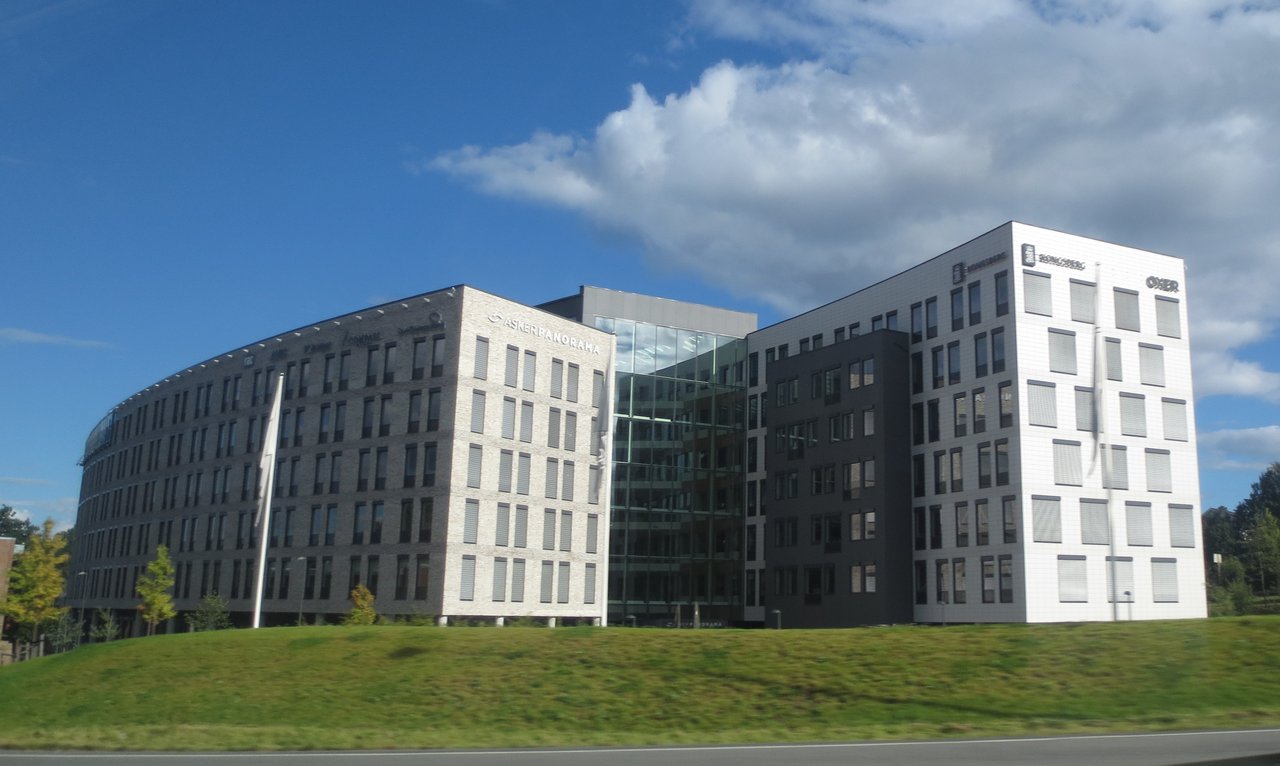
Norwegian defense and technology group KONGSBERG has announced it is raising its investment in additive manufacturing, ordering two multi-laser metal 3D printers from EOS and its subsidiary AMCM for installation at its main production facility in Norway. The purchase pairs an AMCM M 4K — a large-format, multi-laser powder bed fusion system — with an AMCM M 290-2 1kW, a smaller but faster twin-laser machine built around EOS's established M 290 platform. Financial terms were not disclosed.
The announcement, reported by TCT Magazine alongside KONGSBERG's own newsroom statement, frames the buy less as a one-off equipment upgrade and more as an infrastructure decision. According to KONGSBERG's own newsroom statement, the company is moving to "establish new manufacturing capacities that enable strategic innovation, faster design cycles, enhanced performance and scalable production for next generation defence applications." That is corporate language for a fairly specific bet: that metal laser powder bed fusion is now mature enough to sit inside a defense prime's core production flow, not just its prototyping lab.
What's Actually Being Installed
The two machines cover different jobs. The AMCM M 4K is AMCM's large-build-volume, multi-laser system, the category built for parts too big or too geometrically complex to justify tooling, and for runs where laser count (rather than machine count) is how you scale throughput. The AMCM M 290-2 1kW is a twin-laser variant of EOS's widely deployed M 290 — a machine already common in aerospace and medical production — upgraded with 1 kW lasers for faster build rates on qualified metal powders. Pairing a big-format system with a compact, high-repeatability one is a common way manufacturers cover both ends of a part catalog: full-scale structural sections on the M 4K, higher-precision or higher-volume components on the M 290-2.
Per the confirmed facts, KONGSBERG intends to use the machines for three overlapping purposes: printing full-scale sections of technology demonstrators, supporting product qualification work, and producing flyaway hardware — parts that actually fly or ship on fielded defense and security systems, as opposed to test articles that get scrapped after evaluation. That last category is the significant one. Qualifying an additively manufactured part for flyaway use in a defense program means clearing material certification, process repeatability, and non-destructive inspection hurdles that prototyping work never has to touch.
EOS's Additive Minds consulting arm is named as the integration partner. Additive Minds is EOS's applications-engineering and process-consulting group, typically brought in for exactly this kind of work: standing up AM methodology inside an organization that hasn't built its production system around it before, covering design-for-AM training, parameter development, and qualification workflow rather than just machine commissioning.
What It Means for Makers
Nobody reading this on a desktop FDM printer is about to be affected by an AMCM M 4K landing in Norway. But the deal is worth watching for what it signals about where laser powder bed fusion is heading as a category. A defense contractor putting multi-laser metal AM into main production — rather than a satellite R&D center — is a vote of confidence in throughput and repeatability that trickles down the supply chain over time. When primes like KONGSBERG scale up demand for validated metal powders, process parameter sets, and qualified operators, the tooling, training, and service ecosystem around those machines gets thicker for everyone downstream, including the contract manufacturers and smaller shops that eventually buy secondhand or entry-tier hardware built on the same underlying laser and recoater technology.
There's also a methodology signal here that applies well beyond defense. The stated use cases — demonstrator sections, qualification support, flyaway parts — describe a maturity ladder that any serious metal AM adopter climbs: prove the geometry works, prove the process is repeatable enough to certify, then trust the part in the field. Bringing in a dedicated applications-consulting group (Additive Minds, in this case) to build that ladder rather than treating the printer as a plug-and-play purchase is the part hobbyists graduating into small-batch production work would do well to copy in miniature: process validation isn't optional overhead, it's the actual product.
Reading Between the Lines
KONGSBERG hasn't disclosed which specific programs the new capacity will feed, what powders are targeted, or a production timeline — TCT Magazine's report and KONGSBERG's own announcement both stop at the equipment list and stated applications. That's typical for defense-adjacent manufacturing news: the interesting operational detail (which platform, what part, what quantity) is usually the part that doesn't get published. What's confirmed is the equipment, the site, and the stated intent, which is enough to place this in a broader pattern of European defense manufacturers treating multi-laser metal AM as production infrastructure rather than a lab curiosity, a shift that's been building across the sector as procurement cycles compress and demand for faster-iterating hardware increases.
Bottom Line
KONGSBERG's purchase of an AMCM M 4K and an AMCM M 290-2 1kW is a straightforward capacity expansion with no price tag attached, but it's a useful data point on where multi-laser metal powder bed fusion sits in 2026: mature enough that a national defense prime will route flyaway hardware through it, with a formal applications-consulting engagement to make sure the qualification work holds up. Expect more defense manufacturers to make similar moves as the case for metal AM in production, rather than just prototyping, keeps getting easier to make.
