
Yorkshire3D Limited, a UK manufacturer based in Huddersfield, has opened beta access to Makr3D, a cloud-based fulfillment platform designed to let online sellers offer 3D-printed products without owning a single printer. The pitch is straightforward: upload a design, pick a business model, and let a print farm handle production, quality control, packing, and shipping — all under the seller's own storefront branding rather than Yorkshire3D's.
The service opened to "founding sellers" on June 25, 2026, according to a report from VoxelMatters, which covered the launch. It's a bet that the market for print-on-demand physical goods — already well-established for t-shirts and mugs through services like Printful and Printify — has room for a dedicated 3D-printing equivalent, one built specifically around the quirks of FDM production rather than bolted onto a generic dropshipping stack.
What Makr3D Actually Does
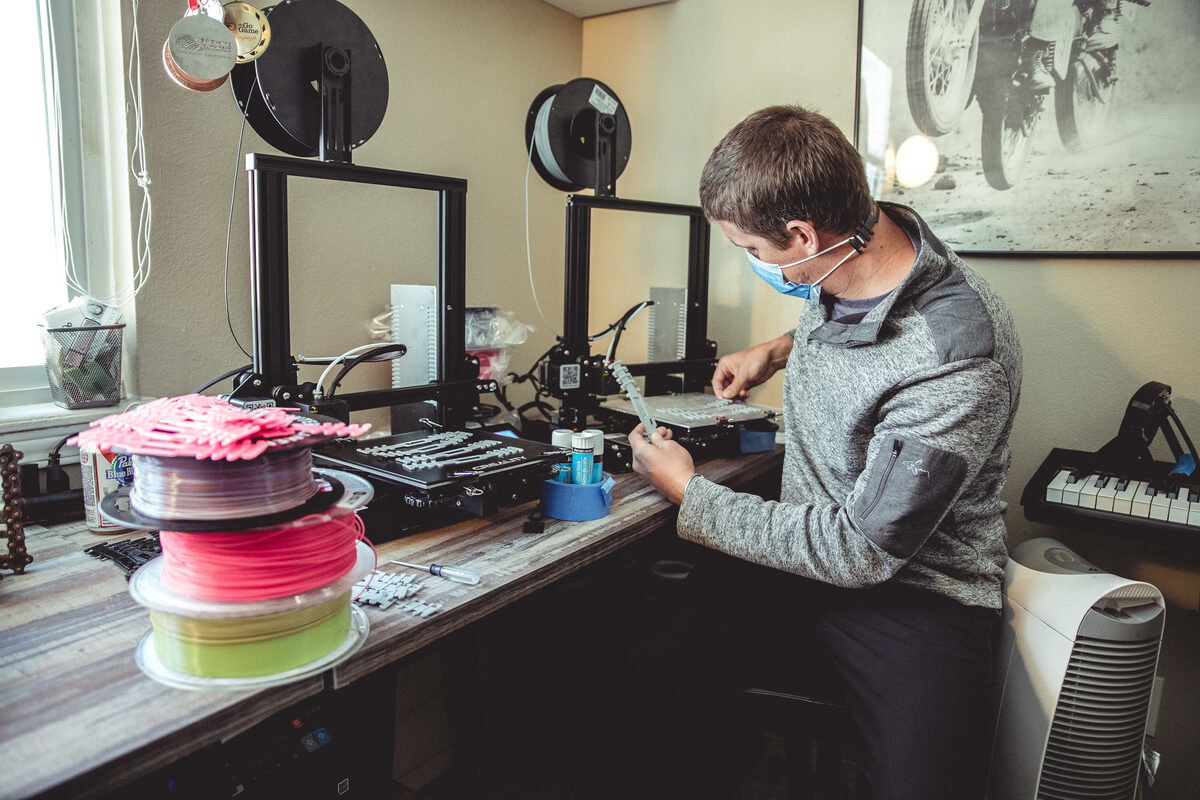
Strip away the "as-a-service" branding and Makr3D is, at its core, a managed print farm with a storefront-facing API and a private file vault. Sellers on Etsy, Shopify, or similar platforms submit a design, and Makr3D's operation — reportedly running more than 100 Bambu Lab printers with capacity for over 300 full build plates per day — handles the physical production. Finished parts are quality-checked, packaged, and shipped out under the seller's brand, meaning customers never see Yorkshire3D or Makr3D mentioned on the box.
That white-label framing is the core of the pitch. A seller running a small Etsy shop for, say, articulated fidget toys or customized cable organizers doesn't need to explain to buyers that their order was actually printed by a farm in Huddersfield. The fulfillment layer stays invisible, which is exactly how services like Printful built their business in the merch space — sellers control the customer relationship, the platform handles the unglamorous logistics of production and shipping.
Two Different Business Models
What differentiates Makr3D from a generic "send us your STL, we'll print it" service is that it reportedly supports two distinct commercial arrangements, aimed at two different kinds of users.
The first is brand-owned fulfillment: a seller who already has their own designs — either created in-house or licensed elsewhere — uploads them and pays Makr3D to print, pack, and ship on a per-order basis. This is the straightforward print-on-demand model, aimed at sellers who want manufacturing capacity without capital tied up in a print farm of their own.
The second is a design-licensing marketplace model, where designers can list files for other sellers to license and sell on a per-unit basis without ever handing over the underlying file. This is the more interesting piece structurally, because it tries to solve a problem that has dogged the 3D-print design economy since the earliest days of Thingiverse and MyMiniFactory: designers who want to monetize their work through print-on-demand channels have historically had to either give up the file entirely (and with it, control over unauthorized reproduction) or restrict themselves to selling physical prints they make themselves, which doesn't scale.
The File-Privacy Angle
According to VoxelMatters' reporting, uploaded STL and 3MF files remain private within the Makr3D platform — they are never passed on to the sellers who list products for sale, and they are not downloadable by anyone outside the print-farm operation itself. In practice, that means a designer licensing a file through the marketplace model retains custody of the actual geometry; the seller gets a listing and a supply chain, not a file they could resell, remix, or redistribute on their own.
This is worth dwelling on because it's the mechanism that makes the licensing model plausible in the first place. Print-on-demand for physical merch works because a t-shirt design file isn't especially valuable once it's been applied to a shirt — the value is in the finished product. A 3D model is different: the STL itself has standalone value, is trivially copyable, and can be re-uploaded to any printer anywhere. A platform that lets sellers list and sell designs without ever receiving the underlying file directly addresses the piracy concern that has made designers wary of wide distribution deals in the past. Whether that private-vault approach holds up against sellers trying to extract geometry through other means — say, by ordering a physical unit and 3D-scanning it — is untested territory the beta doesn't appear to address.
Capacity and Scale
The reported farm size — over 100 Bambu Lab printers producing more than 300 full build plates daily — puts Makr3D in a different category from the boutique print-farm-as-a-service operations that have popped up around Discord communities and small marketplaces over the past few years. That's a meaningful industrial base for a beta launch, and the choice of Bambu Lab hardware specifically signals a bet on consistency and uptime: Bambu's AMS ecosystem and largely closed-loop calibration make farm-scale operation with minimal per-unit babysitting more realistic than it would be with a fleet of open-frame kit printers.
What It Means for Makers
For sellers already running an Etsy or Shopify shop with printed goods, Makr3D's core promise is removing the printer entirely from the equation — no more managing a garage full of machines, no more overnight prints, no more shipping runs to the post office. That's a genuine value proposition if the pricing pencils out against operating your own farm, though neither source discloses pricing, minimum order volumes, or turnaround times, all of which will determine whether this beats printing in-house for anyone beyond the smallest sellers.
For designers, the licensing-marketplace option is the part worth watching closely. A model where a file can be monetized at scale without ever leaving a private vault addresses a real, long-standing tension in the model-sharing economy — but it also concentrates a lot of trust in Yorkshire3D's infrastructure and business practices. Designers considering the platform during this beta phase will want clarity on royalty terms, exclusivity requirements, and what happens to listed designs if the platform changes hands or shuts down — none of which is detailed in the available reporting.
As with any beta, the real test will be in execution: whether 300 build plates a day translates into reliable turnaround times, whether quality control catches the print defects that plague FDM at scale, and whether the private-file model actually survives contact with sellers and competitors probing for gaps. For now, it's a notable structural experiment in an industry that has mostly left print-on-demand fulfillment to boutique operators or DIY setups.
