
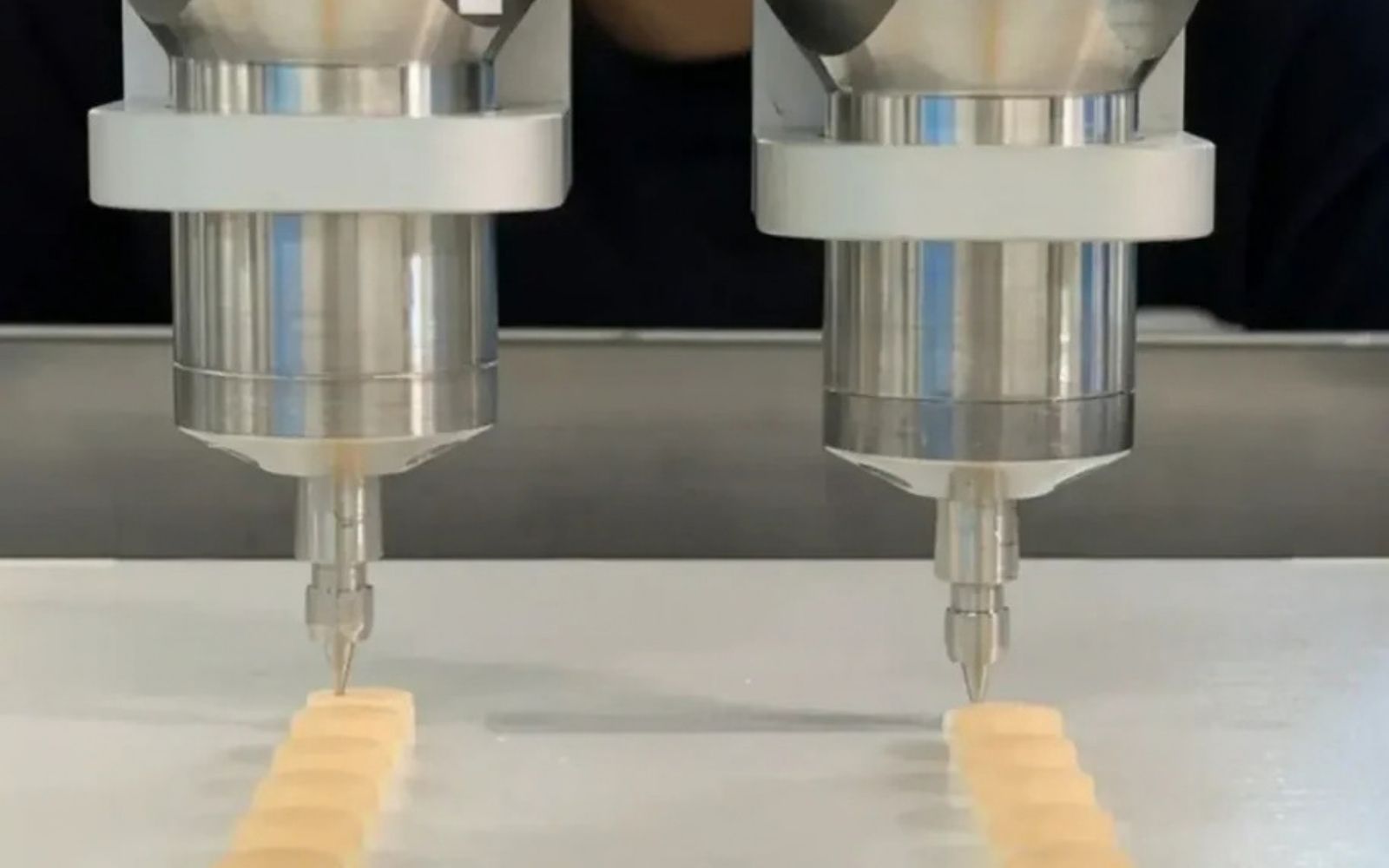
PharmaTher Holdings Ltd. (CSE: PHRM) wants to place up to 50 CraftMake pharmaceutical 3D printers across North America over the next 12 months, with the first orders expected in the fourth quarter of 2026. The Toronto company laid out the plan in a corporate strategy update issued through Newsfile on October 5, 2026 (read via a BioSpace mirror of the release). The same release renames its PERSONALIZ3D platform as M3DICINES, launches a new corporate website, and sets out a drug-development timeline that runs to a planned New Drug Application in the fourth quarter of 2028. Trade outlet VoxelMatters covered the placement plan on October 7.
None of this has happened yet. What PharmaTher published is a roadmap of targets and intentions, not delivered results, and it should be read that way. Still, it is one of the more concrete commercial plans we have seen for putting 3D printers inside pharmacies, and that makes it worth unpacking.
The Hardware Deal Behind the Plan
The CraftMake printers are not PharmaTher's own machines. They come from Craft Health Pte. Ltd., and PharmaTher announced on October 1 that it had become the exclusive North American distributor for Craft Health's CraftMake platform. The October 5 update builds directly on that deal: PharmaTher describes an "asset-light" model in which Craft Health supplies the hardware, while partners handle compounding and manufacturing.
Two of those partners are already named as the first placement sites. One is PD Labs, a 503A compounding pharmacy that the release and VoxelMatters both describe as PharmaTher's US Center of Excellence. The other is a GMP contract manufacturer that neither the release nor the trade coverage identifies by name. Those two sites cover the two ends of the business PharmaTher is describing: pharmacy-level compounding on one side and regulated, good-manufacturing-practice production on the other.
The 50-unit figure needs context. According to the release, PharmaTher sees more than 10,000 potential sites for the system in North America. Up to 50 placements in a year is therefore a small opening wedge against that addressable pool, and "up to" is a ceiling, not a commitment. The release names pharmacies, telehealth companies, CDMOs, hospitals, and research and government sites as the target customers.
How the Money Is Supposed to Work
Anyone who has bought a consumer printer and then spent more on filament than on the machine will recognize the business model. VoxelMatters reports that each placement is designed to generate revenue from the system itself plus recurring software, consumables, and service revenue. In other words, the printer is the entry point and the ongoing materials and support are where the long-term revenue is meant to come from.
That is a familiar structure in industrial additive manufacturing, and it explains why a distributor would care more about the installed base than about the number of units shipped in any single quarter. It also means the meaningful metric to watch over the next year is not just how many printers ship, but whether placed units actually run and consume material.
What PharmaTher Says It Will Print First
The release lists specific first products for the 503A compounding channel, targeted for the fourth quarter of 2026:
- NAD+
- Glutathione
- Sermorelin
- PT-141
After that, PharmaTher says it plans a ketamine dissolvable tablet aimed at telehealth in the first quarter of 2027. The release says the 503A products will be printed as chewables, dissolvable tablets and multi-layer combinations, but in the material we reviewed the company has not published print parameters, formulation specifics, or validation data for any of these products, so there is little yet to evaluate on the technical side.
The Long Regulatory Road
Alongside the compounding business, PharmaTher outlined a conventional drug-development track. It plans to file applications for orphan drug and rare pediatric disease designations in October 2026, hold a pre-IND meeting in the first quarter of 2027, and submit a New Drug Application in the fourth quarter of 2028. The release notes that priority review vouchers have recently sold for between US$100 million and US$155 million, which signals why a rare pediatric designation is attractive to a small company.
That timeline is two years out and depends on regulators, so it is the most speculative part of the announcement. The release frames these as planned milestones, and nothing in it suggests any of the designations has been granted.
The Rebrand
The platform formerly called PERSONALIZ3D is now M3DICINES, with a dedicated site at M3DICINES.com, while the corporate site lives at PharmaTher.com. The name change is cosmetic, but it does tell you where the company sees its identity: in printed medicine as a product category, rather than personalization as a feature. VoxelMatters' coverage quotes CEO Fabio Chianelli on the strategy alongside the placement details.
What It Means for Makers
Nobody reading FilamentFeed is going to be buying a CraftMake for the garage. Pharmaceutical printing sits under regulatory regimes that hobby hardware never touches, and the machines are aimed at pharmacies, contract manufacturers and similar institutional sites. But the story is still relevant to anyone who follows where additive manufacturing is finding real commercial footholds.
First, it is another example of 3D printing being sold on a razor-and-blades model, with the printer as the gateway to recurring consumables and software. That pattern is spreading from desktop FDM into nearly every vertical, and medicine is no exception.
Second, it shows what "distributed manufacturing" looks like once it leaves the conference keynote. Instead of a central factory, PharmaTher is pitching printers placed at individual compounding pharmacies and contract manufacturers, each producing small batches close to the patient. Whether that works at scale is an open question, but the first two sites give the plan a concrete starting point.
Third, and most practically, this is a set of dated targets. Q4 2026 for initial orders and first 503A products, Q1 2027 for the ketamine tablet and pre-IND, Q4 2028 for an NDA. Those are checkable. If you are tracking pharmaceutical printing as a field, the useful exercise over the next 12 months is simple: compare what ships against what was promised.
Bottom Line
PharmaTher has turned a fresh distribution deal into an ambitious public roadmap: up to 50 CraftMake placements in North America within a year, a first wave of compounded products before the end of 2026, and a rare pediatric drug program aimed at a 2028 NDA. The hardware partner, first two sites, and revenue model are defined. The results are not. Treat it as a plan worth watching, not a market that already exists.
