
Phillips Corporation has renamed its Additive Hybrid division to Phillips Advanced Manufacturing Solutions (AMS), 3DPrint.com reported on July 8, 2026, folding several previously separate product lines into a single business unit and installing a new president to run it. On paper, a rebrand is corporate housekeeping. In practice, it signals something makers watching the industrial end of additive manufacturing should pay attention to: the line between "3D printer" and "machine tool" is disappearing at the enterprise level, and the companies selling into that market are reorganizing their sales and engineering teams to match.
What Changed
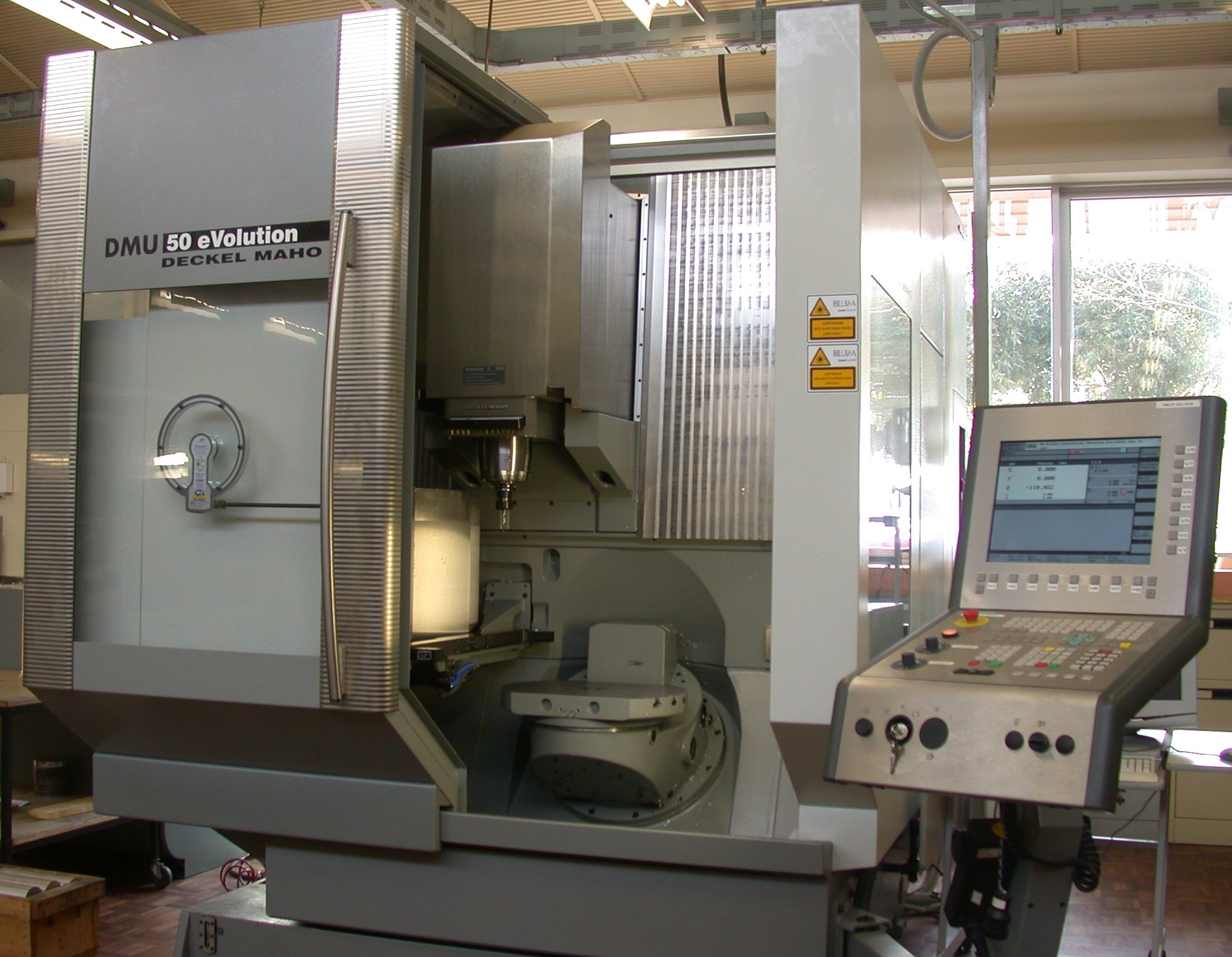
Phillips Corporation is a long-established industrial equipment distributor best known in machine-shop circles for selling Haas CNC systems. Its Additive Hybrid division had, until now, occupied a fairly narrow niche: bolting Meltio wire-laser metal deposition heads onto Haas CNC machines so a single system could both deposit metal and machine it to final tolerance in one setup. That hybrid product line isn't going away — it's the anchor of the new division — but according to 3DPrint.com's reporting, AMS now also encompasses standalone additive manufacturing technology sold on its own, large-format additive and subtractive cells, and deployable, point-of-need manufacturing equipment intended for expeditionary or field use, alongside applications-engineering consulting.
Brian Kristaponis, previously general manager of the Hybrid division, has been promoted to president of the new AMS unit. In comments cited by 3DPrint.com, Kristaponis framed the move as more than a naming exercise: "This rebrand reflects a fundamental shift in how manufacturing is evolving." A separate quote attributed to John Harrison, president of Phillips Global Additive, adds that "advanced manufacturing is reshaping how products are designed, built, and sustained" and that customers "look beyond individual machines." The company's own site, in a page devoted to the new division, confirms both the branding and lists its current technology partners: Meltio, Fronius, Laserline, InssTek, and MX3D — a roster that spans wire-arc and wire-laser metal deposition, laser-powder deposition, and large-scale robotic directed energy deposition. 3DPrint.com's coverage of the rebrand also names Markforged, EOS, and Solukon among the partners grouped under AMS.
Why Consolidate Now
Each of those partner technologies solves a version of the same problem — adding metal where you need it rather than machining a part down from solid stock — but they've historically been sold and marketed as distinct product categories aimed at different buyers. Wire-laser hybrid systems built on a Haas CNC platform appeal to job shops that already own CNC equipment and want repair and near-net-shape deposition capability without buying an entirely new machine. Large-format directed-energy-deposition systems, by contrast, target aerospace and defense primes building big structural parts that would be prohibitively slow or expensive to machine from a solid billet. Deployable manufacturing gear is a third market entirely: military and remote-operations customers who need to fabricate or repair parts where there is no supply chain at all.
Putting all of it under one division head suggests Phillips has concluded these are not separate businesses competing for internal resources, but one continuum of "blended manufacturing" — additive and subtractive processes combined, at scales ranging from a shop-floor hybrid mill to a large-format DED cell to a shipping-container-sized field unit. That's consistent with a broader industry pattern: metal AM vendors that once competed purely on print speed or resolution are increasingly competing on how well their systems integrate with existing CNC and quality-control workflows, because that's what actually gets machines sold to conservative manufacturing buyers.
The Navy Connection
The rebrand also comes with proof points already in the field, both tied to the U.S. Navy. According to Phillips' AMS division page, the company is "supporting a landmark distributed advanced manufacturing experiment with the Naval Postgraduate School at RIMPAC 2026" — the biennial Rim of the Pacific exercise, the world's largest international maritime exercise. 3DPrint.com's reporting separately links that RIMPAC work to manufacturing-software partner 3YouRMind. Neither source specifies which hardware or vessel is involved, so it should not be assumed to be the Haas-plus-Meltio hybrid line specifically.
Distinct from the RIMPAC experiment, 3DPrint.com also reports that Phillips holds a U.S. Navy contract with the Naval Surface Warfare Center Carderock Division to supply containerized units pairing Haas CNC machining with Meltio metal deposition — exactly the kind of deployable, point-of-need hybrid system the new AMS division is now built to sell. Shipboard and expeditionary manufacturing capability has become a recurring theme in recent defense-industry coverage, as the Navy and other services test how much repair and fabrication work can be handled without returning to a fixed depot. A hybrid system that can deposit metal to rebuild a worn or damaged component and then machine it to spec in the same footprint is a natural fit for that use case, where space is scarce and downtime is expensive. It's also a useful marketing data point for a division whose new "deployable expeditionary manufacturing equipment" category is built around exactly this kind of environment.
What It Means for Makers
None of this touches desktop or prosumer 3D printing directly — Phillips AMS operates at the industrial job-shop-and-defense-contractor end of the market, with systems built around six-figure Haas CNC platforms and industrial laser or arc deposition heads. But it's a useful signal for anyone tracking where metal additive manufacturing is headed as a category, and it matters to makers in three indirect ways.
First, it's further evidence that "hybrid" — additive deposition plus subtractive finishing in one machine — is graduating from a niche technique to a standard product category with dedicated sales and support behind it. What starts as an enterprise category often trickles down in simplified form; today's expensive hybrid CNC-plus-wire-laser cells are the ancestors of tomorrow's more accessible metal-repair tools. Second, the partner list — Meltio, Fronius, Laserline, InssTek, MX3D, plus Markforged, EOS, and Solukon per 3DPrint.com — is a useful cheat sheet for anyone researching wire- and powder-based metal AM vendors, since these are the companies whose deposition heads are being validated against industrial CNC integration right now. Third, Phillips' Navy work — the RIMPAC 2026 experiment and the separate Carderock contract for containerized Haas-and-Meltio units — is a reminder that field-repair and expeditionary manufacturing is a real, growing demand driver for metal AM investment, a trend that has previously pushed innovation (and eventually cost reductions) down into more accessible desktop and benchtop metal printing systems.
For job shops and manufacturers evaluating hybrid or large-format metal AM purchases, the practical takeaway is simpler: Phillips now has a single division, and a named president, to talk to about the entire spectrum from a Haas-based hybrid cell to a large-format DED cell to field-deployable equipment — rather than navigating what were previously separate product lines with separate points of contact.
