
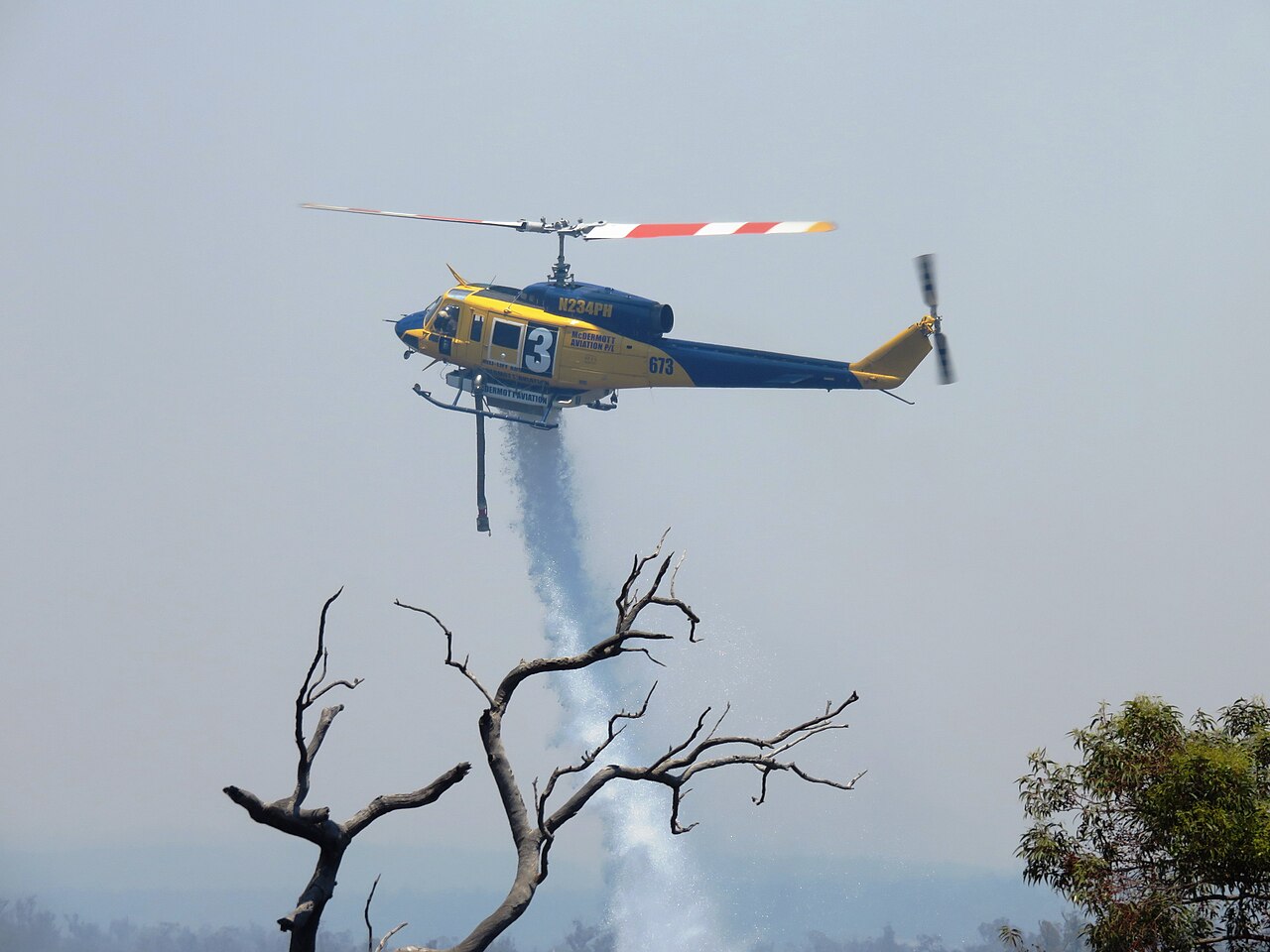
Australian aerospace firm Plane Support has received approval from the Civil Aviation Safety Authority (CASA) to produce cabin air-conditioning ducting for the Bell 214B (B-1) helicopter by additive manufacturing, according to a company press release dated 12 October 2026. The approval sits under CASA's Australian Parts Manufacturer Approval (APMA) framework and caps almost two years of development work carried out with McDermott Aviation, which holds the type certificate for the 214B and is the world's largest operator of the type.
On paper, it is a modest part. The ducting carries air-conditioned air through the helicopter's cabin, and nobody is going to put it on a trade-show plinth next to a printed rocket injector. The interesting part is the route Plane Support took to get it approved. Anyone who has tried to keep an old machine running after the replacement parts got hard to find will recognise it.
A Legacy Airframe, a Supply Problem
The project did not start as a technology demonstration. According to the release, McDermott Aviation started it because some 214B parts had become hard to source. The aircraft in question are working machines: as VoxelMatters reports, the helicopter is flown to fight bushfires across Australia, which is about as unforgiving a duty cycle as an operator can ask for.
John McDermott put the operational logic plainly: "An aircraft waiting on a component you can't easily get hold of is an aircraft that isn't working."
That sentence is the whole business case. If a fleet can't fly without a part that is hard to get, going without it costs far more than almost any engineering effort to reproduce it. The question becomes whether a replacement can be made. In aviation, it also has to be made in a way a regulator will sign off.
Scan, Reverse Engineer, Redesign
The release describes a three-step process that hobbyists restoring vintage equipment will recognise, carried out under far stricter controls. First, the original ducting was 3D scanned. Second, the team reverse engineered the part from that data. Third, the part was redesigned for additive manufacturing while keeping its form, fit and function. That is the standard a replacement aircraft part has to meet if it is going to slot into an existing airframe without changing how the airframe behaves.
That third step matters. A straight copy of a part designed for a different manufacturing process rarely makes a good print. Geometry that was easy to form one way can be awkward or weak when built up layer by layer, and features a printer handles easily may have been impossible in the original. Redesigning for AM while holding form, fit and function constant means balancing what the printer is good at against what the aircraft demands.
Jason Hazell, Plane Support's Director of Engineering, summed up the difficulty: "Ducting sounds simple until you try to reproduce it."
Anyone who has tried to print a curved, thin-walled, hollow part that has to mate precisely with existing hardware at both ends will understand the sentiment. Ducts are all transitions, bends and interfaces, and every one of those has to land in the right place.
The Lab and the Paperwork
To make the parts, Plane Support built a dedicated aerospace additive manufacturing lab around a Markforged FX10. The machine was only one piece, though. The company says it also developed new quality systems, production controls and inspection methods to support the work. VoxelMatters notes that the company's engineers worked with CASA to show that the printed parts met airworthiness requirements, and that the approval process ran roughly two years. The magazine also names Fraser Wright as Plane Support's Director of Manufacturing and Maintenance and describes the finished duct as Queensland-made.
According to the release, which Vertical Mag also published, the approval expands the scope of Plane Support's CASA Part 21K additive manufacturing capability.
A production printer backed by documented controls and inspection is what separates an approved aircraft part from a part that merely fits. The printer produces geometry; the quality system produces evidence. In regulated aviation, the evidence is what gets approved.
Why the Timeline Is the Story
Two years for a cabin duct can sound slow. It is better read as the cost of being early. The release presents the approval as an expansion of an existing AM capability rather than a first step. Hazell says the team had no established process to follow and had to develop its own procedures, and that the groundwork "now gives us a pathway for other components and other aircraft types." Once the procedures, controls and regulator relationship exist, later parts should be able to lean on them, though neither Plane Support nor CASA has said which components, if any, are next.
It is also worth being clear about what has not been announced. The sources do not describe flight-critical structural parts. As reported, the approval covers ducting components for one helicopter type. It is a narrow approval for specific parts, not a blanket licence to print aircraft parts.
What It Means for Makers
The lesson for makers is in the workflow more than the hardware. Scan the original, reverse engineer it, then redesign it for the process you actually have instead of copying the old geometry exactly. That is how a lot of people already keep old printers, vehicles, appliances and tools alive after the manufacturer has moved on. Plane Support's approval is a high-stakes version of the same approach, with the added step of proving every step of the process to a regulator, with each part held to the original's form, fit and function.
The second lesson is about documentation. The release spends as much time on quality systems, production controls and inspection methods as it does on the printer. Makers who sell functional replacement parts, even in unregulated markets, can borrow some of that discipline: record what was measured, how it was printed and how it was checked. That is the difference between "it seemed to fit" and a part you can stand behind.
Finally, the story is a reminder of where additive manufacturing earns its keep. Not every win is a lattice-optimised bracket or a consolidated engine assembly. Sometimes it is a duct for a firefighting helicopter that would otherwise be waiting on a hard-to-source part. That is less glamorous, and arguably more useful.
Sources
- Plane Support gains CASA approval for 3D printed 214B helicopter parts (Plane Support press release via Comms People, 12 October 2026)
- Plane Support wins regulator approval for 3D printed helicopter duct (VoxelMatters, 12 October 2026)
- Plane Support gains CASA approval for 3D printed 214B helicopter parts (Vertical Mag, 12 October 2026)
