
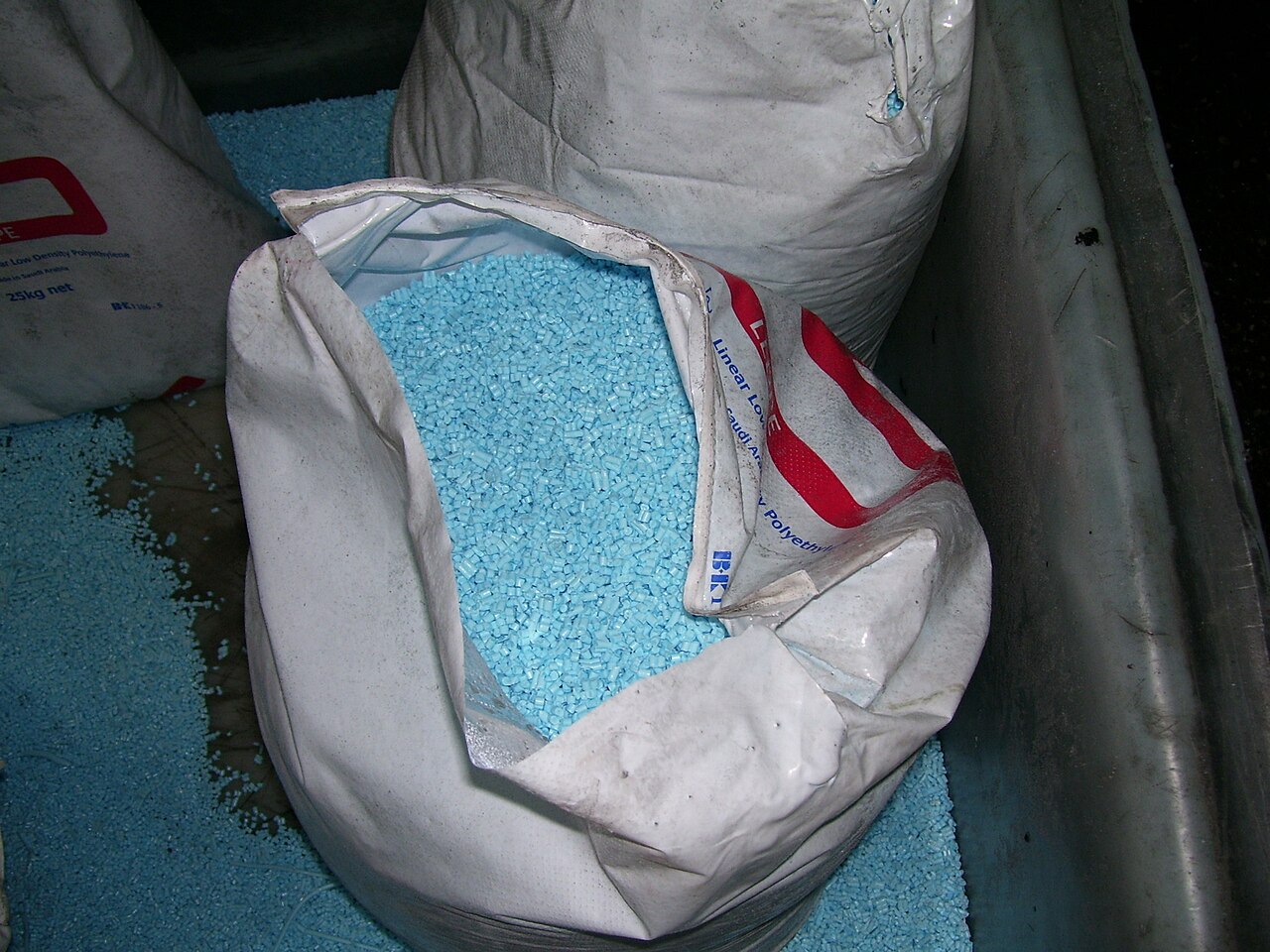
Prusa Research is now selling the raw material that sits upstream of its own filament line. In a post on the Prusa blog dated October 13, 2026, the company introduced Prusament Pellets: the exact pellets it uses to manufacture Prusament filament, now packaged in small batches of up to 14 kg and shipped pre-dried. Prusa pitches them at two audiences that rarely share a sentence: people running large-format fused granular fabrication (FGF) printers, and labs or classrooms doing small-scale polymer research and development.
One caveat up front. As of this writing, the announcement and the shop listing are the only sources available. FilamentFeed did not find independent coverage or hands-on reports, so everything below reflects what Prusa itself has published.
What Prusa Is Actually Selling
The pitch rests on provenance. According to the blog post, these are the exact pellets Prusa uses to manufacture Prusament, its premium-grade filament. The company says raw pellets are generally a commodity shipped with high moisture content, so it dries them on arrival, before manufacturing filament. For this product it takes a portion of the dried pellets and seals them in a plastic canister or bag to keep the moisture level low. The result, Prusa says, is pellets that in most use cases are ready to use immediately after unpacking.
That matters because a supplier shipping material already dried removes a step that otherwise needs a dryer and time. Prusa's wording is careful, though: ready to use "in most use cases," not universally. Anyone with a hygroscopic material and a long storage interval should still check whether drying is needed.
The launch lineup covers four materials, all in natural (uncolored) form, sold in two package sizes. The smaller packages ship in 5-liter canisters; the larger ones come in aluminum-plastic bags. For easier handling of the canisters, Prusa recommends printing an opening wrench by SquasherJoe and a separate extension for easier dispensing.
According to the blog post, the launch prices (US dollars include import duties) are:
- PLA Natural: 4 kg for $44.99, 14 kg for $149.99
- PETG Natural: 4 kg for $44.99, 14 kg for $134.99
- ASA Natural: 3.5 kg for $54.99, 12 kg for $169.99
- PC Blend Natural: 3.5 kg for $69.99, 12 kg for $199.99
Run the numbers and the 4 kg PLA package works out to roughly $11.25 per kilogram, while the 14 kg PLA bag comes to about $10.71 per kilogram. The product is live in the Prusa shop. When we loaded the listing for Prusament Pellets PLA Natural 4kg, it showed an in-stock status and a price of $41.66 for a United States destination, a different figure from the blog's $44.99. We did not determine why the two differ.
Use Case One: Printing Big With Pellets
The first audience is large-format printing. FGF, or direct printing from pellets, skips the filament stage entirely. Prusa's post makes the standard economic argument for the approach: it offers lower prices than traditional FFF/FDM printing because it bypasses the filament manufacturing process. The second benefit is speed, since pellet extruders can lay down material at rates of several kilograms per hour, much faster than standard filament printing.
That throughput changes what is practical. Prusa says the packaging is ideal for printing medium-sized models such as furniture or sculptures, the kind of parts where a conventional filament machine would be physically too small or would need a great deal of material. For those builds, both the per-kilogram cost and the deposition rate start to dominate the project budget.
What Prusa has not announced is hardware to go with the material. In the comments on the blog post, one reader writes that they hope this is a first step toward a pellet head for the Prusa XL, and another wonders whether Prusa might release a desktop filament extruder. In the page text we reviewed, Prusa had not responded to either. For now, these pellets are aimed at people who already own or have built a pellet-fed system.
Use Case Two: The Polymer Lab
The second pitch is less obvious and arguably more interesting. Prusa describes the pellets as a base material for research and education. Because they are natural, uncolored base polymer, researchers or hobbyists can mix them with custom masterbatches to test new colorants, UV stabilizers or mechanical additives. The company names carbon nanotubes and glass fibers as examples.
From there, Prusa notes, university labs operating desktop filament extruders can use the pellets to extrude their own experimental 1.75 mm or 2.85 mm filament. The post frames the problem plainly: raw materials are usually sold in tons or at least hundreds of kilos, and for a few dozen kilos only a handful of manufacturers can help. Prusa says there is no need to buy large quantities for educational purposes and calls the pellets an affordable option for material scientists. A 14 kg ceiling is modest by industrial standards, which is precisely the point. It is sized for an experiment, a course module or a series of formulation trials.
The "same pellets as Prusament" claim does double duty here. A researcher who compounds an additive into this base and extrudes filament can compare against a commercial filament made, per Prusa, from the same pellets. That could make it easier to isolate what an additive changes, though Prusa does not make that argument itself.
Open Questions
The announcement leaves a few things unresolved. One commenter asked whether the pellets are pure resin or already compounded with processing aids, and asked Prusa for the generic chemical class and whether users need to add processing aids and stabilizers for optimal properties. That distinction matters to anyone doing formulation work, since pre-existing additives would confound results. Prusa had not responded in the page text we reviewed, and the blog post itself does not say.
The post also does not say how the PC Blend is composed. Buyers with specific requirements should check the shop pages and ask Prusa before ordering.
What It Means for Makers
For most desktop-printer owners, this is not a product to buy. Without a pellet extruder or a filament extrusion line, a canister of granulate is just a canister of granulate.
For the smaller group who do run FGF machines, it is a notable option: a pre-dried feedstock sold by a filament maker, in quantities that do not require a pallet and a warehouse. The roughly $11.25-per-kilogram price on the 4 kg PLA package, or about $10.71 on the 14 kg bag, gives a concrete number to weigh against whatever granulate supply they use today. The ASA and PC Blend packages cost more per kilogram: about $14.17 and $16.67 at the 12 kg sizes, from the blog's list prices.
For universities, makerspaces and hardware startups doing materials work, the more significant shift may be access. Small batches of a known base polymer lower the barrier to running formulation experiments and spinning custom filament in-house.
The obvious next move would be Prusa hardware that consumes these pellets directly, and at least some readers are hoping for it. Until Prusa says something, though, treat that as speculation, and treat this launch as what it is: Prusa opening up the front end of its own supply chain to anyone who wants to start one step earlier.
