
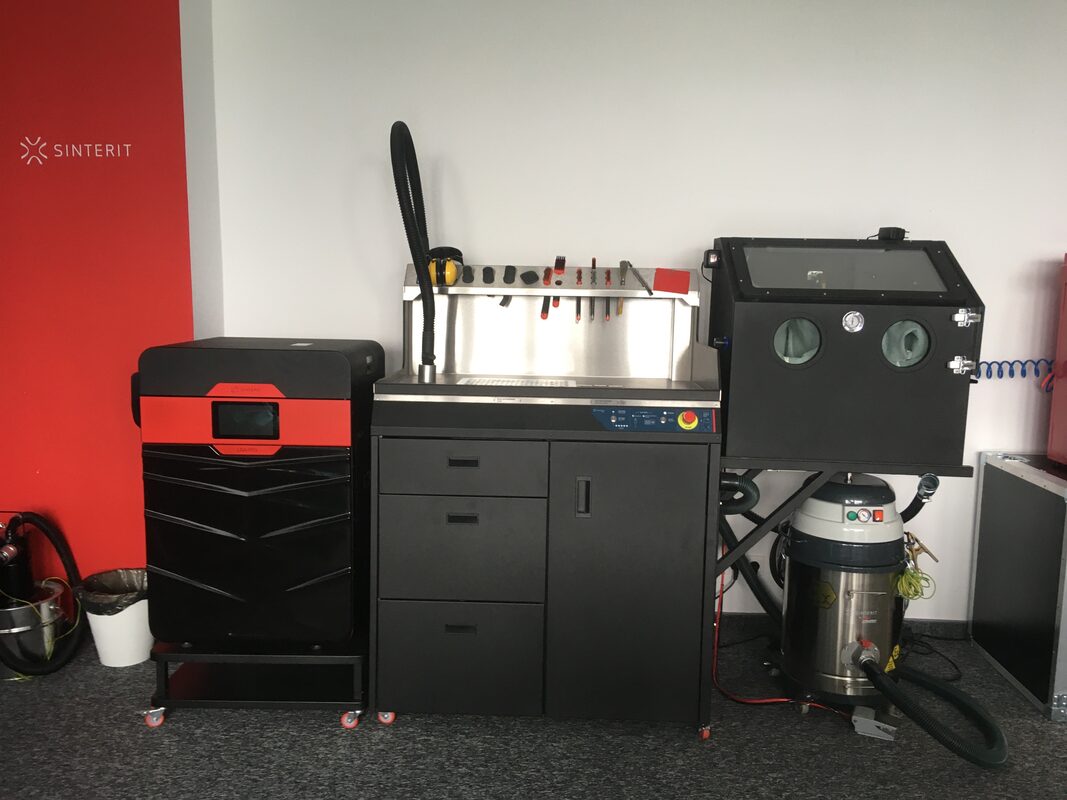
Polymer powder-bed-fusion printer maker Sinterit and German post-processing specialist DyeMansion have announced a formal partnership, pairing Sinterit's compact selective laser sintering (SLS) hardware with DyeMansion's vapor-smoothing and coloring systems. The deal, reported July 29 by 3DPrint.com's Joris Peels, is aimed squarely at makers and small manufacturers who own — or are shopping for — an entry-level SLS machine but have had no straightforward path to the smooth, colored, production-grade surface finish that industrial powder-bed parts are known for.
DyeMansion first posted the news on its own site on July 22, under a German-language headline that translates to "Sinterit & DyeMansion Form Partnership, Enabling Users of Compact SLS Systems a Complete Solution for New Applications" — framing the tie-up as joining forces to deliver a complete solution for compact SLS systems and new post-processing applications. A week later, the broader trade press picked it up as a signal of where the low end of polymer laser powder bed fusion (LPBF) is heading next: not just cheaper printers, but cheaper printers wired into an established finishing ecosystem.
The Hardware Being Bundled
The centerpiece on the printing side is Sinterit's BIANCO2, a desktop-scale SLS system built around a 30W RF CO2 laser with a 130 x 180 x 330mm build volume, priced at €47,000. That's a fraction of what a full industrial SLS platform costs, and it's the kind of machine that has increasingly found its way into small job shops, university labs, and product-development studios that need functional nylon parts without outsourcing to a service bureau.
What those buyers have historically lacked is an affordable, repeatable way to turn as-printed SLS parts — which come out of the build chamber with a grainy, matte, slightly rough surface — into something that looks and feels like an injection-molded part. That's DyeMansion's specialty. The company's VX1 vapor-smoothing unit, built around a 24.6-liter chamber, treats parts printed in common SLS materials including PA12, PA11, and TPU, dissolving and redepositing a microscopic surface layer that seals off pores and levels ridges left by the sintering process. Paired with that is DyeMansion's DM60 coloring system, which lets shops dye finished parts to a target color rather than leaving everything in raw powder-gray or having to hand-paint each unit. Together, the BIANCO2-plus-VX1-plus-DM60 combination is meant to function as a packaged workflow: print, smooth, color, done — without the buyer having to separately source, qualify, and integrate finishing equipment from a different vendor after the fact.
Why Now
The timing tracks with a broader shift the trade press has been describing in polymer LPBF over the past year: as more manufacturers ship sub-€50,000 SLS systems, the printers themselves have become less of a differentiator than what happens after the print finishes. A raw SLS part is functional but visually and texturally unfinished — fine for a prototype, less fine for a customer-facing product or a part that needs a sealed, low-friction surface. Vapor smoothing and dyeing used to be something only owners of full industrial machines bothered to invest in, because the finishing hardware itself carried an industrial price tag and assumed industrial part volumes. By striking a partnership rather than simply publishing a compatibility note, Sinterit and DyeMansion are betting that packaging the two together — rather than leaving buyers to figure out on their own whether a desktop SLS part is even compatible with vapor smoothing — will convert more entry-level SLS buyers into finishing-equipment buyers, and vice versa. Sinterit CFO Łukasz Adach and DyeMansion CEO Felix Ewald both spoke to the rationale in comments to 3DPrint.com, framing the tie-up as a way to extend industrial-grade finishing down into the compact SLS segment rather than keeping it walled off for buyers of six-figure systems.
DyeMansion also used the announcement window to tease a second, smaller product: a compact unit called "PowerShot," which the company says it plans to show at Formnext 2026. Details beyond the name and the trade-show target weren't part of this announcement, but the naming and timing suggest DyeMansion is building out a lower tier of its own finishing lineup to match the lower tier of printer it's now partnering with — a logical next step if the goal is a genuinely accessible smooth-and-colored SLS pipeline rather than an industrial finishing line squeezed awkwardly onto a desktop printer's output.
What It Means for Makers
For anyone running or considering a compact SLS printer, the practical upshot is fewer unknowns. Vapor smoothing chemistry and process parameters are notoriously particular about the powder and part geometry they're treating; an unofficial or unverified pairing between a random desktop SLS printer and a random vapor-smoothing unit carries real risk of warping, over-etching, or simply wasted material. A named, vendor-endorsed pairing — BIANCO2 parts through a VX1, colored on a DM60 — gives buyers a documented, presumably tested combination to point to instead of guessing. It also matters for anyone weighing an entry-level SLS purchase against outsourcing to a service bureau. Bureaus have long offered smoothing and coloring as standard add-ons; in-house SLS shops mostly haven't been able to match that without a second major capital purchase and a lot of trial and error. A packaged path from Sinterit and DyeMansion narrows that gap, at least for shops able to absorb the combined cost of a €47,000 printer plus DyeMansion's finishing hardware — still a serious investment, but one now sold with an explicit roadmap rather than left to the buyer to assemble. Sinterit sells into more than 80 countries, so the practical reach of this partnership — how many of its dealers and service partners actually stock or support DyeMansion equipment locally — will matter as much as the announcement itself. That's the detail worth watching as the two companies move from a joint press release to actual joint installations.
