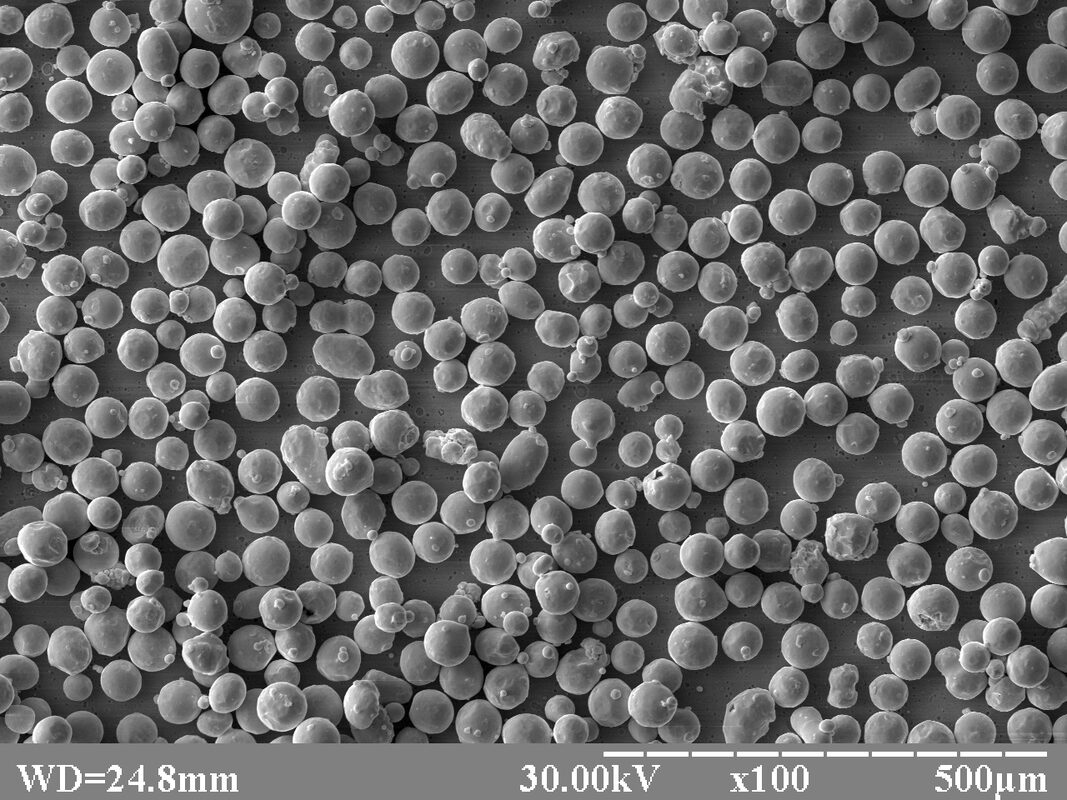
Tekna, the Sherbrooke, Canada-based maker of metal powders and plasma systems, has posted a record-EBITDA quarter. In its third-quarter 2026 report, published November 5, the company said revenue rose 61% year over year to CAD 13.4 million, up from CAD 8.3 million, and EBITDA reached a record CAD 1.9 million against CAD 0.3 million a year earlier. Order intake doubled and the backlog grew to CAD 25.5 million.
For a company of Tekna's size, those are big moves. They are also more nuanced than the headline suggests, because the mix of what Tekna sold this quarter changed and dragged one important margin downward. The details say a good deal about where demand for metal materials is coming from right now.
The numbers, line by line
Here is how the quarter breaks down, with the year-earlier figure in parentheses, as reported by Tekna:
- Revenue: CAD 13.4 million (CAD 8.3 million), up 61%
- Contribution margin: 50.7% (57.6%)
- EBITDA: CAD 1.9 million (CAD 0.3 million), including CAD 1.0 million of non-recurring items
- Adjusted EBITDA: CAD 2.9 million (CAD 0.5 million), a 21.5% margin
- Order intake: CAD 10.6 million (CAD 5.3 million)
- Backlog: CAD 25.5 million (CAD 18.2 million)
VoxelMatters, reporting on the results on November 12, converted the key figures to US dollars: EBITDA of roughly US$1.33 million, order intake of about US$7.41 million and a backlog of around US$17.84 million.
The adjusted EBITDA figure is the cleaner read on underlying performance. Strip out the CAD 1.0 million in non-recurring items and the business generated nearly six times the adjusted EBITDA it did a year ago on revenue that grew by well under double. That is operating leverage: fixed costs being spread across a substantially larger top line.
Why the margin went down while profit went up
The one figure moving the wrong way is contribution margin, which fell nearly seven percentage points, from 57.6% to 50.7%. Tekna attributes the decline to two things: a heavier weighting toward Materials sales, which carry lower margins, and non-recurring items in the quarter.
This is the classic tension for a company that sells both equipment and consumables. Systems revenue, in Tekna's case its plasma equipment, can be lumpy but lucrative on a per-unit basis. Materials revenue, the powders themselves, tends to be steadier and more repeatable but thinner per dollar. A quarter dominated by powder sales will typically show more revenue and a lower blended margin, which is exactly the pattern here. Tekna also credited strong order and project execution in Systems, so both sides of the business were active.
For investors, the trade looks acceptable: absolute profit rose sharply even as the percentage slipped. For anyone tracking the metal additive supply chain, the more interesting point is simply that powder volume is what moved the needle.
Where the demand is coming from
Tekna names three end markets driving Materials demand: aerospace, defense and medical. Those are the sectors that have historically consumed the most specialized, tightly specified metal feedstock, and where qualification requirements make it costly for a customer to switch suppliers once a material is approved.
The company also points to two broader trends: reshoring and localized manufacturing. Both favor suppliers with production capacity close to their customers, particularly in defense, where sourcing rules and supply security carry real weight. Tekna has set a target of double-digit annual revenue growth through 2030, a goal VoxelMatters also highlighted in its coverage. The company also reported shorter delivery schedules and growing customer order sizes.
Orders, backlog and the road into 2027
Order intake of CAD 10.6 million doubled year over year, but it is worth noting that it came in below the quarter's CAD 13.4 million in revenue. In other words, Tekna shipped more than it booked in Q3. That is not alarming on its own, because a single quarter's bookings can swing with the timing of large Systems orders, but it is the number to watch over the next two reports.
The backlog offers the counterweight. At CAD 25.5 million, up from CAD 18.2 million a year earlier, it is roughly 40% larger and equivalent to nearly two quarters of revenue at the current run rate. Tekna says that backlog extends its revenue visibility into 2027, and its chief executive said new Materials orders support continued positive momentum as the company moves into the fourth quarter.
Leaner on the cost side
Chief executive Claude Jean pointed to restructuring work as well: the ongoing consolidation of sites and the simplification of the company's Asian entities, which he said are creating a leaner cost base and a simpler operating structure. Those moves plausibly help explain why EBITDA grew so much faster than revenue, though Tekna does not quantify their contribution in the report.
There was also a governance change in the period. Egil Haugsdal was elected Chair of the Board at an extraordinary general meeting on October 1.
What It Means for Makers
Very few FilamentFeed readers will buy powder directly from Tekna. But the companies that make feedstock sit upstream of every metal part that eventually reaches a service bureau, a printing farm or a design shop, and their results are a useful gauge of where industrial metal demand is actually flowing.
The signal from this quarter is fairly clear. Demand is concentrated in aerospace, defense and medical, sectors with long qualification cycles and sticky supplier relationships, and it is being reinforced by a push to manufacture closer to home. That combination tends to support steady, unglamorous volume rather than speculative spikes.
For makers who outsource metal parts, a healthier materials supply base is broadly good news. Suppliers with strong earnings and a deep backlog are better positioned to hold capacity and keep lead times stable. The caveat is that when powder demand is driven by high-specification regulated industries, those customers will claim first priority on capacity, and pricing for specialized alloys is unlikely to drift lower simply because volume is rising.
The bottom line: Tekna's record quarter is less a story about one company's turnaround than a data point showing that the metal materials business is being pulled forward by defense, aerospace and medical work. Watch whether order intake catches up with revenue in Q4. If it does, the growth target through 2030 starts to look credible rather than aspirational.