
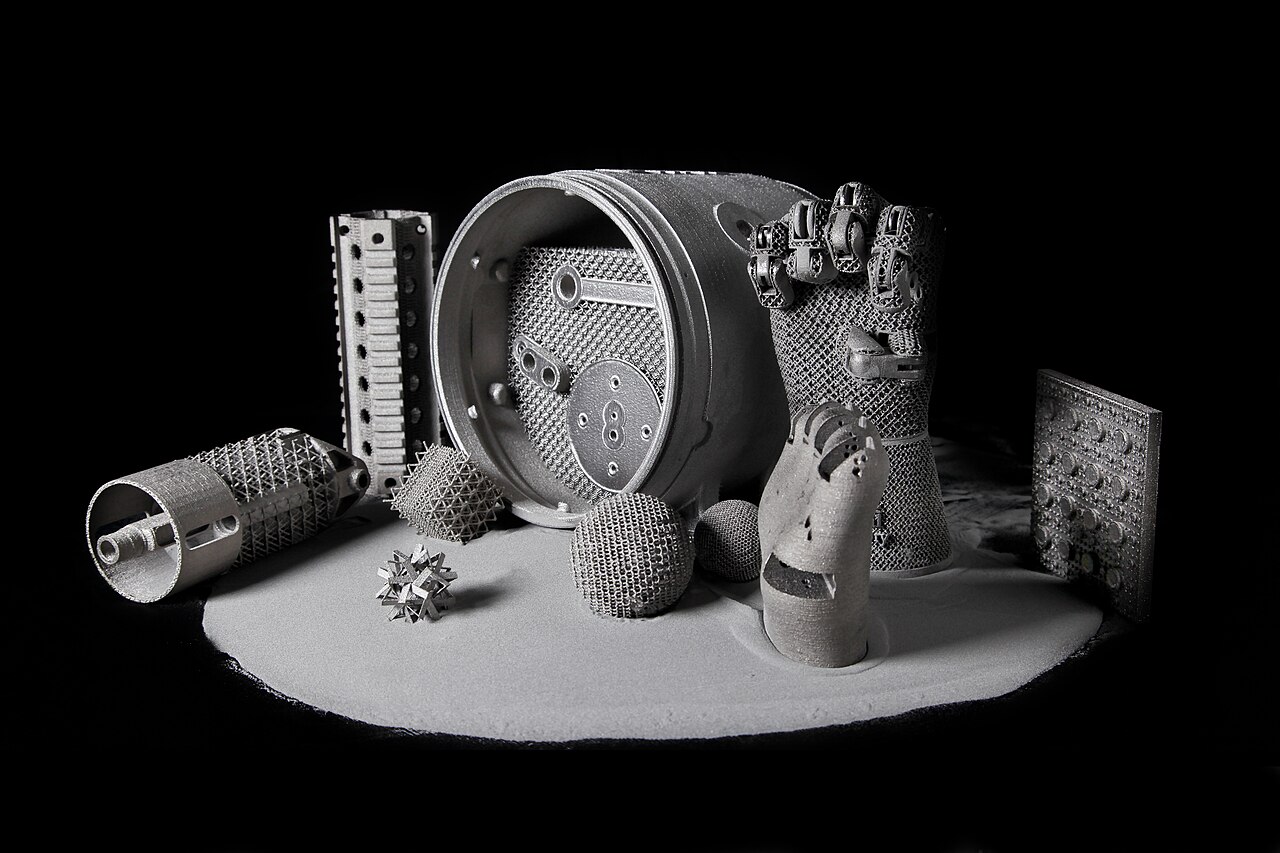
One anonymous customer just became one of the more interesting data points in metal AM this year. On July 22, 2026, Sherbrooke, Quebec-based Tekna Holding ASA (OSE: TEKNA) announced purchase orders worth more than CAD 3 million for Ti-6Al-4V titanium powder from what it calls "a major U.S.-based contract manufacturer supplying precision components to defense original equipment manufacturers (OEMs)." That same customer bought roughly CAD 0.5 million of powder across the whole of 2025. One buyer, one alloy, one year: a sixfold increase.
The customer asked not to be named. Tekna describes it only as a U.S. contract manufacturer producing precision components for defense OEMs, a relationship that dates back to 2017. Roughly half the ordered volume had already shipped when the release went out, with the balance scheduled through the second half of 2026. "This expansion reflects the trust our customer has placed in Tekna's quality, consistency, and reliability over nearly a decade of partnership," CEO Claude Jean said in the release.
Why a powder order tells you more than a printer order
Printer sales are capital expenditure: lumpy, loudly announced, and a machine that shipped in March can sit idle in November waiting on a qualified process. Consumable volume is different. Nobody buys six times as much titanium powder to store it in a drum. Powder is consumed by parts that were actually built, so a step change in feedstock purchasing is about as close as an outsider gets to watching a production line's duty cycle.
That is the framing Tekna itself puts on the news. The release states that "contract manufacturers are scaling production of titanium components to meet rising demand from OEM customers," as additive manufacturing moves out of development and into serial production. It is also the 2026 pattern: the interesting AM numbers show up in materials revenue, not machine unit counts.
Tekna's own news feed helps calibrate how much of this is one lucky customer versus a trend. Its 2026 releases include a USD 8.1 million multi-plasma-system order from a new U.S. critical-minerals customer on June 30, a CAD 1.5 million system order from a UK university on March 26, Q1 2026 results on May 7 headlined "Strong Growth in Revenue Supported by Robust Demand in Additive Manufacturing," and a March 17 collaboration with Farsoon to industrialize Ti-6Al-4V powders for laser-based powder bed fusion. VoxelMatters puts the Q1 revenue growth at 19 percent year over year.
What Ti64 powder actually is
Ti-6Al-4V — universally shortened to Ti64 — is titanium alloyed with roughly six percent aluminium and four percent vanadium, exactly as the name encodes. It is the workhorse titanium alloy of aerospace and, increasingly, of metal AM. VoxelMatters notes it is valued for its strength-to-weight ratio and corrosion resistance, and Tekna's release describes the powder as widely used in additive manufacturing of critical aerospace and defense components — about as archetypal an AM application as exists.
The alloy composition, though, is the easy part. What separates a printable metal powder from expensive grey dust is geometry and cleanliness. Powder bed fusion machines spread a thin layer across a build plate with a recoater, then melt a cross-section into it — a process unforgiving about how particles behave in bulk. Powder that flows freely spreads into a uniform, dense layer. Powder with irregular, jagged, or satellite-covered particles clumps and leaves voids, and every void is a potential defect in the finished part.
This is why plasma atomization exists and why it commands a premium over cheaper routes. Tekna describes its powder line as vertically integrated around proprietary induction plasma technology, the same core technology behind the plasma systems it sells to other industries. Tekna says its induction plasma atomization process "delivers powders with exceptional density, high flowability, and superior sphericity." You are not paying for titanium by the kilogram in any meaningful sense. You are paying for particle sphericity, flowability, freedom from internal porosity, and the lot-to-lot consistency that lets a defense supplier qualify a process once and keep running it.
Not a spool: how metal feedstock differs
For anyone whose materials experience stops at filament, the mental model transfers badly. A spool of PLA is a consumer good: you order it, you print, and if a batch is off you tweak a temperature.
Metal powder is closer to a regulated chemical input. Fine titanium powder is reactive and, at the right particle size and concentration, combustible, which shapes how it is stored, decanted, and loaded. Machines run under inert atmosphere. Unfused powder from a build is typically sieved and reused, so operators track how many thermal cycles a lot has seen. Chemistry — particularly oxygen pickup — drifts with reuse, and for defense hardware that drift is a documented, controlled parameter rather than a shrug.
Which means changing powder suppliers is not a purchasing decision, it is a requalification project. A relationship running since 2017 is the norm here, not the exception, and it explains why a sixfold increase from an existing supplier is more informative than a new logo.
The near-shoring angle
Tekna explicitly frames the order as evidence of a shift in sourcing. "Demand for near-shore, high-performance metal powders is accelerating as our customers move additive manufacturing into serial production," Jean said. Titanium feedstock supply has geopolitics baked into it, and a U.S. defense contract manufacturer buying from a Canadian producer is a materially different risk posture than sourcing from further afield. Where a single disrupted lot can stall a delivery schedule, supply chain geography becomes a specification rather than a preference.
What It Means for Makers
Practically, none of this changes what is on your bench. Plasma-atomized Ti64 is not a material you will be spreading in a garage, and the qualification apparatus around it is precisely what makes it inaccessible to hobbyists.
What it does change is the trajectory of the industry that eventually hands you tools. Serial metal production means process parameters get hammered flat, machine reliability becomes a contractual obligation rather than a marketing claim, and powder producers invest in capacity. It also means the AM skill set is drifting toward the industrial: metallurgy, powder handling, process qualification, and traceability rather than slicer settings alone.
The narrower read is simpler. When a shop that has bought from the same supplier since 2017 suddenly needs six times the titanium, something on its floor stopped being a prototype and started being a part number. Repeated quietly across enough contract manufacturers, that is what "AM going serial" actually looks like — and it shows up in powder invoices well before it shows up in announcements about the parts themselves.
Sources
- Tekna Secures Purchase Orders Worth Over CAD 3 Million for Titanium Powder Supporting U.S. Defense Manufacturing — Tekna press release, July 22, 2026
- Tekna's titanium powder orders from a U.S. defense customer rise sixfold — VoxelMatters, July 23, 2026
- Tekna News & Press Releases index — Tekna
- Tekna Powders — induction plasma atomization — Tekna
