
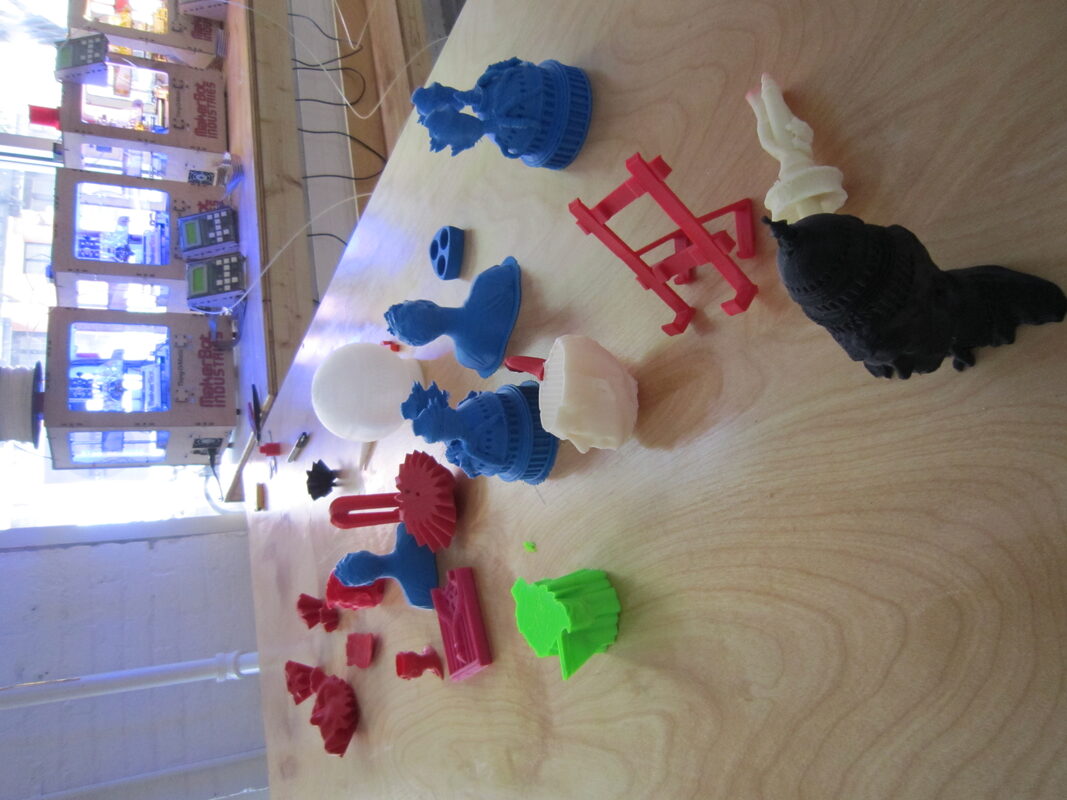
Ask most makers what a print "costs" and they'll quote you the filament — grams times price per gram, done. That number is real, but it's rarely more than a third of what the part actually cost to produce. This is a companion piece to our guide on how to price 3D printing services, which covers markup, margins, and what to charge a customer. This article covers the step before that: figuring out the true underlying cost of a print, so whatever price you set later is built on a real number, not a filament-only guess.
Filament Cost
Filament price varies more than most buyers expect. A 2026 pricing breakdown from filament price-tracking site SpoolMath puts budget PLA from brands like Sunlu, Overture, and Elegoo at $15–19/kg, mid-range spools from Bambu Lab, Hatchbox, and Polymaker's PolyLite at $19–25/kg, and premium filament such as Prusament or MatterHackers Pro at $29–40/kg. PETG typically adds $2–5/kg over PLA, landing around $17–35/kg.
To turn a kilogram price into a per-part cost, use the grams the slicer reports — but that figure is usually just the model, not the filament that actually leaves the spool. Purge towers, prime lines, failed first layers, and tool-change waste all consume filament that never becomes part of the finished object. A common fix is adding a flat waste percentage on top of the sliced weight; the right number depends on your setup (a single-extruder printer with a dialed-in first layer wastes far less than a multi-color AMS running frequent purge towers), so treat any specific percentage as a starting assumption to calibrate against your own usage, not a fixed constant.
Electricity Cost
Electricity is usually the smallest line item, but it isn't zero. A Prusa community forum thread on power consumption is a useful reference: Prusa's own FAQ figures cite roughly 80W printing generic PLA and 120W printing generic ABS, while forum members who metered their own machines reported peaks near 210W on a Prusa MK3S printing PETG with the heated bed cycling, and idle draw of 60–70W with the bed off. The bed's duty cycle — not the hotend or steppers — is the biggest swing factor, which is why hotter-bed materials like ABS and PETG cost more per hour than PLA.
The math is simple: average wattage during the print, times hours printed, divided by 1,000, times your electricity rate per kWh. A printer averaging 90W for 3.5 hours consumes 0.315 kWh. Rates vary by state and utility, so use your own bill's rate rather than a national average.
Machine Depreciation
A printer is a depreciating asset — bearings wear, hotends clog, belts stretch, and the machine eventually gets retired. Fold that into a per-part cost through amortization: take the purchase price (minus any resale value you expect to recover), divide by the hours you realistically expect to print over its working life, and you get a depreciation rate in dollars per hour, multiplied by the hours a given part takes. Expected hours, not years, is what matters — a printer running eight hours a day, five days a week racks up over 2,000 hours a year, so "lifetime" should be tracked in print hours, not calendar time.
Failure Rate
No print farm — or hobbyist — has a 0% failure rate. Spaghetti, warped corners, mid-print clogs, and power blips eat filament, electricity, and machine time without producing a sellable part. Rather than guessing a dollar figure per failure, apply a failure-rate multiplier across successful prints: adjusted cost equals base cost divided by (1 minus your failure rate). If roughly 1 in 10 prints fails outright, a $3.00 base cost becomes $3.00 ÷ 0.90 = $3.33, since successful prints absorb the failed ones. Your own failure rate depends on complexity, bed adhesion, and how closely you monitor unattended runs — track your own scrap pile for a month rather than borrowing someone else's number.
Labor
Labor is the cost category people underestimate most, because so little of it happens while the printer is actually extruding. It covers slicing and file prep, bed leveling and nozzle checks, periodic monitoring, and post-processing — support removal, sanding, gluing multi-part assemblies, or painting. None of that shows up in the slicer's time estimate, but all of it is real time. Time it rather than estimate it, then value that time at an hourly rate reflecting what it's worth. Even a modest rate turns fifteen or twenty minutes of hands-on work into a cost that can rival or exceed the filament itself — the biggest blind spot in filament-only math, not the smallest cost.
Worked Example
Here's a full walkthrough for one specific part — a small PLA mounting bracket — using assumptions flagged clearly as an illustrative example, not universal figures. Plug in your own numbers and the math holds.
Assumptions: PLA at $22/kg (mid-range, per the SpoolMath figures above); the slicer reports 45g for the part, plus a 10% waste/purge allowance, for 49.5g total; a 3.5-hour print; a printer averaging 90W while printing (within the 80–120W PLA range reported in the Prusa forum thread); a local electricity rate of $0.16/kWh; a $700 printer with an expected working life of 5,000 print hours and no resale value; an 8% failure rate; and 20 minutes of combined setup, monitoring, and post-processing labor at $25/hour.
Filament: 49.5g × ($22 ÷ 1,000) = $1.09. Electricity: 90W × 3.5h ÷ 1,000 = 0.315 kWh × $0.16/kWh = $0.05. Depreciation: $700 ÷ 5,000 hours = $0.14/hour × 3.5 hours = $0.49. Labor: 0.333 hours × $25/hour = $8.33. Base cost: $1.09 + $0.05 + $0.49 + $8.33 = $9.96. Applying the 8% failure-rate multiplier: $9.96 ÷ 0.92 = $10.83 — the true cost of that one bracket.
Filament and electricity together were under a dollar and a half. Labor and depreciation — the categories a filament-only estimate ignores entirely — made up over 80% of the total.
Putting It Together
The general formula: (filament + electricity + depreciation) ÷ (1 − failure rate), plus labor. Every input is measurable on your own setup: weigh your waste, meter your printer if unsure of its wattage, check your utility bill for the real rate, track your own failure log, and time your own post-processing instead of guessing.
Once you have an honest cost-per-part number, you're ready for what to charge — margin, market rate, and profit are covered in our guide to pricing 3D printing services. Cost and price are different calculations, and skipping the first is how "profitable" print businesses quietly lose money on every job.
