
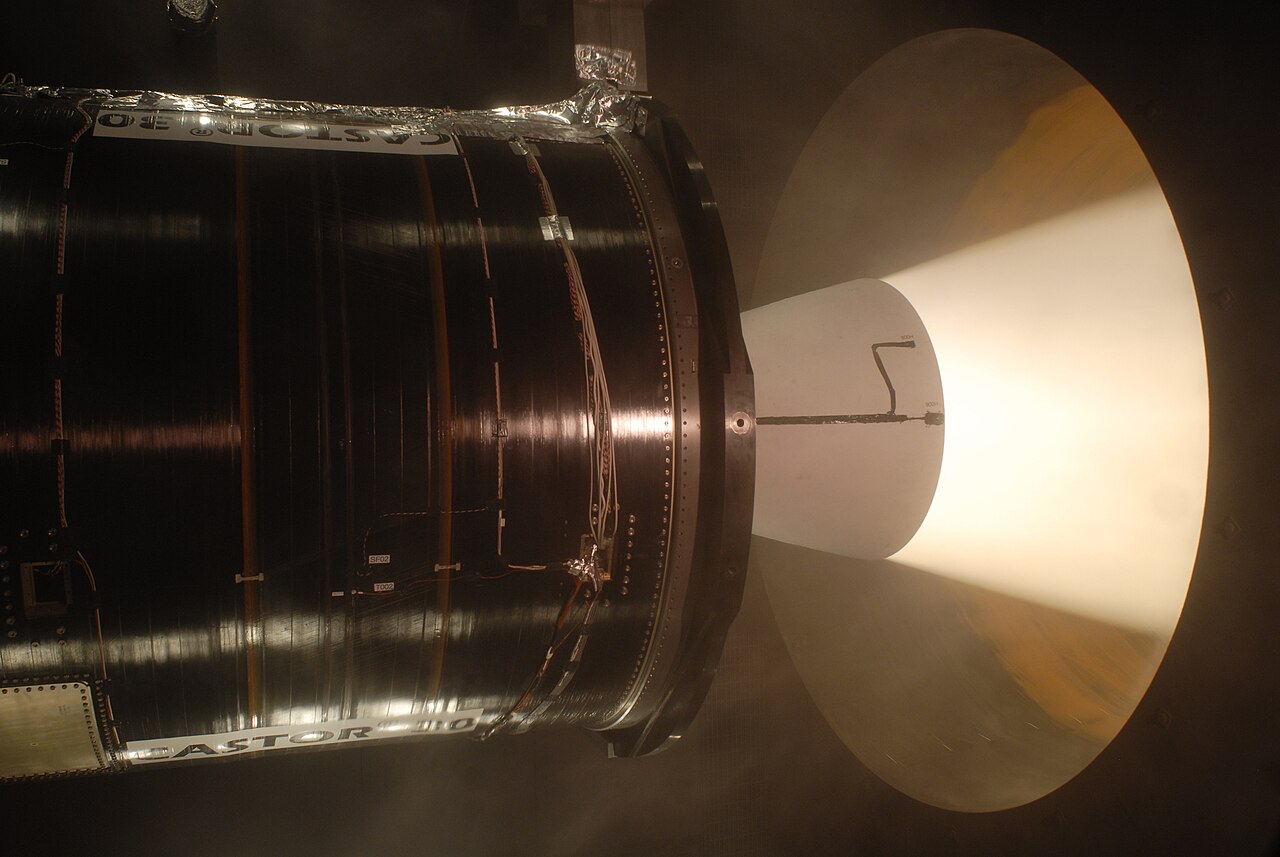
X-Bow Systems used the AUSA Annual Meeting in Washington, DC, on October 12 to announce that Leidos has selected it to develop and produce booster motors for the U.S. Army's Low-Cost Containerized Munition (LCCM). The details are in the company's press release (via mirror). The work starts with design, qualification testing and static fires, and full-rate production at scale is planned for 2027. The release does not disclose a contract value, quantities, or motor specifications.
The pitch is about quantity, not finesse. "Modern conflict is decided by how many rounds you can put downrange, not how exquisite each one is," said Jason Hundley, X-Bow's founder and CEO. A low-cost cruise missile only works as a concept if every part of it can be built cheaply and in volume, and the solid rocket motor has historically been one of the hardest parts to scale. X-Bow says its additive manufacturing process fixes that.
What Was Actually Announced
Leidos is the prime on LCCM and, according to the release, will produce the munitions in large quantities. X-Bow's job is the booster motor, the propulsion stage that gets the munition moving. The release says LCCM advances the Department of War's "Arsenal of Freedom" initiative, under which Leidos will produce the munitions in large quantities.
The sequence matters. This is not a production order yet. The agreement, as 3D Printing Industry summarized it, covers design work, qualification testing and static fire trials first, with full-rate manufacturing to follow in 2027. In other words, the Albuquerque-based company still has to show that its motors meet the program's requirements before the volume numbers mean anything. X-Bow scheduled briefings at AUSA from October 12 to 14.
3D Printing Industry covered the announcement, and Tom's Hardware followed on October 17.
Why Printing Matters for a Rocket Motor
X-Bow does not publish the details of its process. It calls it proprietary and presents it, in 3D Printing Industry's account, as a fix for a "50-year bottleneck" in solid rocket motor (SRM) output. That is a strong claim, and it comes from the vendor. The more concrete argument appears in Tom's Hardware's reporting: additive manufacturing suits the complex geometries SRMs need, and it lets X-Bow build and test new designs in days instead of months or years.
That second point matters most for this contract. The first phase of the Leidos agreement is essentially an iteration loop of design, qualification and static fire. A process that shortens each cycle from months to days lets a supplier get through qualification faster, or try more variations in the same time. Then comes the real test. Producing motors at full rate in 2027 is a different problem from producing qualification hardware, and fast prototyping alone will not solve it.
The Track Record Behind the Pitch
X-Bow is not a new company with only a slide deck. Tom's Hardware notes it was founded in 2016 and has produced more than 2,100 combat-ready rocket motors. The press release ties that figure to the company's recently completed first major production contract and says the Leidos selection builds on it.
The company is also busy. The release calls LCCM the latest of six new propulsion programs X-Bow has been selected for in 2026, across the Navy, the Army and the Missile Defense Agency. The release also says its revenue and backlog have more than doubled since 2023. Neither figure is broken out in dollars in the material available, so read them as direction rather than scale.
A Crowded Field of Printed Propulsion
X-Bow is one of several companies pitching additive manufacturing as the answer to munitions production capacity. 3D Printing Industry pointed to Ursa Major, which uses its Lynx process. In February 2026, Ursa Major completed an SRM Manufacturing Pathfinder Program with the Navy and the Office of Strategic Capital, a cost-share effort backed by a combined $25 million from the three partners. It static fired a 10-inch SRM prototype, and its tooling lets a single line switch between 2-inch and 22-inch motors. The same report noted that L3Harris finalized a $1 billion Department of War investment in its Missile Solutions unit in April. The funding is meant to expand and modernize SRM facilities in Camden, Arkansas; Huntsville, Alabama; and Orange, Virginia, among other locations.
Tom's Hardware listed more evidence that printed propulsion and airframes are becoming normal in defense work: a static-fire test of 3D-printed rocket propellant by Chromatic 3D Materials, a cryogenic rocket engine demonstration by Othisis in August, a $30 million contract to prototype 3D-printed jet engines for the U.S. Air Force, and the U.S. Navy printing drones and parts aboard aircraft carriers.
So the competition is not over whether to print rocket motors. It is over who can qualify first and then deliver steadily at volume. X-Bow's 2,100-motor record is its strongest argument there. Ursa Major's line that switches between motor sizes, and L3Harris's large investment, show the other approaches buyers are weighing.
What It Means for Makers
None of this involves the printer on your bench, and the processes in question are proprietary industrial systems, not anything you can buy. But the shape of this deal will be familiar to anyone who has taken a printed part from prototype to small batch.
First, the business case for additive manufacturing here is iteration speed and geometry, not the cost of each part. Moving from months to days per design cycle is the same benefit makers get when they reprint a bracket overnight instead of waiting for a machined part. The scale is very different, but the reasoning is the same.
Second, qualification is the gate. A printed part that works once is a prototype. A printed part that works the same way every time, across a production run, is a product. The Leidos agreement puts static fires and qualification testing before full-rate production for exactly that reason. Being able to repeat a result is the hard part, whether you are printing PETG enclosures or solid rocket motors.
Third, notice what is still unknown. There is no disclosed contract value, no production quantity, and no public motor specification. The 2027 full-rate target is a plan, not a delivery. The milestones to watch are the static fire results and whether production starts on schedule. If X-Bow hits them, this will be one of the clearest cases yet of additive manufacturing working at munitions scale. If it slips, the "50-year bottleneck" will take longer to break than the press release suggests.
Sources
- Leidos Selects X-Bow to Provide Rocket Motors for U.S. Army's Low-Cost Cruise Missile (X-Bow press release, PR Newswire, via mirror)
- X-Bow 3D Printed Rocket Motors Selected for Army Cruise Missile (3D Printing Industry)
- US Army to use 3D-printed rocket motors for low-cost cruise missiles (Tom's Hardware, Oct 17, 2026)
