
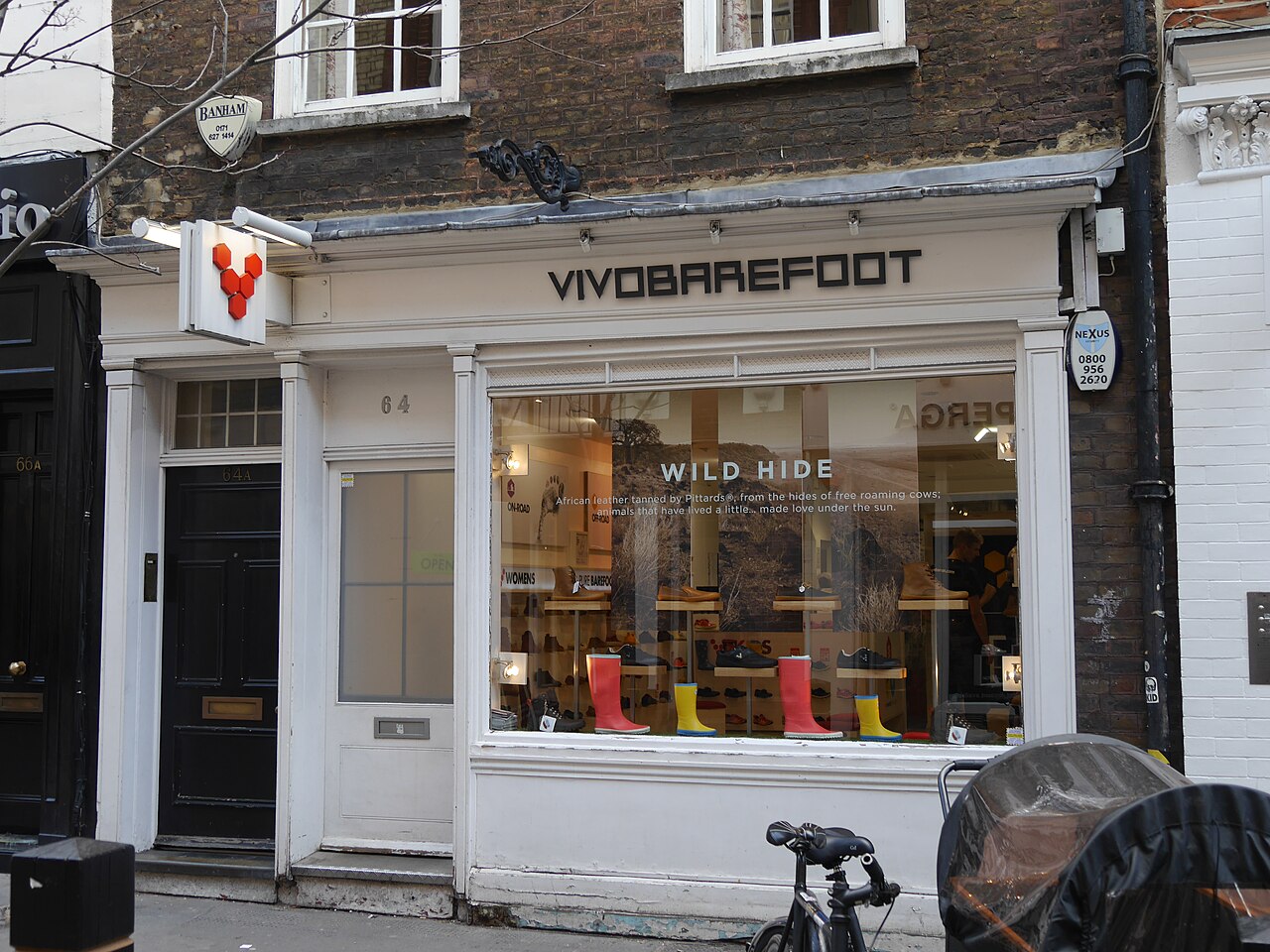
Most partnership announcements in additive manufacturing are about the future. This one points to a product people can already wear. Chemicals group Arkema and printer maker Carbon are expanding a materials collaboration that, according to trade coverage, has run for more than 13 years. They are aiming it at elastomer lattice parts for consumer goods such as footwear midsoles. The example both companies point to is the Vivobarefoot Tabi Gen 02, which Carbon's footwear page describes as a fully custom sandal printed with Digital Light Synthesis (DLS) from a 3D scan of the wearer's foot.
We could not read the joint release from Arkema and Carbon directly. This article draws on Carbon's own product material and on reports from 3D Printing Industry and VoxelMatters, both of which covered the expanded partnership this week.
Who Does What
The two companies split the work along familiar lines. According to 3D Printing Industry, Arkema supplies the material science and the industrial capacity to scale up production, and its specialty UV-curable materials are the chemical base for Carbon's work. Carbon takes that base and formulates elastomers tuned for its DLS printers. VoxelMatters adds that Arkema's additive business goes well beyond photopolymers. The company supplies thermoplastic pellets, powders and UV-curable resins, and it often co-develops materials directly with printer OEMs.
That arrangement matters more than it might seem. A printer company can design a resin that prints well, but a resin that prints well on a lab bench is not the same as one that can be made consistently, in volume, for a consumer brand's production run. A chemical supplier can make materials at volume, but it needs a printing process and a set of applications to sell into. A collaboration that has lasted over a decade suggests that both sides have found the arrangement worth keeping.
The 3D Printing Industry report includes comments from Carbon CTO Jason Rolland and from Julie Haevermans, VP Marketing at Arkema Coating Solutions. Rolland said Arkema's scale-up expertise lets his team focus on developing elastomers for performance, comfort and customization. Haevermans said Arkema intends to keep building on its work with Carbon, with performance and sustainability as the priorities.
The Material Family
VoxelMatters lists three Carbon elastomers relevant to the partnership. Each is tuned for a different mechanical job:
- EPU Pro is the material VoxelMatters says is used for Vivobarefoot's custom footwear, offering durability and light weight.
- EPU 46 is described as having energy return properties and tunable stiffness, the springy rebound you want underfoot or under a cyclist. VoxelMatters cites custom bike saddles and footwear midsoles as applications.
- EPU 45 goes the other way and is known for energy damping and strain-rate sensitivity, which means absorbing impact instead of returning it. VoxelMatters credits it with the success of 3D printed football helmets.
The difference between return and damping is the core of the whole business. The same lattice geometry behaves very differently depending on whether the polymer it is printed in bounces back or soaks up energy. Having distinct formulations for each behavior gives designers two separate levers. They can change the material, and they can change the lattice.
Lattices, Software and the Foot Scan
The material is only half of the system. Carbon's footwear page describes multizonal lattices, meaning lattice structures whose properties change from one region of a part to another. It also describes the company's Design Engine software, which is used to tune stiffness, energy return and airflow, including with multi-zone lattices. In principle, a heel strike zone, an arch and a forefoot flex area can each get their own lattice behavior within a single printed part.
The Tabi Gen 02 takes the idea to its logical endpoint. Instead of tuning zones for an average foot in a size run, each sandal is generated from a scan of an individual foot and then printed. According to 3D Printing Industry, the sandal was developed with Carbon and is manufactured by Oechsler. Switching to DLS made it lighter, at roughly 91 grams per sandal, with an ultra-thin 2 mm sole. That thin sole fits Vivobarefoot's minimalist approach. It also suggests that the lattice and material can carry a structural load at very small thicknesses, rather than relying on a thick slab of cushioning.
The supply chain is worth noting too. Arkema supplies the chemistry base, Carbon formulates the material and provides the printing platform and design software, Oechsler handles production, and Vivobarefoot sells the finished sandal. Consumer-scale additive manufacturing tends to look like this: a chain of specialists, each responsible for one link.
What It Means for Makers
Nobody reading this is going to run EPU Pro on a desktop machine. DLS is an industrial process. Even so, there are some practical lessons for people who print flexible parts at home.
Geometry and material work together. The Carbon story only holds up because the lattice and the polymer are designed as a pair. If you print TPU lattices for insoles, grips or bumpers, you have already seen that the same infill pattern feels completely different in a soft grade than in a stiff one. Carbon's range of return and damping grades formalizes that relationship. Makers can borrow the same mental model: decide whether a part should bounce or absorb, and pick the material accordingly before tuning the lattice.
Zoned design is the real innovation. The headline feature in Carbon's pitch is not that the part is printed. It is that stiffness, rebound and airflow can vary across one part. Slicers and design tools that support variable-density or region-specific infill let hobbyists try a rough version of the same idea. A 2 mm, 91-gram production sandal is a useful benchmark for how far material efficiency can go.
Scan-to-print customization is becoming practical. Making a product from one person's foot scan used to be a demo-booth trick. The Tabi Gen 02 shows it working as an actual consumer product with a named manufacturing partner. For makers with phone-based or structured-light scanners, the workflow of scanning, generating geometry and printing is a familiar one. The difference here is the industrial material behind it.
Bottom Line
This is not a breakthrough announcement. It is a long-running supplier relationship getting bigger. That may be the more meaningful signal. A chemicals company is pledging to keep developing printable elastomers with its partner, a printer company has a family of grades for return and damping, and a footwear brand is selling scan-based custom sandals made by a contract manufacturer. Together, they suggest that lattice elastomers have moved beyond the prototype stage, at least in footwear and protective gear.
