
North Carolina-based restor3d says its 3D-printed titanium hip cup is ready for the general market. In a Business Wire release published ahead of the AAHKS 2026 meeting, the company said its Velora Acetabular System enters Full Commercial Release this month, following what it called a successful Limited Market Release. The same announcement marks the completion of the first Limited Market Release cases for its Identity Kinematic Alignment (KA) knee planning approach, and says the company is working toward Full Commercial Release of its Identity 3DP Porous Total Knee Arthroplasty System in 2027.
None of those milestones is dramatic on its own. Taken together, they show a medical additive manufacturing company moving products out of controlled pilot programs and into routine commercial supply. For anyone who follows industrial 3D printing, that shift from pilot to scale is the part worth watching.
What Velora Actually Is
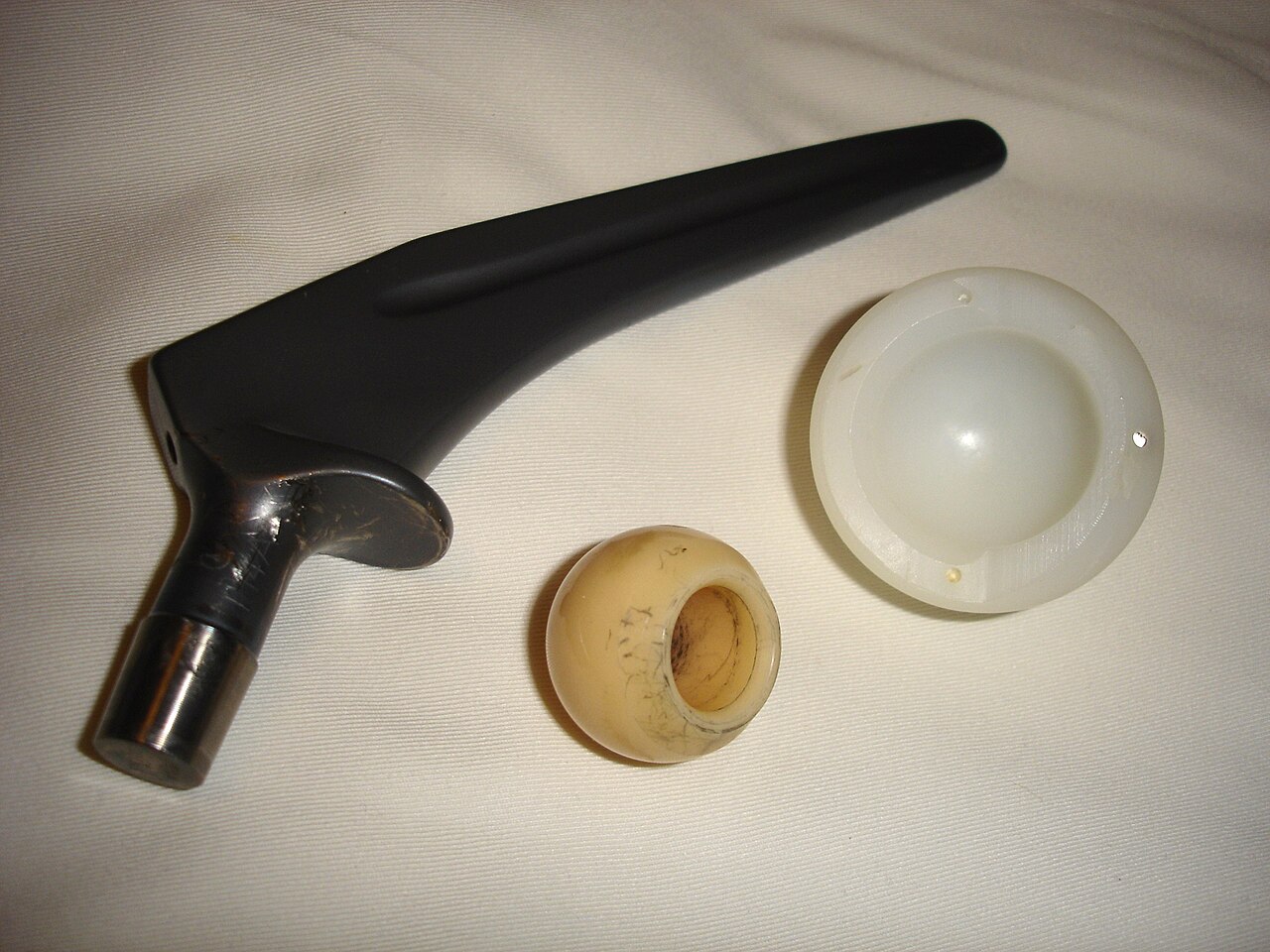
The acetabular cup is the hemispherical shell that seats in the pelvis in a total hip replacement. The femoral head, attached to a stem in the thigh bone, articulates against a liner locked inside that shell. Velora is restor3d's take on that shell: a 3D-printed titanium cup with what the company describes as a fully interconnected porous architecture, designed to encourage bone ingrowth and biologic fixation. The release credits the design to restor3d's proprietary TIDAL Technology.
The porous structure is the reason additive manufacturing matters here. A lattice in which every pore connects to its neighbors gives bone a continuous path to grow into the implant rather than simply butting up against a coated surface. Producing that kind of open, internal geometry is something powder-bed printing does well and conventional machining does poorly. The release does not detail the printing process, lattice dimensions or porosity figures, so how TIDAL differs from other porous titanium approaches remains unstated in the material available.
The sizing argument
According to VoxelMatters' coverage, the most concrete design claim concerns head-to-cup ratios. Velora accommodates a 36 mm femoral head in a 48 mm cup and a 40 mm head in a 52 mm cup without requiring the surgeon to upsize the cup. The company says this supports greater range of motion and joint stability. Normally a bigger head demands a bigger shell, and a bigger shell means removing more of the patient's bone, so fitting a larger head into a given shell size is the sort of geometry trade-off where printed structures may give designers more room to work.
The off-the-shelf range is broad. VoxelMatters reports cup sizes from 40 to 70 mm, offered in multi-hole, limited-hole and no-hole configurations for different screw fixation needs. Liner options include standard, lipped, face-changing and lateralized versions. That breadth matters commercially: a system that covers most patients from a standard inventory is far easier for hospitals to adopt than one that needs special handling.
The Knee Side: Patient-Specific at Scale
The knee announcements lean harder on what makes additive manufacturing distinctive, namely the ability to make every part different.
Identity KA, per VoxelMatters, designs the femoral component from each patient's CT scan and builds the patient's constitutional leg alignment into the surgical plan. Kinematic alignment, broadly, aims to restore the leg's natural geometry rather than forcing every knee to the same mechanical target. Pairing that philosophy with a component shaped to the individual femur is a natural fit for a printed, one-off part. The milestone restor3d is reporting is modest but real: the first Limited Market Release cases are done.
Identity 3DP Porous combines a 3D-printed cobalt chrome femoral component with a titanium tibial baseplate. VoxelMatters reports that it is FDA-cleared for both cemented and cementless use, and restor3d claims it is the first and only patient-specific cementless total knee system. That is the company's own characterization and not one we were able to verify independently. The company is targeting Full Commercial Release for this system in 2027, so it has not yet reached the full-release stage that Velora is entering.
Cementless fixation is where the porous printing story comes full circle. Without bone cement, the implant depends on bone growing into its surface for long-term stability, the same biologic fixation principle behind Velora's interconnected lattice. A patient-specific component that also relies on printed porosity combines both of additive manufacturing's main strengths in medicine: custom geometry and engineered internal structure.
Pilot to Production
The phrase that recurs through the announcement is "Limited Market Release," and it is worth understanding as a stage. Medical device makers commonly put a new implant in the hands of a restricted group of surgeons and sites before a full launch, gathering clinical and logistical experience in a controlled setting. Moving to Full Commercial Release signals that the company believes the product and its supply chain are ready for wider demand.
For a printed implant, that readiness includes manufacturing. A cup range spanning 40 to 70 mm in three hole configurations is a substantial catalog of distinct parts, and each must be produced, finished and inspected to medical standards in volume. The release frames Velora's step as a portfolio milestone, and CEO Kurt Jacobus and co-founder and chief commercial officer Ken Gall are both quoted in it on the company's hip and knee momentum. The announcement does not give production volumes, case counts from the limited release or clinical outcome data, so the scale of the rollout is not yet quantified publicly.
What It Means for Makers
Most readers will never print a hip cup, and nobody should try. But the design logic here is familiar to anyone who has dialed in an infill pattern or experimented with gyroid lattices. Restor3d's pitch rests on two ideas makers already work with daily: internal structure can be engineered for a function, not just for weight or print time, and printing lets a part be customized without retooling.
The interesting signal is maturity. Restor3d is building an off-the-shelf printed hip catalog while pushing patient-specific printed knee parts through the same pilot-to-launch pipeline. Velora's move into full release, and the 2027 target for the Identity 3DP Porous knee, are data points suggesting that additive manufacturing in orthopedics is behaving like an ordinary product business. That is a useful benchmark for where industrial printing as a whole may be heading.
The open questions are the ones the release leaves unanswered: how many cases the limited release covered, what the manufacturing throughput looks like, and how the patient-specific knee performs as it scales. Those are the numbers to watch as Velora reaches more operating rooms.
