
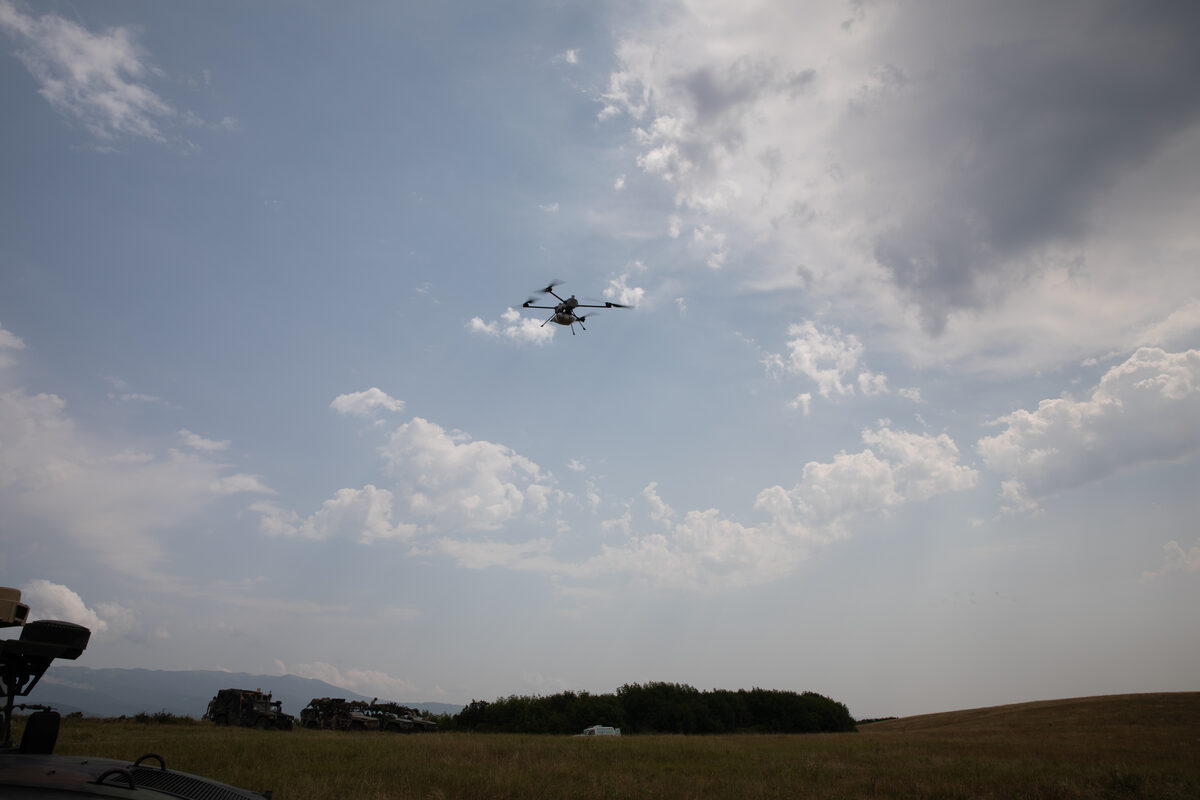
A Maui-based startup is putting a volcanic-rock-reinforced 3D printing filament through one of the toughest proving grounds available: an active naval exercise. According to reporting from UAS Vision on July 15, 2026, Voltage Vessels is field-testing 3D-printed fixed-wing drones and a small surface-water drone built from its Eclipse X9 material during RIMPAC 2026, the biennial Rim of the Pacific naval exercise now underway in Hawaiian waters.
Eclipse X9 is a composite of PETG — a thermoplastic polyester — loaded with chopped basalt fiber: melted volcanic rock spun into continuous filament, similar in concept to fiberglass but derived from stone rather than sand. RIMPAC marks the material's move into airframes and a compact water-surface drone, tested alongside more than two dozen other unmanned-systems experiments running in parallel at the exercise.
What's Actually Being Tested
RIMPAC 2026 kicked off June 24 and runs through July, drawing 30 nations and, per Stars and Stripes reporter Wyatt Olson's July 10 dispatch, more than two dozen separate unmanned-systems experiments running in parallel. Voltage Vessels' contribution sits inside that broader push: the exercise has become a proving ground not just for platforms and tactics but for the raw materials those platforms are printed from. Olson's piece also notes that the Pentagon created a new "drone czar" position in late June 2026 to consolidate and speed up procurement of unmanned systems, underscoring how central unmanned systems — and by extension the manufacturing methods behind them — have become to current defense priorities. Voltage Vessels CEO Sam Young, quoted in the UAS Vision piece, framed the ambition well beyond a single airframe: "We're enabling manufacturers in the world to use our material to relieve their pain points, whatever those pain points are, from drone manufacturing to infrastructure to marinas to totes for shipping." That's a materials-supplier pitch, not a drone-maker pitch — the company wants Eclipse X9 filament and pellets to become a drop-in structural material across additive manufacturing applications, with RIMPAC serving as a highly visible stress test. Young also told UAS Vision he wants to "enable boat builders to print boats for the first time," which is the closest thing to an explanation for why a marine-oriented startup ended up flying an airframe at a naval exercise in the first place.
The basalt itself isn't domestic yet. Young noted that raw basalt fiber currently has to be imported because, in his words, "there's no place in America where you could actually make basalt fiber yet" — Voltage Vessels is developing U.S. production plants, but as of the RIMPAC test window those aren't operational, and the company's current supply still runs through China, Mongolia, and Uzbekistan.
Why Basalt Fiber, and How It's Made
Basalt fiber production is mechanically simple: crushed basalt rock is melted at roughly 1,500°F and drawn into continuous filament, with no chemical additives required in the process. That imported basalt is then compounded with PETG to form Eclipse X9.
The pitch to makers and manufacturers is a familiar one from the fiber-reinforced-filament world — added stiffness and strength over unreinforced plastic — but with a specific set of claims that distinguish basalt from the carbon fiber and fiberglass reinforcements more commonly seen in desktop and industrial print materials. Per the company's own published data, Eclipse X9 is stronger than carbon fiber or fiberglass composites, UV-resistant, electrically non-conductive, non-magnetic, and recyclable at end of life. Non-conductivity in particular separates it from carbon-fiber-reinforced filaments, which are conductive enough to matter around RF electronics and antennas — a real consideration for anyone printing drone airframes that need to house radios without shielding them from their own signal. Voltage Vessels' own marketing goes further, describing the material as having "low radar return" and being RF-transparent — claims worth flagging as company language rather than independently tested figures, unlike the mechanical numbers below.
Voltage Vessels' own site (voltagevessels.com) lists validated performance figures from third-party testing at the University of Maine's Advanced Structures and Composites Center, run against ASTM D638 (tensile) and D790 (flexural) standards plus ISO 12215 marine scantling analysis for hull applications. The company reports tensile strength of 108.2 MPa, bending strength of 112.98 MPa, water absorption under 0.4%, saltwater immersion testing across 24 to 26 months, and heat deflection above 70°C. Those are marine-grade numbers, consistent with the ISO 12215 marine scantling standard the company tests against, and they explain why a small surface-water drone made the jump to RIMPAC alongside the fixed-wing airframes. The company also lists the Naval Information Warfare Center, NASA, Army applications, and Oak Ridge National Laboratory among its partners and application areas — though it's worth noting those are the company's own claims rather than independently confirmed program relationships.
What It Means for Makers
None of this material is available off the shelf to hobbyists yet, and RIMPAC testing is a defense-adjacent proving ground, not a consumer launch. But the underlying story is relevant to anyone tracking where reinforced filaments are headed. Basalt fiber has circulated in niche filament catalogs for a few years as a fiberglass alternative with better UV and chemical resistance, but it's rarely been paired with this level of formal mechanical testing, let alone flown and floated at a multinational military exercise. For makers building anything that lives outdoors long-term — enclosures, marine hardware, drone components, infrastructure fixtures — the water-absorption and heat-deflection numbers above are the ones to watch, since they speak to long-term dimensional stability rather than just peak tensile strength on a single pull test. If Eclipse X9 or materials like it eventually reach spools and pellet hoppers outside defense applications, the non-conductive property is the one likely to matter most for hobbyist drone builders specifically: a basalt-reinforced airframe wouldn't need the same isolation precautions around GPS and telemetry antennas that carbon-fiber prints require.
Bottom Line
Voltage Vessels is using a high-visibility naval exercise to validate a basalt-PETG composite across two very different use cases — flight and marine surface operation — in the same testing window. The company's mechanical data, generated at an accredited composites lab under recognized ASTM and ISO standards, gives the marketing claims more weight than typical filament-vendor copy. Whether Eclipse X9 becomes a broadly available print material or stays a defense-and-marine niche product remains to be seen, but it's a useful data point for makers on how far basalt-reinforced composites have come as a fiberglass and carbon-fiber alternative.
