
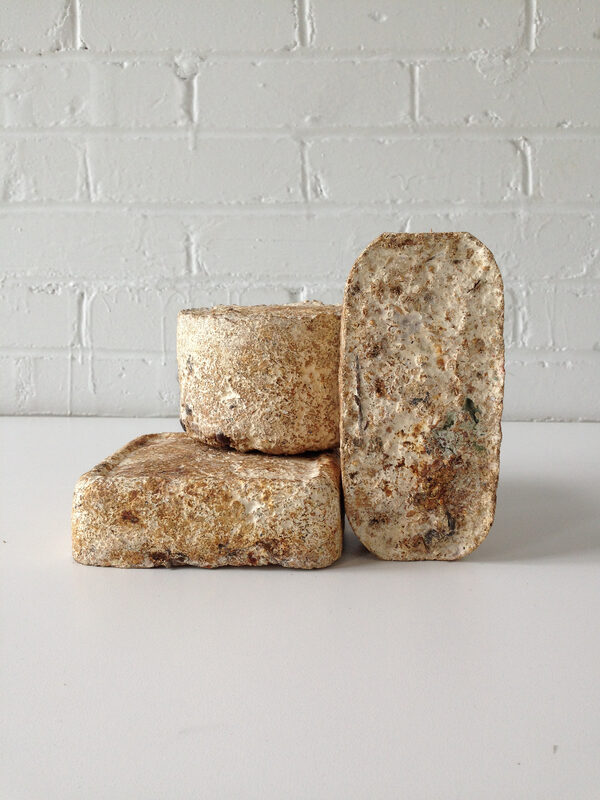
Yeast has spent millennia doing one job for builders of bread: eating sugar and exhaling carbon dioxide. A team at Sweden's Chalmers University of Technology has now given it a second career as a structural ingredient, and they have premiered the result publicly. In a project the university summarizes under the headline "'Baked', printed, ready - premiere of architecture made from yeast", the researchers unveiled architectural pieces 3D-printed from a hydrogel that is bound together not by plastic or plaster, but by baker's yeast itself. The catch, and the clever part, is that the yeast is dead on arrival: it is heat-deactivated before it ever reaches the print head, so it contributes mass and mechanics rather than fermentation.
The work comes from Yagmur Bektas, Malgorzata A. Zboinska, Cecilia Geijer, Tiina Nypelo, and Zeinab Hefny, and is published in Frontiers of Architectural Research under the title "Novel 3D printable yeast-based materials for architectural applications." In the researchers' framing, echoed in trade coverage, the yeast is used as structural biomass in a printable material rather than as a living, gas-producing agent.
What's actually in it
The recipe is short and almost entirely from the kitchen-and-coastline end of the supply chain. Five ingredients go in: baker's yeast; cellulose fibers derived from wood; alginate extracted from brown seaweed; plant-derived glycerol; and water. There are no fossil-derived polymers, no synthetic binders, and nothing that demands a high-temperature curing step.
Each component plays a role you can reason about. The cellulose fibers bring reinforcement, the alginate is a gelling agent that gives the mixture its hydrogel character, the glycerol acts as a plant-based plasticizer that keeps the material workable rather than brittle, and water is the carrier. The yeast is the part worth lingering on. After it is heat-deactivated, it is mixed into the hydrogel as biomass, where the researchers credit it with acting as a binding agent that provides volume, viscosity, and strength. In other words, the dead cells are not filler; they are the body of the material, thickening the paste so it holds a printed bead and contributing to the stiffness of the finished piece.
How it prints
This is a pressure-based extrusion process, the same broad family as the paste and clay printers many makers already recognize, rather than anything involving a heated nozzle or a fused-filament hot end. The material is pushed out as a hydrogel using air pressure and left to dry at room temperature until it reaches its final shape. That single fact carries most of the project's appeal: there is no energy-intensive heating step in the print itself, which sidesteps both the power draw and the equipment that thermoplastic and ceramic workflows assume.
Just as notable, the prints require no support structures. For anyone who has spent an afternoon peeling away support scaffolding or dialing in tree supports, a material that holds its own geometry as it is laid down is a meaningful practical difference. The deactivated-yeast hydrogel evidently has enough yield strength to bridge and stack without a printed crutch underneath it, which keeps both material waste and post-processing labor down.
The output is tunable in the ways architects care about. The team reports that they can adjust the formula to change the material's transparency, color, and surface texture, which is what makes the named applications plausible rather than aspirational: daylight-modulating and sunlight-protection screens, wall panels, and room partitions. Those are interior elements where a designer wants to control how light passes through a surface, how it reads visually, and how it feels to the touch, and where a printed, locally tuned panel could substitute for plaster, plastic sheet, or synthetic textile.
Why "baked" is the right word
The premiere's framing leans on the baking pun, but it is technically earned. Deactivating the yeast with heat is a deliberate processing choice, not an afterthought; the researchers describe it as necessary to stabilize the material. A living yeast culture in a hydrogel would keep metabolizing, off-gassing, and changing over time, which is the opposite of what you want in a wall partition. By killing the cells first, the researchers convert an unstable biological system into a stable engineering material while keeping the entire feedstock bio-based and, importantly, biodegradable at end of life. The whole assembly is meant to break down and return to nature rather than persist as another stream of plastic-laden building waste.
That biodegradability is the explicit pitch. Chalmers and the trade coverage both frame these printed elements as renewable, biodegradable alternatives to fossil-based interior materials, slotting into the same role currently filled by plaster, plastic, and synthetic textiles. The team also sketches a longer horizon for the platform, naming self-healing and air-purifying materials as future directions. Those are not claims about what the current panels do; they are stated as where the line of research could go.
What It Means for Makers
For now, this is a university research result with a public debut, not a product you can buy or a recipe you can replicate on a desktop printer this weekend. But the underlying approach maps cleanly onto tools makers already use. Pressure-based, room-temperature paste extrusion is exactly the regime that clay and food printers operate in, which means the barrier here is materials science and characterization, not exotic hardware.
The more durable lesson is in the formulation strategy. Every ingredient is renewable and individually well understood by the bio-materials community: cellulose, alginate, glycerol, water, and a cheap, globally available biomass in deactivated yeast. Treating a deliberately killed microorganism as a structural binder, rather than as a living agent or a waste product, is a reframing that the broader maker and bio-fabrication scene can take ideas from. If a hydrogel can be made to print without supports and tuned for transparency, color, and texture from a five-item bio-based list, it sets a useful benchmark for what "sustainable printable material" should actually deliver rather than merely promise.
The realistic near-term reads: watch Frontiers of Architectural Research and Chalmers for follow-up characterization data, and treat the self-healing and air-purifying ambitions as aspirations to verify later, not features shipping today. What is concrete is the demonstration itself: real architectural pieces, printed cold, from material that began as something you would otherwise use to make bread rise.
