
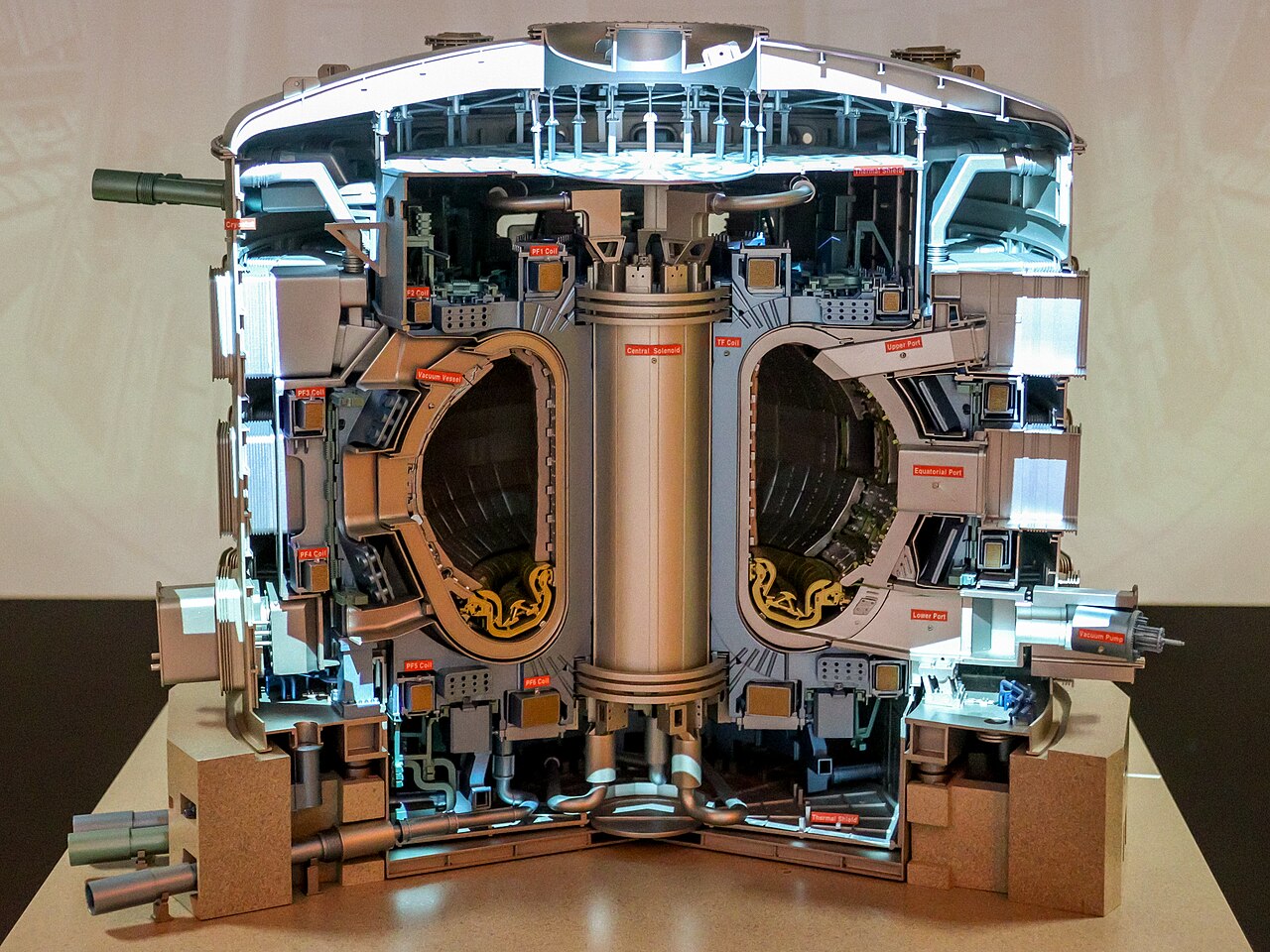
Freemelt, the Swedish maker of electron-beam powder-bed fusion (E-PBF) systems, has secured an ITER-related qualification order from Alsymex, a subsidiary of the French industrial group ALCEN and a strategic supplier to ITER. The contract is worth SEK 3.3 million, roughly $326,000. Freemelt will make subassemblies of tungsten bricks joined to copper substrates, which will then go through bonding and high heat flux testing. Final delivery is scheduled for the first quarter of 2027.
That is a small sum by fusion-industry standards. The order matters more for where it sits. The parts belong to the Small Scale Mock-up (SSMK) programme, which Freemelt describes as an early qualification campaign for tungsten in ITER. Qualification campaigns decide which materials, joining methods and suppliers are trusted with the hardware that comes later, so an additively manufactured part showing up at this stage is worth noting.
A note on timing: Freemelt's own release is dated November 4, 2026, and VoxelMatters reported the order on November 15. The deal is not new this week, but it has only just started to circulate in additive manufacturing trade coverage.
Why Tungsten, and Why Now
The context Freemelt gives is a materials change at the project level. According to the company, ITER is moving from beryllium to tungsten for plasma-facing applications. Plasma-facing components are the surfaces closest to the fusion plasma. VoxelMatters puts the case for tungsten simply: it withstands extreme temperatures.
A change in specified material means a new round of qualification. The new material has to be shown to survive in the specific geometries, joints and assemblies the design calls for, and that is the job of programmes like SSMK. The name "small scale mock-up" suggests smaller trial pieces built to test the materials and joints before full-scale hardware.
The joint is the critical part of this order. Freemelt is not shipping loose tungsten blocks. It is shipping tungsten bricks joined to copper substrates, and the release says these subassemblies are intended for bonding and high heat flux testing. The sources do not detail the test criteria, but a tungsten-copper assembly is only as good as the bond between the two metals.
Freemelt CEO Daniel Gidlund called the contract "an important milestone in the ongoing qualification of tungsten for fusion energy applications." The company also lists fusion as one of its strategic growth markets.
The Supply Chain Around the Order
It helps to know who is buying. VoxelMatters reports that Alsymex holds several contracts with Fusion for Energy (F4E), the EU body that manages Europe's contribution to ITER. Freemelt is therefore entering the ITER effort through an established supplier. Working under an incumbent supplier looks like a practical way into a heavily documented industry.
This is also not Freemelt's first fusion work. VoxelMatters notes that the Alsymex order follows a larger SEK 55 million (about $5.43 million) manufacturing order from F4E for JT-60SA. Measured in revenue, the earlier order is far bigger, more than sixteen times the value of the Alsymex contract. Measured strategically, the new order adds something the F4E work did not: a part in the qualification of tungsten for ITER itself.
Freemelt names three strategic growth markets: fusion, medtech and defense. The company says its manufacturing business supports customers with advanced metal components, from process development and qualification through inspection and delivery.
Where Electron Beams Come In
Freemelt's process is electron-beam powder-bed fusion, which melts metal powder with a focused electron beam instead of a laser. The sources do not say how Freemelt will build the tungsten bricks or how the copper bonding will be done, and we will not guess. They also give no tolerances, brick dimensions or test parameters. What we can say is that a company built around E-PBF has been chosen to supply tungsten parts for a qualification campaign, which suggests the process is being taken seriously for this refractory material.
That is the important point here. Tungsten is a difficult metal to make things from, and the parts that go through qualification are the parts future procurement is based on. If E-PBF tungsten assemblies pass bonding and high heat flux testing, the process strengthens its claim to a role in fusion hardware supply. If they fail, the testing will show where the problems are, which is useful too. In either case the results will come from controlled testing, not marketing material.
What It Means for Makers
No one reading this will be printing tungsten on a hobby machine. The story still matters to the wider additive community for three reasons.
First, materials drive adoption. ITER's move from beryllium to tungsten opened a need for tungsten components, and an additive manufacturing company has won work to supply them. Industrial printing tends to grow this way. A material change or a new performance requirement opens a gap, and a process that can handle the material fills it. The same pattern shows up at the consumer level whenever a hard-to-print engineering filament becomes practical and suddenly finds uses.
Second, multi-material interfaces are the hard part. These subassemblies are judged on how well tungsten and copper stay joined under heat, not just on how well the tungsten is printed. Anyone who has fought adhesion between dissimilar materials on a desktop printer will recognize the problem, even though the scale and the stakes are very different.
Third, qualification is how processes earn trust. A SEK 3.3 million order will not change Freemelt's financial position. Being part of an early qualification campaign for a flagship fusion project is the kind of slow, testable credibility that gets additive manufacturing written into specifications. Makers who follow industrial AM should watch the results of the SSMK testing, if and when they are made public, more closely than the contract value.
Bottom Line
Freemelt's Alsymex contract is small, specific and strategically useful. It puts electron-beam-printed tungsten, bonded to copper, into an early ITER qualification programme at a time when the project is replacing beryllium with tungsten for plasma-facing applications. Together with the earlier SEK 55 million F4E order for JT-60SA, it supports Freemelt's stated aim of making fusion a growth market. The next milestone is delivery in Q1 2027, followed by the test results, which will show whether the parts hold up.
