
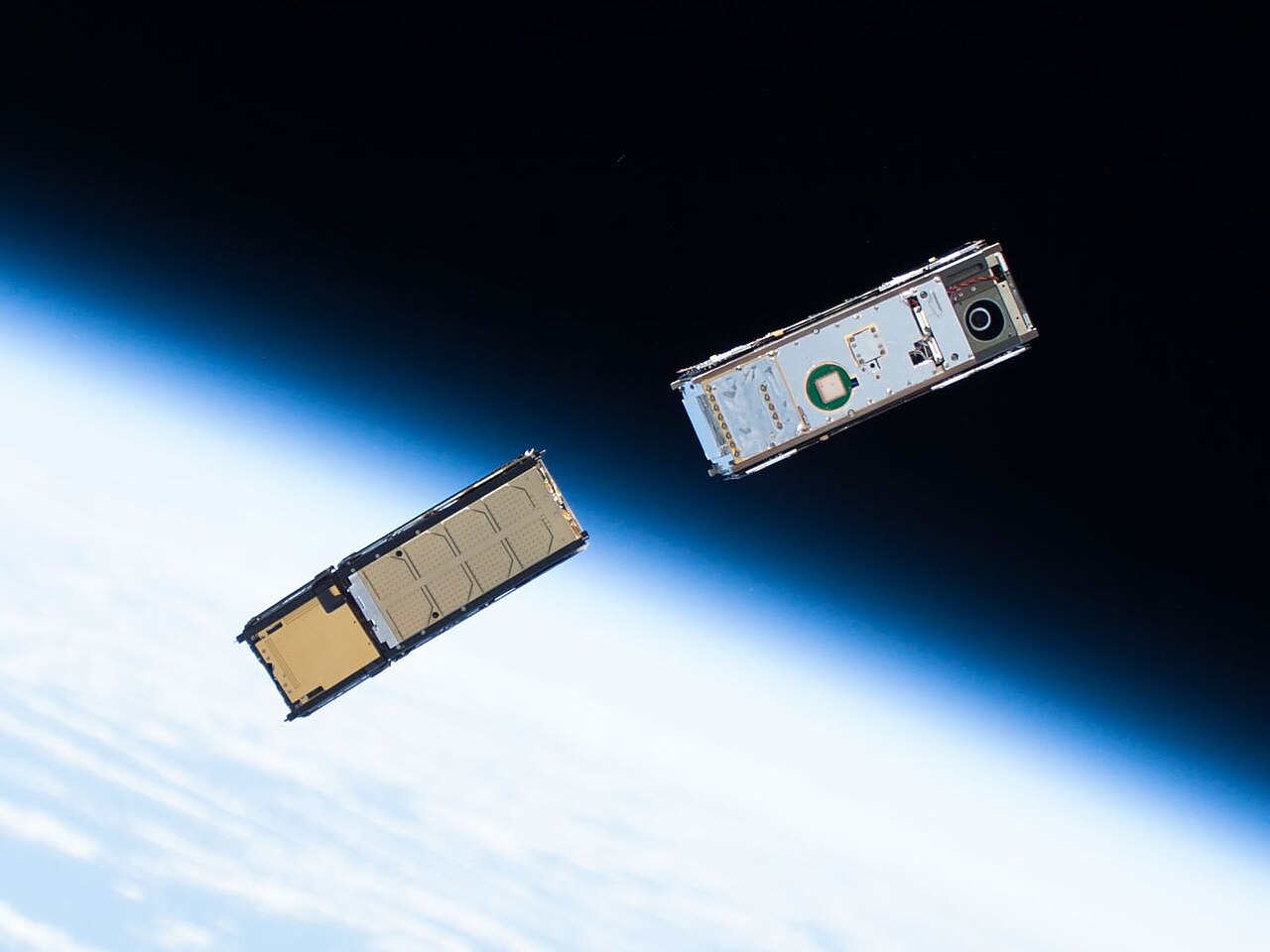
Karlsruhe-based Horizon Microtechnologies wants satellite builders to send it work. According to 3D Printing Industry, the company has opened a call for proposals under IP-MASS, a project run within ESA Phi-Lab Austria to industrialize radio-frequency components that are 3D printed in polymer and then metallized. The first target is shielding enclosures at volumes of up to 50,000 parts per year, with antennas, waveguides and filters also on the list. The company is asking for candidate parts with potential demand of at least 100 units a year, and it says partners do not need a finished design to apply.
That last point matters more than it might seem. Horizon is asking for a problem, and it is pitching itself as a design partner from the beginning rather than a print bureau at the end of the chain.
Print the shape, then plate the function
The process itself is a two-step one. Horizon prints precision polymer parts, then applies metallic and protective coatings over them. The polymer carries the geometry; the metal does the electrical work. According to 3D Printing Industry, the architecture has previously been qualified for use in space, which is the threshold any process has to clear before a satellite integrator will take it seriously.
In a company press release dated September 29 and hosted on SpaceNews, Horizon describes applying metal only to the thickness actually required over the polymer body. The reasoning is straightforward. For many RF parts, what matters electrically is the conductive surface, not the solid metal behind it. A shielding housing has to block interference, and a waveguide has to guide a signal along its inner walls. In both cases a thin conductive layer over a lightweight core can do the job that a machined block of metal traditionally does.
The payoff Horizon claims is mass. The release states that replacing even lightweight metals such as aluminium with metallized polymer can cut weight by 40%. That is the company's own figure, not an independently tested result, and it will depend heavily on the part. In launch economics, though, mass is the line item everyone watches, and a satellite carries many small housings and RF parts. Savings on each of them add up across a constellation.
What IP-MASS actually is
The press release frames IP-MASS as a two-year scale-up project supported by EUR 500,000 and reinforced by Horizon's selection into ESA Phi-Lab Austria, whose focus Horizon describes as "Industrialization by Design." The stated goal is production of up to 50,000 precision-coated satellite components.
The two sources describe the project at two stages. The September release announced the program and the Phi-Lab selection. The newer call for proposals, covered by 3D Printing Industry, is the practical follow-through: Horizon now needs real parts from real customers to push through the process at volume. The release also says the effort is not limited to shielding housings. Horizon is looking for spacecraft applications more broadly, as well as space-related terrestrial applications, and 3D Printing Industry says proposals can cover ground-based systems tied to the space sector.
EUR 500,000 over two years is a modest sum. The figure that stands out is the 50,000-part target. The release contrasts it with one-off prototype production. Talking about tens of thousands of identical coated components per year is constellation language, and it pushes Horizon's process into a production regime where consistency, yield and inspection matter as much as geometry.
Why ask for parts without finished designs
The "no finished design required" condition fits the Phi-Lab theme. Industrialization by design means shaping a component around the production process early, rather than taking a design drawn for machining and trying to print it afterward. Part of the advantage of print-and-metallize is geometric freedom: internal channels, consolidated assemblies and shapes that would be awkward or impossible to machine. A team that brings a finished, machining-optimized drawing gives up most of that freedom before the conversation starts.
3D Printing Industry compares the approach to the memorandum of understanding signed in July 2026 between Fortastra and Hadrian, another arrangement built around getting manufacturing input into a program early. The difference is scope: that MOU is between two companies, while Horizon's invitation centers on one process and is open across the space supply chain.
The 100-units-a-year floor is also telling. It screens out one-off curiosities and focuses the program on parts that recur. Those are the parts where a process change pays back, and the only kind that can help Horizon prove its process at the volumes it is targeting.
What It Means for Makers
Nobody reading FilamentFeed is going to print a flight-qualified waveguide on a desktop resin machine this weekend. Horizon is working at micro scale, with precision and qualification requirements far beyond hobby gear. The underlying idea, however, is one makers already know: let the printed polymer handle shape and stiffness, and add a functional surface where it is needed.
Hobbyists have long electroplated or conductive-coated printed parts for looks, wear resistance or basic shielding. What Horizon is attempting is the industrial, controlled version of that, with the coating thickness held only to what the part needs and, according to the company, an architecture previously qualified for space use. If it works at 50,000 parts a year, it is another data point that additive manufacturing has moved past prototyping and into real production. It also suggests that the most valuable printed parts may be hybrids, where the print is the substrate rather than the finished product.
For engineers at small space hardware companies, the call itself is the practical takeaway. If you have a recurring RF housing, antenna, waveguide or filter with demand of at least 100 units a year, Horizon says you can bring it in before the design is settled.
Bottom Line
IP-MASS is a small-budget, high-ambition bet. The numbers worth watching are the claimed 40% weight saving, which comes from Horizon itself, and the 50,000-part target, which is a target rather than a demonstrated result. The call for proposals shows Horizon is moving from announcement to execution. Whether metallized polymer becomes routine in constellation hardware will depend on what partners bring in and how those parts perform.
