
Most of what gets called "distributed manufacturing" is a desktop printer in a garage. Hyperion Systems is betting on a much larger version of the idea. The Australian company has signed with Inspire Robotics to put its TitanCell, a robotic large-format 3D printing cell built into a shipping container, into Timor-Leste, where it is meant to turn hard-to-recycle plastic waste into boats and marine equipment. 3D Printing Industry reported the agreement on October 9, describing a system that packages industrial robotics, large-scale additive manufacturing and Hyperion's proprietary recycled-polymer technology into a single transportable unit developed in Western Australia.
The project is still ahead of the hardware. According to Hyperion, the unit is due to be deployed and commissioned in Timor-Leste later this year; none of the published coverage says commissioning has happened yet. The details below come from trade press reports that quote Hyperion and Inspire Robotics, and they should be read as the companies' own account of what the system will do.
What the TitanCell Is Supposed to Be
Hyperion pitches the TitanCell as a "Factory-in-a-Box." The appeal of the container format is easy to see: a standard shipping container is already the unit the global logistics system knows how to move, so a production cell built inside one can, in principle, travel to wherever it is needed without a purpose-built facility waiting at the other end.
Chief executive Josh Wigley, who co-founded the company with David Budge, framed it in exactly those terms. "The TitanCell was designed to fundamentally rethink manufacturing by taking advanced production capability directly to the point of need," he said in a statement carried by VoxelMatters.
The feedstock is the more interesting half of the story. Hyperion says the system will print from shoreline and industrial plastics that are hard to recycle through conventional channels. That is the material that tends to accumulate in places without a large recycling industry nearby, and turning it into something with resale value is the central economic argument of the project.
What the coverage does not provide is the engineering detail makers would want: print process, build volume, deposition rate, how the recycled stream is sorted and conditioned, or what mechanical properties the finished parts reach. Hyperion attributes the capability to "proprietary" recycled-polymer technology, and the reports stop there.
Boats First
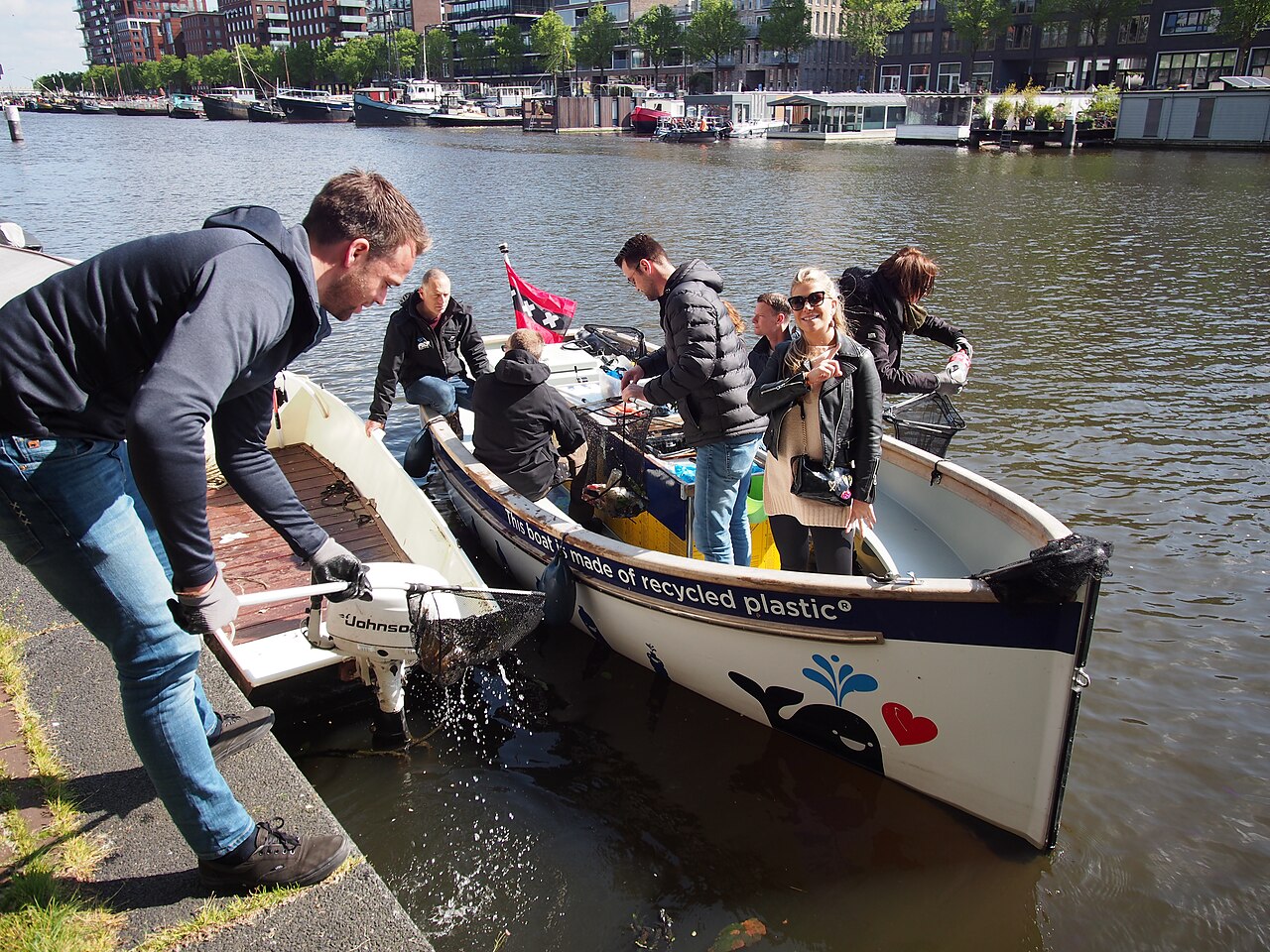
The first products are marine. According to 3D Printing Industry, the initial jobs are boats and marine gear to support monitoring of illegal fishing, mangrove restoration, beach cleanup and plastic recovery itself. There is a neat circularity in the last item: boats printed from collected plastic used to collect more plastic.
Beyond that first run, the companies list a wider catalog. Australian Manufacturing cites modular housing components, pontoons, culverts and hulls for both autonomous and crewed vessels. VoxelMatters adds marine infrastructure to the list. These are large, relatively simple, often low-tolerance parts, the category where large-format polymer printing has the most plausible case against conventional fabrication, particularly when the alternative is importing finished goods.
Hulls are also the item that will draw the most scrutiny. Anything that floats with people aboard has to cope with UV exposure, impact, fatigue and water ingress at layer boundaries. The companies have not published test data, and it would be premature to assume a recycled mixed-plastic hull performs like a molded or laminated one.
The Business Model Around the Box
The TitanCell is not being sold as a standalone machine here. It is being deployed under Inspire Robotics' Business-in-a-Box platform, which the companies describe as a way to put production capability in the hands of local entrepreneurs. In other words, the container is supposed to anchor small businesses rather than depend on outside operators.
Dr Theodore Blackmon of Inspire Robotics argued the point directly. "We believe the future of innovation is not concentrated in major cities or large corporations," he said, as quoted by Australian Manufacturing. According to 3D Printing Industry, Blackmon has also set a 2029 milestone for demonstrating tangible results, and the project is tied to President Ramos-Horta's goal of a plastic-free Timor-Leste.
The money is modest by industrial standards. Hyperion's commercialization of the TitanCell has been supported by an AU$385,000 matched funding grant from the Australian Government's Industry Growth Program. That is a small sum next to the scale of the problem the project is aimed at.
What It Means for Makers
For most readers, the TitanCell is not a machine you will ever buy. It is still worth watching for three reasons.
First, it is a live test of whether recycled waste plastic can serve as a production feedstock rather than a novelty filament. Hobbyists who have tried printing with reclaimed material know the problems: inconsistent melt behavior, contamination, moisture and unpredictable mechanical properties. A commercial operation built on shoreline and industrial scrap has to solve those problems at scale and repeatedly, and if Hyperion publishes how it does that, the lessons will travel down to smaller recyclers and maker spaces.
Second, the product list is a useful reality check on where large-format printing actually earns its keep. Pontoons, culverts and housing components are bulky, expensive to ship and tolerant of a rough surface. That is the sweet spot, and it is notably different from the high-precision parts that dominate desktop printing conversation.
Third, the Business-in-a-Box model is a form of the maker-entrepreneur idea at a different scale. The question is the same one any print farm faces: can local operators find enough paying demand to keep the machine busy once the launch funding is spent?
Bottom Line
Hyperion and Inspire Robotics have a credible-sounding plan, a small matched government grant and a target country with a stated plastic-free goal. What they do not yet have, at least publicly, is a commissioned unit, independent performance data or a track record in the field. The claims so far belong to the companies. The real story starts when the container is running in Timor-Leste and the first printed hull goes into the water.
Sources
- Hyperion Systems and Inspire Robotics to Deploy Recycled-Plastic 3D Printing Factory in Timor-Leste (3D Printing Industry)
- Hyperion Systems installs TitanCell 3D printing unit in Timor-Leste (VoxelMatters)
- Australian-made manufacturing technology targets plastic waste in Timor-Leste (Australian Manufacturing)
