
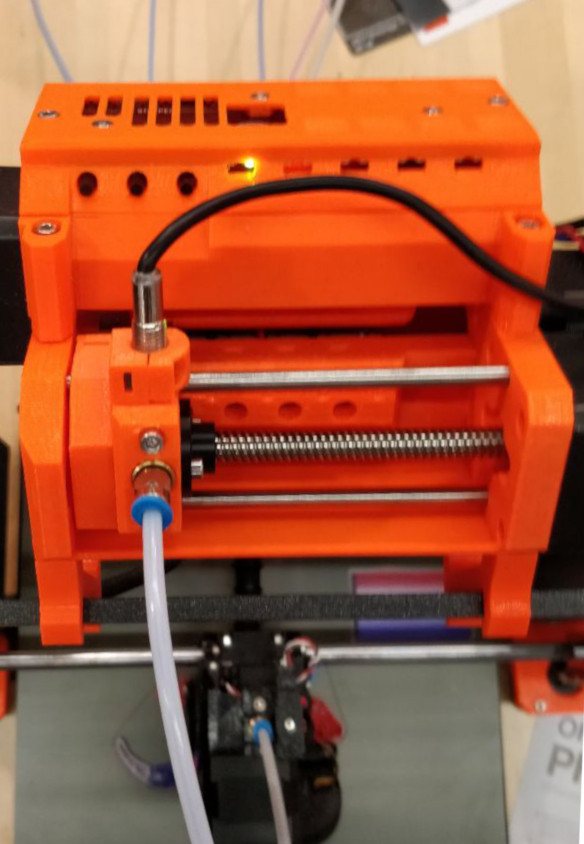
Prusa Research's long-awaited multi-material toolchanger has crossed from prototype hype into actual shipping hardware. In a "State of INDX" update posted to the company's blog on July 3, Prusa confirmed that Founder's Edition units of the Bondtech-co-developed INDX system are already landing on early adopters' desks, with standard Conversion Kits for the CORE One and CORE One+ set to leave the factory by the end of July and the full first production batch shipping by the end of August. Alongside the shipping timeline, Prusa used the update to explain, in more technical depth than previous teasers, exactly how INDX manages to swap tools with what it claims is a fraction of the filament waste of rival systems.
INDX is Prusa's answer to a problem that has dogged multi-material 3D printing since its earliest wipe-tower days: every time a toolchanging printer switches filament or nozzle, some amount of plastic has to be purged and primed before the new material extrudes cleanly, and that purge typically gets dumped onto a sacrificial tower printed alongside the actual model. For complex multi-color prints, that tower can end up using more filament than the object itself.
How the Waste Bin Replaces the Wipe Tower
Instead of a wipe tower, INDX relies on a silicone nozzle-cleaner paired with a small waste bin. When a tool change happens, the nozzle wipes against the silicone element and deposits a tiny purge pellet — Prusa says each pellet weighs roughly 0.013 to 0.015 grams — directly into the bin rather than onto the print bed or a printed structure. The company's own comparison data, cited in the update, is stark: a benchmark model that itself weighs 81.7 grams generated about 29 grams of waste using INDX's system, versus up to 696.4 grams of wasted material on unspecified competing toolchanging solutions. The INDX Conversion Kit product page lists the waste figure per filament change at just 13 milligrams — a number that, if it holds up across real-world print jobs rather than just Prusa's internal benchmark, would represent an order-of-magnitude reduction from wipe-tower-based multi-material printing as makers have known it for years.
That waste reduction matters for more than just filament cost. Wipe towers eat build volume, add print time, and often require post-print cleanup or disposal of a plastic lattice nobody wants. A system that can route purge material into a bin that's periodically emptied — rather than printing it onto the bed — also shortens print times and reduces the amount of stringing and oozing debris that can interfere with later layers.
Tool-Offset Calibration Goes Inductive
The July update also details a new automatic tool-offset calibration system built around an inductive sensor rather than a camera. Every time a print starts, the system runs a calibration pass to confirm the physical offset between each tool head, a step that's critical on any toolchanger because even fractions of a millimeter of misalignment between tool positions show up as visible seams or layer mismatches in multi-material prints. Prusa says it chose an inductive sensor specifically for its resistance to debris — a camera-based vision system, by contrast, can be thrown off by dust, stray filament fuzz, or lighting changes inside a printer enclosure, all common in real workshop conditions rather than a clean lab.
The Smart Head at the center of the system houses an induction coil alongside Bondtech's DX extruder, and it's designed to work with up to eight passive tool heads on a single CORE One or CORE One+. According to the conversion kit's spec sheet, a tool change takes about 12 seconds, nozzles can run as hot as 300°C, and the system supports nozzle diameters from 0.25mm up to a full 1.0mm — a wider range than many single-nozzle setups offer out of the box. Installing the kit on an existing CORE One takes roughly five to six hours, per Prusa's own estimate, which puts it solidly in weekend-project territory for an experienced owner rather than a quick bolt-on upgrade.
ColorMix and Halftoning for Actual Color Blending
On the software side, Prusa is pairing INDX with a ColorMix feature in PrusaSlicer and its EasyPrint app that uses halftoning — essentially a dithering technique borrowed from print media — to simulate dozens of color combinations from a base set of eight filaments arranged in a CMYKW+RGB (cyan, magenta, yellow, black, white, red, green, blue) configuration on an 8-tool INDX setup. Rather than requiring a distinct filament spool for every shade a print calls for, the software interleaves fine patterns of the base colors to approximate intermediate tones, similar in spirit to how a four-color inkjet printer produces a full color gamut from a handful of ink cartridges. Firmware 6.6.1 has already shipped in support of the rollout, and Prusa says four additional print profiles are in the pipeline.
What It Means for Makers
For makers who've watched multi-material toolchanging remain the province of enthusiast builds and expensive commercial machines, INDX's shipping milestone is significant less for novelty and more for maturity: a documented, quantified waste reduction, a debris-tolerant calibration method chosen specifically for workshop conditions rather than lab demos, and a software feature that meaningfully expands color output without buying eight times the filament. The catch is availability and cost. At $693.52 for the base 4-tool kit — with an 8-tool configuration presumably priced higher — this is an add-on for owners already invested in the CORE One ecosystem, not a standalone printer purchase. Founder's Edition buyers are effectively the beta cohort; the real test of Prusa's waste and reliability claims will come once the broader Conversion Kit batch ships at the end of July and August, and independent owners start running it through ordinary, messy home-shop conditions rather than Prusa's own benchmark prints. Makers holding CORE One or CORE One+ units who print multi-color work regularly should watch early adopter reports closely before committing kit-conversion time and money.
