Software
Slicers, firmware, and the open-source toolchain — release notes translated into settings you can actually use.
-
Software
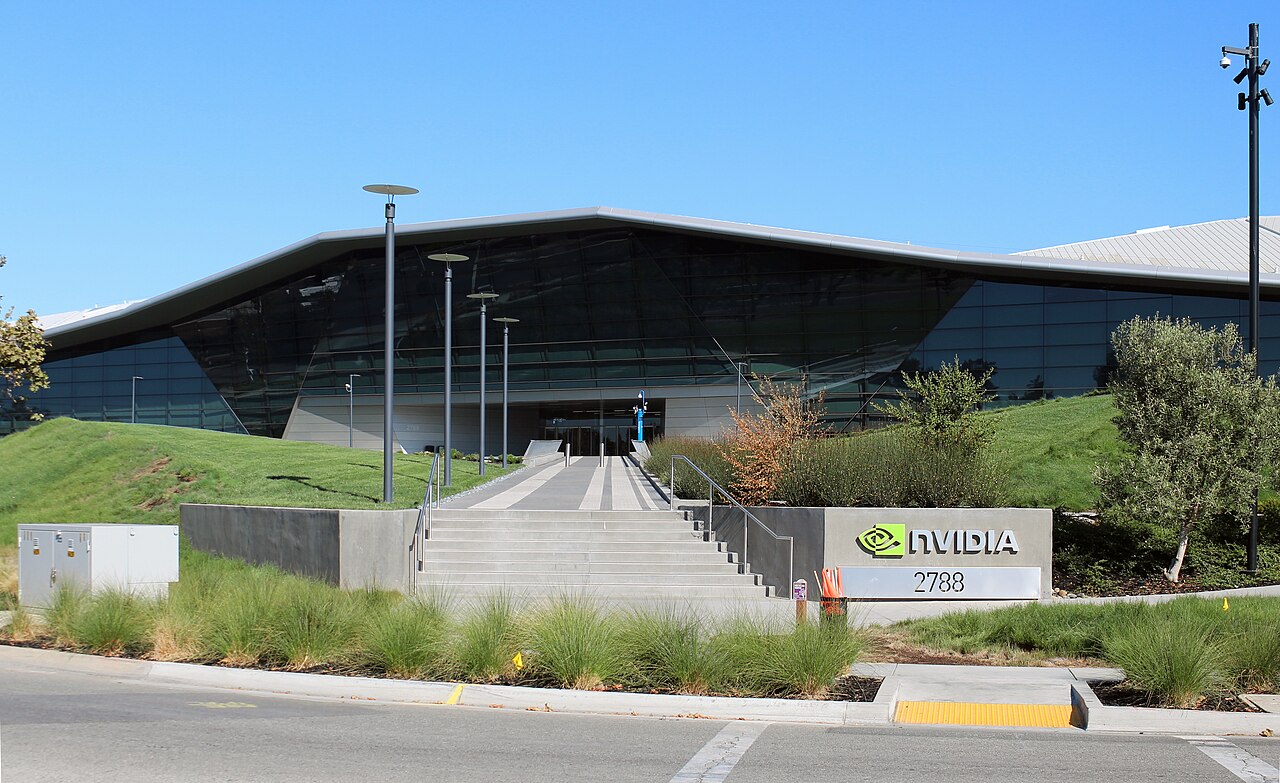
NVIDIA Open-Sources the SMLib CAD Kernel as USD BRep: What Makers Actually Get
NVIDIA has released USD BRep, an Apache 2.0 NURBS solid-modeling kernel built on SMLib with C++ and Python APIs, giving makers and AI-agent tinkerers a free, scriptable source of exact geometry, though NVIDIA's own docs warn that repairs can fail silently.
-
Software
Extrudio Renders Product Photos From Your G-Code, Not Your STL
Extrudio builds product shots by sweeping a virtual plastic bead along sliced G-code toolpaths, so real layer lines and stair-stepping show up. It works with Bambu Studio, OrcaSlicer and PrusaSlicer output and gives new accounts 20 free credits, though Hackaday readers pushed back on its $12 pricing.
-
Software
Creality Print 7.3.0 Bets on Full Color: Spectral Matching, Gradients and Purge That Becomes Infill
Creality Print 7.3.0 goes all-in on full-color printing with spectral-data color prediction, one-click OBJ color separation, anchored gradients and purge reused as hidden infill, plus K3 multi-nozzle support, Adaptive TPMS infill and ZAA top-surface anti-aliasing.
-
Software
ModelSplitter Is a Free Browser Tool That Cuts Oversized Models to Fit Your Printer and Writes the Assembly Guide
ModelSplitter, a free browser-based STL/3MF splitter in public beta, finds the fewest-part cut for your build volume, sizes pins, tenons and magnet sockets automatically, and exports a numbered PDF assembly guide. A Pro tier comes to Kickstarter on November 3.
-
Software
Fahz 2.0 Turns Side-Profile Photos Into Print-Farm Orders With No CAD Step
The Fahz face-profile vase is back on Kickstarter after a 2018 shutdown. Software now turns photos into support-free FDM meshes and sends each order by API to Slant 3D, which prints it in PLA. Pledges start at $30 for a 3-inch vase.
-
Software
Sneakprint's ShoeFactory Sells Foot-Fitted Flip-Flops as a Printable STL File
Sneakprint's ShoeFactory turns a phone-browser foot scan into a parametric, left-and-right-specific flip-flop you print yourself: EUR 64.99 buys a reusable STL archive, though the company names no recommended material or printer.
-
Software
sphereneNXT v2.0.0 Adds Built-In Structural Simulation for Lattice and Minimal-Surface Infill
Spherene's browser-based sphereneNXT v2.0.0 adds linear static simulation, so engineers can test ADMS, TPMS and beam infill structures before and after generating them without exporting to a separate FEA tool.
-
Software
OctoPrint 2.0.0rc6: Sixth Release Candidate Fixes Regressions, Including a Limited Path-Traversal Bug
OctoPrint's sixth 2.0.0 release candidate fixes a limited path-traversal regression on the download API, cleans up file metadata handling and restores a Gcode Viewer signature plugins rely on, after a four-month RC phase in which the maintainer has pressed plugin authors to migrate.
-
Software
GeoDict Quantify Puts AI Micro-CT Analysis Into a Fixed, Entry-Level Package, and Reproducibility Is the Point
Math2Market's GeoDict Quantify bundles ten image-analysis modules, AI segmentation and scriptable "recipes" for micro-CT and FIB-SEM data. It ships only through OEM partners, has no public price, and its maker says it was not built exclusively for AM.
-
Software
OwlCAD Beta Brings Free Parametric CAD to the Browser, With an AI That Returns Editable Geometry
Spare Matter Corp's OwlCAD beta is a free, browser-only parametric CAD tool with all exports and print-sale rights included; the $12/month Pro tier adds AI that returns an editable node tree instead of a mesh.
-
Software
Snapmaker Opens Space 3D-Model Platform, Pays Creators by Print Time Instead of Downloads
Snapmaker's Space model-sharing platform exits beta with 2,500+ U1-tuned designs and a rewards system that pays creators for cumulative real-world print time, not download counts.
-
Software
California Signs the Firearm Printing Prevention Act: Consumer 3D Printers Will Need Gun-Blocking Tech, but Not Yet
Gov. Newsom signed AB 2047 on Sept. 26, but nothing binds printer makers until ASTM publishes a standard and California DOJ issues guidance, with enforcement a year after that.